3399 Boul Crémazie E, Montréal, QC H1Z 2J1

CAMPUS DE MONTRÉAL

Cours commis aux pièces

Cours de Cours commis aux pièces à Montréal

Les perspectives de carrière au Québec sont actuellement excellentes pour les commis aux pièces. Emploi Québec classe la profession comme l’une des plus en demande actuellement au pays. Cela est en partie dû aux nombreux débouchés et au fort besoin de main-d’œuvre pour ce métier. En tant que commis aux pièces, vous pourrez travailler à divers postes dans une multitude d’entreprises différentes : grandes surfaces, commerces spécialisés dans la vente de pièces automobiles et secteur manufacturier. Mais de nombreuses autres structures ont besoin d’assistance ! Alors si une carrière de commis aux pièces vous intéresse, c’est le moment idéal pour vous lancer!
  • Le cours
Type de programme:

Ce programme vous permettra de maîtriser tous les aspects de la vente et mise en marché de pièces automobile ainsi qu’au contrôle d’inventaire et l’étalage.

Prérequis:

Être âgé de 18 ans au moment de l’inscription et passer une entrevue avec le conseiller aux admissions.

Évaluation:

L’évaluation se fait à travers des tests ponctuels et un examen final. La note de passage est de 70%. L’étudiant Un certificat reconnu par l’industrie automobile est émis conditionnellement à la réussite du programme.

Frais de scolarité:

L’école de l’automobile vous propose différentes méthodes visant à faciliter le financement de vos études. Un conseiller aux admissions se fera un plaisir de vous fournir les informations pertinentes; les frais de scolarité peuvent être déductibles d’impôt.

Perspectives de carrière comme conseiller aux pièces

Les possibilités d’emploi sont excellentes au Québec. L’industrie connaît présentement une pénurie de conseillers aux pièces qualifiés et on estime que le nombre de personnes qui entrent sur le marché du travail est largement inférieur au nombre des personnes qui se retireront au cours des 10 prochaines années. Le conseiller aux pièces pourra exercer ses fonctions auprès d’employeurs suivants: concessionnaires automobiles, détaillants franchisés et indépendants, les grandes chaînes comme Canadian Tire et Wal-Mart, les centres de distribution de pièces et autres.

Salaire potentiel

Le salaire moyen d’un conseiller aux pièces au Québec se situe entre 20 000$ et 25 000$ à l’entrée sur le marché du travail et entre 35 000 $ et 45 000 $ avec expérience.

Le programme
  • La connaissance du produit
  • La gestion des pièces
  • Le client internet
  • Le client externe
  • L’utilisation du logiciel ADP
  • La gérance de département
Collision Repair Trades


The Collision Repair Trades faculty at the Automotive Training Centre provides a high-end career-training program designed to prepare students for a life-long career in collision repair.

  • Description

Collision Repair Trades at the Automotive Training Centre

In the ever-changing automotive industry, demand for collision repair has remained and will remain consistent in good times and bad. Put simply, accidents will always happen and cars are always going to collide. What this means is that there will always be a need for well-trained graduates of collision repair schools and career-training programs.

Collision Repair courses are held at ATC Surrey, the newest Automotive Training Centre campus. Situated on nearly 2 acres of land, the easily accessible and centrally located campus boasts over 15,000 square feet of progressive and cutting edge training facilities. Students in the Collision Repair Trades faculty will be full immersed, gaining hands-on experience with the latest equipment, software and tools.

Collision Repair Trades Programs at the Surrey Automotive Training Centre:

Prep and Auto Body Technician Training Vancouver

Cutting Edge Collision Repair Training

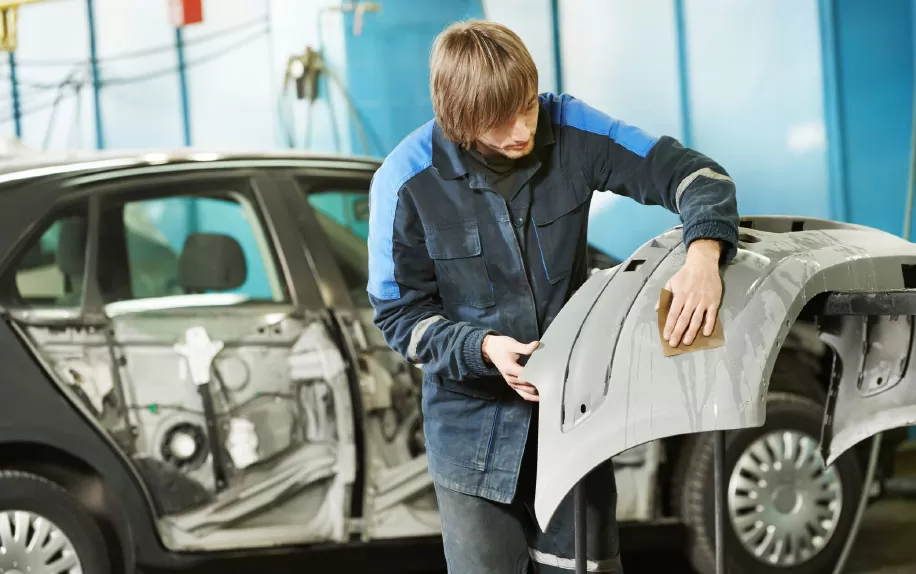
Students in the Collision Repair Trades faculty will learn the fundamentals of collision damage repair, collision damage estimating and more. Using interactive media and the latest industry standard software, students will develop the skills needed to properly complete a hand written or computerized damage report for auto body repair shops, insurance companies and fleet and rental outlets.

The Collision Repair Trades faculty combines classroom theory with shop practice, letting students gain priceless on-the-job experience and the confidence needed to perform in all aspects of collision repair.

Surrey Campus

Auto Estimator


Congratulations on considering an automotive career in the Auto Collision Repair Trades. Collision Repair positions are some of the most secure in the automotive industry. Accidents happen all the time and with more cars on the road than ever before, this trend will not be going away.

  • Description

Auto Body Collision Repair Trades

No matter what the state of the economy, people will need to rely on Auto Collision Repair Trades Technicians like Auto Body Collision Technicians and Auto Refinishers to get their cars back on the road in pristine condition. By getting into Auto Collision Repair Trades now you’re getting a jump-start on a great and stable career. People in the Collision Repair Trades are rewarded for their efforts with good pay. In fact, as an auto body apprentice you can start making money right away.

You can “earn while you learn.” The best part though, is that as a Collision Repair tradesperson you get paid well for doing work you enjoy.

Congratulations on considering a career in Automotive Technical Trades. Canada depends on the work of skilled trade’s people – there’s always high demand for trained professionals in skilled technical trades. This demand is only going to increase as the Baby Boomer generation retires.

Surrey Campus

Auto Body Trade


Congratulations on considering an automotive career in the Auto Collision Repair Trades. Collision Repair positions are some of the most secure in the automotive industry. Accidents happen all the time and with more cars on the road than ever before, this trend will not be going away.

  • Description

Auto Body Collision Repair Trades

No matter what the state of the economy, people will need to rely on Auto Collision Repair Trades Technicians like Auto Body Collision Technicians and Auto Refinishers to get their cars back on the road in pristine condition. By getting into Auto Collision Repair Trades now you’re getting a jump-start on a great and stable career. People in the Collision Repair Trades are rewarded for their efforts with good pay. In fact, as an auto body apprentice you can start making money right away.

You can “earn while you learn.” The best part though, is that as a Collision Repair tradesperson you get paid well for doing work you enjoy.

Congratulations on considering a career in Automotive Technical Trades. Canada depends on the work of skilled trade’s people – there’s always high demand for trained professionals in skilled technical trades. This demand is only going to increase as the Baby Boomer generation retires.

Surrey Campus

Auto Body Repair Certification


If you are interested in becoming an Automotive Refinisher in British Columbia, you need to be certified as an Automotive Refinishing Prep Technician before you start a Refinishing (Automotive Painter) apprenticeship. Certification involves completion of 1 level of practical assessment and examination and 5,280 work-based hours.

Forget the other auto body repair schools: get your Collision Repair Foundation from ATC Surrey

In British Columbia, the Refinishing Prep Technician is a recognized trade with the Industry Training Authority. To be certified, you will need to complete 1,680 work-based hours and 1 level of practical assessment and examination.

In British Columbia, the Auto Body Repair Technician (Motor Vehicle Body Repairer) occupation is a recognized trade with the Industry Training Authority. You will need to complete 6,750 work based hours and 3 levels of practical assessments and examinations to become a Journeyperson.

“The Interprovincial Standards “Red Seal” Program defines an apprenticeship as “An agreement between a person (an apprentice) who wants to learn a skill and an employer who needs a skilled worker — “earning while learning.” Apprenticeship is a proven industry-based learning system that combines on-the-job experience with technical training to produce a certified journeyperson. Upon completion of the specified training period, apprentices receive a Certificate of Qualification. On average, 85% of the apprentice’s two to five years of training is spent in the workplace; the rest is spent at a training institution.”

Apprentices who have obtained status as a certified journeyperson in their Province or Territory are able to obtain a “Red Seal” endorsement on their Certificates of Qualifications by successfully completing an Inter-Provincial Standards Examination and by having the correct amount of documented work-based hours for that trade.

To learn more about the benefits of auto body repair painting, read our web pages the following pages:

Surrey Campus

Auto Body Repair Jobs


Pursuing a career in auto body repair painting means you can pursue entry level positions with a long list of potential employers.   Better still, you don’t need a university degree to pursue these great career opportunities as a Refinishing Prep or Auto Body Technician.

  • Description

Auto body repair painting offers many exciting career paths

Potential Collision Repair Employers

  • New car dealers
  • Retail collision repair facilities
  • Custom specialty shops
  • Heavy duty truck repair facilities
  • Becoming an entrepreneur and owning your own body shop

Entry level positions for auto body repair painting

  • Automotive Detailer
  • Apprentice Refinishing Prep Technician
  • Apprentice Motor Vehicle Body Repairer
  • Automotive Metal Fabricator/Welder
  • Plastic Repair Technician
  • Dent Doctor

  • Aftermarket Installer

Numerous opportunities for career advancement

  • Automotive Refinishing Technician
  • Automotive Painter
  • Motorcycle Painter
  • Aircraft Refinisher
  • Mobile Painter
  • Auto Body Technician
  • Collision Repair Technician
  • Motor Vehicle Body Repairer
  • Mobile Bodyman
  • Frame Repairer
  • Heavy Duty Auto Body Technician
  • Truck Body Specialist
  • Shop Foreman
  • Body Shop Manager
  • Body Shop Owner

Typical duties for Refinishing Prep or Auto Body Repair Technician

  • Remove wax, grease and dust from the vehicle
  • Remove rough spots on vehicle panels and sand surfaces by hand or with air sanders
  • Minor damage repairs
  • Restoration of anti-corrosion treatments and substrate preparation
  • Undercoat product mixing and application ensuring chemical compatibility, adhesion and durability
  • Application of anti-corrosion compounds
  • Prep vehicle for paint; masking and priming
  • Apply primer to repair areas
  • Paint parts inners
  • Sand the vehicle several times during the painting process
  • Possible collision or restorative work, or they may design and create custom paint jobs
  • Set the booth to dry the paint
  • Remove masking papers and touch up paintwork
  • Remove parts, damaged fenders, doors, panels, and grills
  • Repair structure of vehicles
  • Remove dents, buckles, and other defects
  • Repair and replace doors, front-end body, and underbody components
  • Straighten bent or twisted frames and weld metal parts
  • Fill damaged areas with body fillers
  • Filing, grinding, sanding, and smoothing repaired body surfaces as well as repaint repaired surfaces
  • Repair or replace interior components such as seats, carpets, and floorboard insulation
  • Aim headlights and align wheels

Surrey Campus

Refinishing Prep Technician

  • Description

Auto Body Repair and Paint Courses are a Strong Career Choice

The Automotive Industry remains one of the most important in North America, despite the restructuring that has captured so much attention. There continues to be mass competition, significant advances in technology, including many “green initiatives”, and ongoing demand to repair and service the some 500 million cars that are already on the road. This all adds up to one conclusion: it still pays to pursue any one of three available auto body and paint careers — Refinishing Prep Technician, Auto Body Technician or Automotive Painter.

Need more proof that the future looks bright for individuals with a skilled trade designation? According to British Columbia Labour Force Statistics, close to 50% of new jobs created in British Columbia will require a skilled trade designation or a college diploma.

To learn more about automotive training by ATC, including air conditioning Certification Vancouver, read our web pages on:

*This program has been approved by the Private Training Institutions Branch (PTIB) of Ministry of Advanced Education.

Surrey Campus

Short Certification Courses

  • Description

Short Automotive Certification Courses in Vancouver

Success in the highly competitive automotive industry does not come easy, especially if you don’t have the training required to apply the latest shop and business skills. That’s why so many people get their start – or advance their career – by taking ATC’s automotive certification courses Vancouver. You will learn the latest shop and business techniques from experienced automotive instructors with years of industry experience. You will earn while your learn. And you will be doing something you love – working with cars.

To learn more about automotive certification courses Vancouver, read our web pages on:

Online Training

Suspension Alignment


  • Description

For over 30 years, the Automotive Training Centre has provided students with the training they need to succeed in the automotive industry, and ATC’s online courses provide the same quality instruction in a more flexible format. ATC’s online Alignment Course is designed to equip students with the theoretical knowledge and practical skills needed to properly service vehicles. You’ll learn the importance of correct wheel alignment, as well as understand key steering angles. Through ATC’s interactive e-learning platform, you will also be able to perform a virtual four-wheel alignment. 

With web-based classes, online exams, and extensive instructor support, you’ll receive quality training in a flexible format—ideal for those looking to kickstart a new career while balancing personal and professional obligations.

Alignment Course outline:

  • Steering angles 101 (caster, camber, toe, thrust angle, SAI, turning radius)
  • Preparation for alignment
  • Understanding alignment sequence 
  • Alignment report overview
  • How to perform a wheel alignment

Your dream career is just around the corner.

Request your Free Automotive Online Training Info Kit today to learn more!

Online Training

Hybrid & Electric Vehicles


The world is going green, and the automotive industry is no different, making hybrid and electric vehicles more popular than ever before. Since this trend is expected to continue growing, it’s important that those interested in automotive careers have an in-depth understanding of these environmentally-friendly vehicles. ATC’s online introductory course shows students how hybrid and electric vehicles work, as well as how to service and maintain them.

  • Description

ATC uses an e-learning program that offers interactive, game-based instruction to help you gain practical skills and expertise. With extensive instructor support, online testing, and the ability to work at your own pace, ATC’s courses are built to help students succeed. If you’re looking to gain an even deeper understanding of hybrid vehicles, ATC also offers a theory textbook for hybrid cars.

Hybrid & Electric Vehicles Course Outline:

  • Introduction to Hybrid & Electric Vehicles
  • Hybrid Electric Vehicle Operation
  • Safety and Service the Hybrid Vehicles
  • HV Battery Pack and Capacitors
  • Regenerative Braking
  • Brushless Electric Motors Operation
  • Power Inverter, Voltage Converter, and the Controller
  • Basic Hybrid Maintenance and Service
  • Plug-in Electric Vehicle

Interested in learning the mechanics behind these increasingly popular vehicles?

Request your Free Automotive Online Training Info Kit today for more info!

Online Training

Heavy Vehicle Systems


  • Description

Heavy Vehicle Systems Course

Heavy vehicles are essential to a wide variety of industries. The work these vehicles undertake is as big as they are, so it is essential for automotive technicians to understand their complex systems. 

With ATC’s heavy vehicle systems course, you can gain insight into the inner workings of these vehicles in a flexible online format. Students learn how to repair heavy vehicle systems through interactive and game-based learning.

Heavy Vehicle Systems Course Outline:

  • Tires and Wheels – Specialist
  • CAN Bus – Advanced
  • Chassis – Specialist
  • Shock Absorbers – Specialist
  • Electronics – Specialist
  • Electrical Engineering – Specialist
  • Climate Control – Specialist
  • Air Brakes – Specialist
  • Starting and Charging System – Specialist
  • Steering – Specialist
  • Suspension – Specialist
  • Lighting Systems – Specialist
  • Wheel Suspension – Specialist
  • Wheel Settings and Alignment – Specialist
  • Transmission – Specialist
  • Hydraulics – Specialist

Want to gain in-depth insight into heavy vehicle systems?

Request your Free Automotive Online Training Info Kit today to find out!

Online Training

Heavy Vehicle Systems (Basics and Advanced) Course


  • Description

Heavy Vehicle Systems (Basics and Advanced) Course

Heavy duty vehicles have heavy duty engines, and it requires proper training to know how to keep them running smoothly.

ATC’s online courses use interactive and game-based learning to help you understand how heavy vehicles operate, as well as how to repair them. With extensive email support and instructors to guide you through the modules, ATC’s heavy vehicle systems course will help you excel in the automotive industry.

Heavy Vehicle Systems Course Outline:

  • Workplace Safety
  • Tools and Equipment
  • Preventive Maintenance
  • Tires, Wheels and Wheel Bearings 
  • Fifth Wheel
  • Coupling and Uncoupling a Semi-Trailer
  • Tow Coupling
  • Suspension Systems
  • Steering Systems
  • Wheel Alignment
  • Drive Line
  • Electrical Fundamentals
  • Diesel Engine – operation, lubrication and cooling system
  • Diesel Fuel Injection
  • Manual Transmission and Clutch Operation
  • Starting and Charging System
  • Automatic Transmissions

Want to add specialized automotive training to your resume?

Request your Free Automotive Online Training Info Kit today to get started!

Online Training

Estimating Course Objectives


  • Description

ATC’s distance estimating course will prepare you to handle the following aspects of the estimating process:

  • Identify opportunities in the collision repair field
  • Identify steel components on most passenger vehicles and understand the basics of the repair process, including M.I.G. welding principles
  • Identify plastic components and the repair process involved
  • Analyze damage to determine appropriate repair methods
  • Determine the direction, point of impact and extent of direct or indirect damage
  • Identify and record pre existing damage
  • Perform visual inspection of structural components and determine whether they should be repaired or replaced
  • Be familiar with structural damage measuring equipment
  • Determine the parts and procedures needed to complete the repair
  • Determine the paint finish and any necessary refinishing
  • Identify mechanical and suspension damage
  • Document vehicle information correctly
  • Identify and de code V.I.N. numbers
  • Identify and record vehicle options
  • Apply appropriate estimating and parts nomenclature (terminology)
  • Correct use of Mitchell collision guides
  • Apply proper estimating sequence
  • Apply appropriate labor value
  • Select and price proper parts, either o.e.m, Jobber, or recycled
  • Determine and price appropriate sublet operations
  • Recognize and apply overlap, where applicable
  • Determine refinishing material and charges
  • Identify types of vehicle construction
  • Recognize damage characteristics for different types of vehicles
  • Identify plastic repair and replace procedure
  • Identify steel repair and replace procedures
  • Identify impact absorber components and repair/replace procedures
Module 1 — Introduction to Auto Collision technology

Reviews opportunities in the auto collision technology field, identifies the basic construction of vehicles and provides an overview on damage estimating.

Module 2 — Welding

Learn what welding methods are used in the collision repair process.

Module 3 — Panel Repairs

Learn how to analyze metal damage and determine whether repair or replacement is required. Also reviews the repairing of plastic parts, such as bumpers.

Module 4 — Paint Repairs

Learn the different paint processes and how they apply to collision refinishing in an auto body settling.

Module 5 — Interior and exterior trim.

Get an introduction to both exterior and interior trim and gain a general understanding of airbag diagnosis.

Module 6 — Mechanical services

Provides a basic understanding of electrical systems (headlamp, tail amp, and battery and charging systems) and how they relate to collision damage.

Module 7 — Frame and Unibody Construction and Repair

Learn how to identify vehicle construction, use terminology and identify high strength steel. In addition, this modules also looks at the evolution of vehicle design, the unibody constructed vehicle and the use of high strength steels. You will also gain a better understanding of vehicle measuring equipment and the latest methods used to complete unibody repairs.

Module 8 –Suspension and steering

Reviews front and rear suspension systems and how to identify damages.

Module 9 — Vehicle damage Estimating

Learn how to use the Mitchell Guide to write damage reports in the proper sequence and employing flat rate principles. You will also be able to determine related or included items and how they relate to the time allotment.

To learn more about ATC’s automotive online training program read our web pages on:

Why wait? Request your Free Automotive Online Training Info KitToday! Your inquiry will be processed quickly! For more information on our online training courses you can visit our Automotive Online Training Campus.

Register Today! Download the Enrollment Form for our Online Automotive Training Programs.

Online Training

Engine Performance – Sensor and Ignition System Course


As cars become more fuel-efficient and eco-friendly, sensor and ignition systems have become more and more sophisticated. If you want to become a mechanic, it is essential to develop the skills necessary to understand and repair these important systems.

Online PROGRAM

Dispatching & Transportation Operations Online
Program


  • Description

Theory

  • Transportation Operations
  • Transportation Foundations
  • Safety & Compliance
  • Fleet Maintenance & Administration
  • Dispatch
  • Driver Management
  • Transportation of Dangerous Goods
  • Hours of Service
  • Load Securement

Software

  • Google Maps
  • LoadLink
  • Automated Commercial Environment (ACE)

Learning Objectives:

A. The Transportation Industry:
  • Describe the transportation industry and related statistics
  • Explain position description of a city dispatcher
  • Explain position description of a line haul dispatcher
  • Perform an overview of a dispatcher’s position
B. Job Search:
  • Explain resume formatting
  • Describe seeking and applying for employment
  • Perform applying for employment and construct a personal resume
C. Safety in the Workplace:
  • Discuss the importance of safety
  • Discuss personal safety
  • Explain safe lifting procedures
  • Describe slip and fall prevention
  • Explain carbon monoxide the unseen enemy
  • Explain the various aspects of safety in the workplace
D. Transportation Fleet Equipment:
  • Explain the different types of power units
  • Describe straight trucks and cube vans
  • Explain trailer configurations
  • Describe specialty equipment
  • Perform a profile of the various types of fleet equipment
E. Daily Dispatch Challenges:
  • Describe identifying critical information
  • Explain participatory and active listening
  • Describe emergency situations
  • Explain negotiation skills
  • Describe selling skills
  • Describe problem solving
  • Describe your new skills in day to day challenges
F. Drivers:
  • Explain the importance of developing a positive working relationship with drivers
  • Describe the four-trait model of personality differences
  • Explain the ten tips for increasing driver retention
  • Describe the importance of managing start times and a driver’s attitude and appearance
  • Describe the procedure for illness and vacation coverage
G. Delivery and Pick-Up Route Planning in a City Area:
  • Explain the purpose of scheduled routes
  • Describe the loading of freight in geographical areas
  • Explain the purpose of understanding projected volumes
  • Explain the reason for contacting new customers
  • Describe how the pick-up cycle is critical to your operation
  • Explain overages, shortages and damages and the reporting of same
  • Write a report on the importance of the delivery and pick-up cycle
H. Maximizing Available Equipment City and Line Haul:
  • Describe the method of determining an overflow situation
  • Explain the procedure to resolve heavy in equipment use in city routes
  • Explain the procedure to resolve heavy line haul routes
  • Describe the importance of dealing with customer service in overflow situations
  • Demonstrate the importance of maximizing equipment
I. Multi-Tasking in the Work Area:
  • Explain setting up your work environment
  • Describe managing various tasks that require immediate resolution
  • Demonstrate your techniques in multi-tasking
J. Dispatcher Interpersonal Skills:
  • Describe dispatcher communications
  • Explain dispatcher relationships
  • Describe dispatcher leadership
  • Perform the various aspects of communications, leadership and relationships
K. Dispatcher Professional Skills:
  • Describe assigning loads
  • Explain proper utilization of equipment
  • Describe the procedure for assigning line haul drivers
  • Explain the process of assigning routes to specific loads
  • Demonstrate your hands on dispatching skills
L. Dispatching:
  • Explain the basics of tracking loads, drivers and freight
  • Describe your role in customer and driver support activities
  • Explain dispatcher self feedback techniques
  • Explain basic paperwork and the administration responsibilities of a dispatcher
  • Describe the need for backup planning to be effective
  • Describe a day in the life of a dispatcher
  • Demonstrate the fundamentals of dispatching
M. Legal Requirements Affecting Dispatching:
  • Describe mandatory drug and alcohol testing in the U.S.A
  • Explain inspection, securing loads and vehicle weight regulations
  • Explain the hours of service regulations for drivers
  • Describe customs and immigration rules and regulations
  • Explain licensing, trip permitting and fuel tax administration
  • Provide your interpretation of legal requirements
N. Transporting Dangerous Goods By Truck:
  • Explain how DG is classified and identified while being transported
  • Describe the responsibility of shippers, carriers and receivers
  • Explain driver duties and responsibilities for carrying DG
  • Explain DG that have special additional requirements
  • References/Schedules as it applies to dangerous goods
  • Proved the importance of knowing the regulations that govern DG\
O. Computer Dispatching:
  • Explain the process of order taking and dispatching calls
  • Demonstrate your abilities in computer dispatching

Instructional Hours and Program Time:

Program itself is 750 hours minimum of 3 hours per day, 15 hours a week. Each student has 12
months, from the date of registration, to complete the program.

As this is a home-based study program, the pace of learning is dependent upon your time and
commitment. The program contains 15 separate modules. The time to complete each module is
approximately 3.5 weeks per module.

You must complete all 15 modules and examinations within 12 months from receipt of the
program to be eligible for graduation. Failure to complete the course within the time period will
require the student to re-apply for the program.

Material:

  • Fleet Safety Manual, KELLER, JJ
  • Federal Motor Carrier Safety Regulations -Handbook
  • TDG Clear Language Shippers and Driver’s Handbook
  • BCTA Drivers Daily Log Book
  • National Safety Code (NSC) Standards 1-16
  • Ministry of Transport Commercial Transport Procedures -Manual
  • CCMTA Cargo Securement Training Program Manual
  • Driver training -Manual

Admissions Requirements:

Applicants must meet the following requirements prior to acceptance into the program.

  • The minimum entrance requirements are 19 years of age prior to the start of the study and/or graduation from Grade 12 (or equivalent).
  • Satisfy one of the following language proficiency requirements:
  • Completion of three years of full-time secondary (grades 8-12), or two years if the grades are 10, 11, 12, in English, in a country where English is one of the principal languages (Countries list can be found here: https://www.autotrainingcentre.com/automechanic-auto-body-school-surrey/english-language-requirements-for-international-students)
  • This may be demonstrated by providing a high school transcript, completion of a BC Adult Graduation program, or providing international education credentials recognized through WES, ICES, or IQAS.
  • Completion of two years of full-time post-secondary education, in English, in a country where English is one of the principal languages ** (includes international education credentials recognized through WES, ICES, IQAS.)
  • Language development courses (i.e., ELL courses) cannot be included in this calculation.
  • Provide verified results for one of the English language proficiency tests listed below. Test results must be dated no more than two years before the start date of the program.

Mature student applicants:

  • If the applicant is 19 years or older at the start of the program and is a Canadian citizen or permanent resident who cannot access their educational records or provide sufficient evidence of secondary or post-secondary education as described above, then:
  • Provide attestation that they have completed at least three years of full-time instruction in English in a country where English is one of the principal languages, and
  • Complete an Accuplacer English Assessment (Next Generation Reading, Writing, WritePlacer) with these minimum scores:
  • Reading 230
  • Writing 230
  • WritePlacer 4

English language proficiency tests:

  • International English Language Testing System (IELTS academic, IELTS general, IELTS academic online)
  • Overall score of 5.5 minimum
  • Test of English as a Foreign Language (TOEFL iBT or TOEFL iBT Home Edition)
  • Overall score of 46 minimum
  • Canadian Academic English language Assessment (CAEL or CAEL Online)
  • Overall score of 40 minimum
  • Canadian English Language Proficiency Index Program (CELPIP General or CELPIP Online)
  • Scores of listening 6, speaking 6, reading 5, writing 5 minimum
  • Duolingo English test (DET)
  • Overall score of 95 minimum
  • Pearson test of English (PTE) academic
  • Overall score of 43 minimum
  • Cambridge English qualifications B2 first exam (FCE)
  • Overall score of 160 or “C” minimum
  • Cambridge linguaskill
  • Overall level of B2 minimum
  • LanguageCert academic
  • Overall level of B2 minimum
  • The Michigan English test (MET)
  • Overall level of B2 minimum
  • iTep academic
  • Overall score of 3.5 minimum
  • Eiken
  • Placement of Grade Pre-1 minimum

The Grades

Your grade in this course will be based upon a combination of module exams and course assignments in each module as explained below.

Credential (Certification level)

Upon graduation, the student will receive a certificate.

Theory & Assignment Evaluation Value (passing grade 70%)

Module Theory 40%
Completion of Quizzes (13 in total) 20%
Mid Term Exam 20%
Final Exam 20%
Total 100%

Tuition:

Tuition: $3,100*
$3,100* Material: $389
Application fee $255 (nonrefundable fee)
Total Tuition $3,744

*Shipping & Handling via Canada post Regular Parcel service included:

*This program has been approved by the Private Training Instititutions Branch (PTIRU) of Ministry of Advanced Education.
https://www.privatetraininginstitutions.gov.bc.ca/

Online Training

Engine Performance – Fuel Injection Course


Through ATC’s online fuel injection course, students will learn all about the different types of fuel injection systems, their components, and how they operate. 

  • Description

ATC uses an interactive e-learning platform so students can gain hands-on automotive experience without having to leave their homes. Extensive instructor support, online testing, and a flexible class schedule are just a few other perks that ATC’s fuel injection course offers. If you’re looking to launch a successful automotive career, this course provides a great starting point.

Engine Performance – Fuel Injection Course Outline:

  • MPI characteristics
  • MPI operating conditions
  • Multiport injectors
  • GDI characteristics
  • GDI stratified and homogeneous combustion
  • GDI injectors and high-pressure pumps
  • Injection control systems

Want to learn how fuel injection systems work?

Request your Free Automotive Online Training Info Kit today to get started!

Online Training

Engine Management Simulation Course


If you want to refine your repair skills, this simulation course will allow you to practice automotive repairs from the comfort of your home. You will virtually change vehicle parts, replace wires, and create repair invoices using ATC’s web-based software.

Online Training

Electrical Fundamentals


ATC’s Electrical Advanced Course provides students with in-depth insight into the world of automotive electronics, as well as sharpens their understanding of key concepts and important systems. 

  • Description

This course is designed to introduce students to electrical and electronic systems in a flexible online format. You can set your own schedule and complete coursework at your own pace over the course of a year. 

Through an interactive e-learning platform, students will be prepared for the workplace through comprehensive theory and hands-on training. You will investigate electrical circuits, gain insight into common electrical components, as well as learn the proper use of electrical testers. With extensive email support, ATC’s instructor-led online course will help you build a solid foundation for your future automotive career. 

Electrical Fundamentals Online Course outline:

  • Basics of electrical systems
  • Introduction to circuit components (resistor, relay, coil, capacitor, diode)
  • Understanding series and parallel circuits (Ohm’s Law & Watt’s Law)
  • How to use a multimeter & current clamp
  • Batteries 101: theory, diagnosis, and service

Ready to kickstart your career?

Request your Free Automotive Online Training Info Kit today and get started!

Online Training

Electrical Advanced


ATC’s Electrical Advanced Course provides students with in-depth insight into the world of automotive electronics, as well as sharpens their understanding of key concepts and important systems. 

  • Description

This instructor-led online course allows students to learn from seasoned automotive professionals in a flexible format, while receiving extensive email support. With web-based learning and online testing, it’s never been easier to gain the experience and expertise you need to succeed.

Electrical Advanced Course outline:

  • Understanding electromagnetism 
  • Guide to electric motors
  • Starting systems 101: theory, diagnosis, and service
  • Understanding charging systems: theory, diagnosis, and service
  • SRS (air bag system) guide: theory, diagnosis, and service

Interested in strengthening your electrical skills?

Request your Free Automotive Online Training Info Kit today to learn more about ATC’s comprehensive courses!

Cambridge Campus

Auto Mechanic Training Cambridge


The Auto Mechanic Training program provides students with organized learning experiences along with actual shop training, to equip them with the necessary knowledge and experience to diagnose and repair real automotive problems.

  • Description

The combination of both classroom theory (40%) and hands-on training (60%) offers the auto mechanic student the experiences that are required for entry-level Auto Mechanic Jobs. This Auto Mechanic Pre-Apprenticeship program prepares students to engage in the servicing and maintenance of all types and makes of cars. The Automotive Training Centre Instructors all have relevant field experience and provide a practical and knowledgeable source of education to our students.

The Auto Mechanic Training program includes:

  • Introduction to the Automotive Industry and Shop Safety
  • Preventive Maintenance
  • Service Wheels, Tires, Hubs and Bearings
  • Operation & Service Hydraulic Brake Systems
  • Operation and Servicing of Hydraulic Brake Systems
  • Operation & Service Suspension Systems
  • Operation & Service Steering Systems
  • Wheel Alignment
  • Welding Fundamentals
  • Service the Drive Lines and Drive Axles
  • Electrical Fundamentals
  • General Electrical Systems Diagnostics
  • Service Gasoline Engine
  • Service Lubrication and Cooling Systems
  • Operation & Service Ignition Systems
  • Operation and Servicing Fuel Injection Systems
  • Service Emissions and Computer Control System

Online Training

Distance Automotive Mechanics Technician


Now you can train to become a journeyman Auto Mechanic without ever leaving your home. You will learn all the skills required to inspect, diagnose and repair a vehicle – and with ATC’s auto mechanics online course, you can study at your own pace and have up to one year to complete the training. On graduation, you receive the Automotive Mechanic/Technician Certificate from the Automotive Training Centre.

  • Description

Automotive Mechanics Technician Online Course

Since ATC uses the acclaimed e-learning platform instead of a textbook, you can start the program the same day you are admitted! The platform uses an interactive, game-based format that is frequently updated to ensure you receive the most comprehensive and practical training possible. The completely online program features extensive email support so that any questions you have will be answered by your instructor within 24 hours.

Auto mechanics online course outline

  • Module 1: Introduction to Automotive Service, Safety and Tools
  • Module 2: Preventive Maintenance
  • Module 3: Wheels and Tires
  • Module 4: Suspension Systems
  • Module 5: Steering Systems
  • Module 6: Wheel Alignment
  • Module 7: Brake Systems and ABS Brakes
  • Module 8: Drive Line
  • Module 9: Electrical Fundamentals
  • Module 10: Starting Systems
  • Module 11: Charging Systems
  • Module 12: SRS
  • Module 13: Engine Mechanical
  • Module 14: Engine Performance
  • Module 15: On Board Diagnostic Systems
  • Module 16: Manual Transmissions and Transaxles
  • Module 17: Automatic Transmissions
  • Module 18: HVAC Systems Climate Control
  • Module 19: Electric Drive

Why wait?  Request your Free Automotive Online Training Info KitToday! Your inquiry will be processed quickly! For more information on our online training courses you can visit our Automotive Online Training Campus.

**This program does NOT require approval by the Private Training Institutions Branch (PTIB) of the Ministry of Advanced Education on, skills and training. As such, PTIB did not review this program.

Cambridge Campus

Automotive Service Operations


  • Description

Your search for automobile repairing service training ends here

ATC’s Fixed Operations Specialist (Automotive) program (Approved as a vocational program under the Private Career Colleges Act, 2005) is actually three programs in one. You will receive a wide angle view of dealer/store operations and management procedures within a dealership, a repair facility, a body shop and a retail parts store.

Automobile repairing service programs

  • Introduction to the Automotive Industry and Employment Skills
  • Service Facility and the Service Consultant
  • Communications: Customer Relations
  • Internal Communication, Relations and Supervision
  • Communication: Customer Delivery and Follow Up
  • Introduction to Automotive Parts Management
  • Product knowledge: Automotive Systems
  • Parts Management Procedures
  • Marketing and Selling in the Parts Department
  • Parts Pricing and Service Charges
  • Computerized Parts Management
  • The Manager’s Position
  • Material damage procedures
  • Vehicle construction
  • Damage analysis
  • Estimating principles
  • Mitchell flat rate estimating
  • Basic paint estimating
  • Review of body shop operations
  • Preparing estimates
  • Introduction to automated estimating
  • Advanced material damage procedures and vehicle construction
  • Introduction to Audatex Estimating
  • Introduction to ADP Parts and Service

“The Automotive Training Centre (Ontario) Ltd. operates as Canadian Automotive and Trucking Institute”

Cambridge Campus

Transportation Operations & Dispatching


ATC’s Transportation Operations & Dispatching program prepares students for entry into one of the largest industries in Canada; the transportation industry. Through first-rate instruction and the use of industry-standard software, students will develop the experience, skills and confidence needed to excel in demanding, high-level positions.

  • Description

Transportation Operations & Dispatching in Cambridge (Approved as a vocational program under the Private Career Colleges Act, 2005)

ATC’s Transportation Operations & Dispatching program prepares students for entry into one of the largest industries in Canada; the transportation industry. Through first-rate instruction and the use of industry-standard software, students will develop the experience, skills and confidence needed to excel in demanding, high-level positions.

ATC’s Transportation Operations & Dispatching program trains students for careers as:

  • Operations Managers
  • Logistics & Brokerage Clerks
  • Local Dispatchers
  • Highway Dispatchers
  • Driver Managers/Trainers/Recruiters
  • Load Planners
  • Safety & Compliance Officers
  • Log Book Auditors
  • Fleet Maintenance Officers
  • Loss Prevention Administrators

“The Automotive Training Centre (Ontario) Ltd. operates as Canadian Automotive and Trucking Institute”

Online Training

Distance Auto Body Collision Technology & Estimating


ATC’s distance learning program makes it quick and easy to become an Automotive Collision Estimator. This program includes ATC’s complete Collision Estimating program of text, online web based learning, online testing, and professional instructor support. Put simply, with ATC’s estimating courses online you will learn everything you need to know to get on the same career path followed by many of the top professional estimators in the insurance and auto body industry.

  • Description

Auto Body Collision Estimating Online Course

On graduation, you will know how to complete both written and computer- based estimates, including labor, repair, and paint times. In addition, you will receive a professional collision estimator certificate recognized throughout the auto body industry

You also need to know that that collision estimating has good career potential for two reasons:

  • Growing demand throughout North America for experienced collision estimators
  • An increasing number of existing collision estimators are expected to retire

Key elements of ATC’s estimating courses online

  • Identification of vehicle body construction
  • Identification of vehicle body damage
  • Content of a proper collision estimate
  • How to write a collision estimate
  • Several estimate examples
  • Preparing professional estimates
  • Use of industry software to produce computer estimates

To learn more about automotive online training, read our web pages on:

Why wait?  Request your Free Automotive Online Training Info KitToday! Your inquiry will be processed quickly! For more information on our online training courses you can visit our Automotive Online Training Campus.

Register Today! Download the Enrollment Form for our Online Automotive Training Programs.

*This program has been approved by the Private Training Institutions Branch (PTIB) of Ministry of Advanced Education.

Cambridge Campus

Auto Detailing


Auto Detailing Training (This program does not require approval under the Private Career Colleges Act, 2005)

Have you ever wondered how the vehicles on used car lots all look so good? They have all been given a once over by an expert in auto detailing, known formally as “dealer preparation”.

  • Description

Why training for Auto Detailing in Cambridge Ontario is a great career choice

Experts in auto detailing are highly prized because they turn low-value cars and trucks into much higher value reconditioned vehicles.Or you can strike out on your own by establishing your own auto detailing business, an ideal choice if you have an entrepreneurial spirit and have always wanted to run your own business. You will enjoy seeing the smiles on the face of customers when they see the results of your auto detailing.

ATC’s short Automotive Detailing program offers a hands-on approach to learning that takes place, for the most part, in the shop. In fact, you will spend 85% of the course in the shop gaining practical experience, giving you the confidence that you can perform in a real shop environment.

Your instruction covers the essentials of preparing a car for the showroom floor and offers hands-on skills in exterior and interior maintenance for used automobiles. We also ensure you receive instruction on a wide variety of surfaces and materials, a key benefit because it widens your employment potential.

Key elements of ATC’s Auto Detailing Course

  • An Introduction to Professional Automotive Detailing (P.A.D.)
  • Exterior Preparation and Interior Reconditioning
  • Used Vehicle Exterior Reconditioning
  • Vehicle Paint Surface Repair And Reconditioning
  • Workplace Introduction And Major Shop Projects

Earn an industry-recognized certificate

After completing a workplace introduction and major shop projects, you will be awarded an industry recognized certificate following successful completion of a final exam that covers these topics:

  • P.A.D. – Vehicle preparation for delivery and PDI showroom preparation
  • Used vehicle preparation and interior/exterior reconditioning
  • Understanding vehicle paint repair & reconditioning and be shown how to apply vehicle protection applications (rust proofing, undercoating. etc.)

Cambridge Campus

Automotive Service Advisor


After graduation, you will be prepared to take on a wide range of positions within the Automotive Service Sector. Here is a brief outline of some of the employment opportunities, job titles and responsibilities you might have once you have completed your training.

  • Description
Auto Service Advisor employment opportunities
  • Automotive Dealerships
  • Automotive Franchise
  • Independent Repair Facilities
Service Advisor Entry-level job titles
  • Service Advisor
  • Wholesale Retail Parts Representative
  • Wholesale Technical Sales Specialist
  • Retail Salesperson & Sales Clerk
  • Sales Representative (Non Technical)
  • Retail Parts Clerk
  • Tower Operator
  • Warranty Administrator
  • Appointment Coordinator
Typical job description for an automotive service advisor
  • Provide courteous and professional customer service to customers who come to the dealership with questions and concerns about their vehicle.
  • Suggest additional services and products to the customer (sales). Write up the work order for the required repairs.
  • Estimate parts and labour costs, negotiate terms of payment and initiate credit checks.
  • Process and track administrative paperwork regarding customer repairs.
  • Act as a liaison between the customer and the technician.
  • Maintain contact with the customer to keep them informed of status of the service work.

Cambridge Campus

Automotive Technology

In the ATC’s automotive technology training program (approved as a vocational program under the Private Career Colleges Act, 2005), experienced instructors with many years of field experience give you the classroom and hands-on shop training you need to acquire an entry level position and perform, diagnose and repair many different makes of automobiles.

  • Description

Interested in Auto Mechanic Training? Now Available in Cambridge

Key elements of the automotive technology training  program

  • Introduction to the Automotive Industry and Shop Safety
  • Preventive Maintenance
  • Service Wheels, Tires, Hubs and Bearings
  • Operation and Servicing of Hydraulic Brake Systems
  • Operation & Service Suspension Systems
  • Operation & Service Steering Systems
  • Wheel Alignment Theory
  • Welding Fundamentals
  • Service the Drive Lines and Drive Axles
  • Electrical Fundamentals
  • General Electrical Systems Diagnostics
  • Service Gasoline Engine
  • Service Lubrication and Cooling Systems
  • Operation & Service Ignition Systems
  • Operation and Servicing Fuel Injection Systems
  • Service Emissions and Computer Control System

“The Automotive Training Centre (Ontario) Ltd. operates as Canadian Automotive and Trucking Institute”

Cambridge Campus

Ozone Depletion CFC Certification in Cambridge


Ozone depletion CFC certification Cambridge is a government requirement for technicians who service automotive air conditioning systems.

  • Description

The course content and manual cover:

  • environmentally correct equipment design
  • the proper handling of CFC/HCFC/HFC
  • environmental awareness of ozone depleting substances.

You will learn how to comply with provincial regulations covering refrigeration and air conditioning systems, which are based on Environment Canada’s “Code of Practice for Reducing CFC Emissions in Refrigeration and Air Conditioning Systems“.

This course is suitable for all automotive, RV, residential, commercial and industrial applications. The training leads to a certificate issued by The Heating, Refrigeration and Air Conditioning Institute of Canada (HRAI). The certificate is valid in all provinces.

Certification is required to purchase Freon or to operate an A/C business. Applicants must be 19 years old or be a high school graduate.

TORONTO Campus

Automotive Parts Salary


  • Description

Here’s what you need to know about auto parts salaries in Toronto:

As an automotive parts consultant, you earn an auto parts salary, plus a bonus or commission structure. That means better performance leads to better pay. On average, you can expect to earn up to $40,000, plus benefits – even more if you are a top performer.   Think about that – you have the peace of mind that comes with knowing you have a guaranteed base salary, plus the satisfaction of knowing you have the potential to earn additional income.

Any job in the services sector is a good bet because government statistics show that a lot of retirements (about 45%) are expected in “Sales & Service” and “Business, Finance and Administration” over the next five years.    That means almost one out of every two jobs in those sectors will need to be filled by new employees. Better still, Canada is expected to generate one million new jobs over the next five years – and 75% of those jobs will be in the service sector. In short, if you want to increase your chances of getting employed – and staying employed – a career in a service job like Auto Parts Consultant makes good sense.

To learn more about automobile repairing service, read our web pages on:

Surrey Campus

Dispatching & Transportation Operations

  • Description

Dispatching and Transportation Operations Training in Surrey

A trucking career can involve much more than simply driving a truck. Trucking, or the transportation operations industry, can cover a wide range of career opportunities. Consider, for example, the definition given to transportation operations by Industry Canada: “The trucking sector consists of those companies that move goods by means of road transport (carriers). It includes firms that undertake the transport of goods for compensation (for-hire carriers), the trucking operations of firms that maintain their own fleets of vehicles (private carriers), and the business of owner-operators who haul trailers or other equipment using their own trucks (either leased or owned).”

This definition illustrates the sheer breadth and scope of the transport operations industry and hints at the numerous job titles and functions it encompasses, including:

  • Operations Manager
  • Local Dispatcher
  • Highway Dispatcher
  • Driver Manager/Trainer/Recruiter
  • Load Planner
  • Safety & Compliance Officer
  • Representative
  • Log Book Auditor
  • Fleet Maintenance
  • Loss Prevention Administrator
  • Warehouse Supervisor
  • Customer Service Rep
  • Sales

These trucking careers all have very different earning potential, though generally speaking, starting salaries in the transportation operations industry are quite high. Graduates from the Dispatching and Transportation Operations Program are well positioned to take advantage of the high demand for trained graduates, and may be hired by major transportation companies.

Admissions Requirements:

Applicants must meet the following requirements prior to acceptance into the program.

  • The minimum entrance requirements are 19 years of age prior to the start of the study and/or graduation from Grade 12 (or equivalent).
  • Satisfy one of the following language proficiency requirements:
  • Completion of three years of full-time secondary (grades 8-12), or two years if the grades are 10, 11, 12, in English, in a country where English is one of the principal languages (Countries list can be found here: https://www.autotrainingcentre.com/automechanic-auto-body-school-surrey/english-language-requirements-for-international-students)
  • This may be demonstrated by providing a high school transcript, completion of a BC Adult Graduation program, or providing international education credentials recognized through WES, ICES, or IQAS.
  • Completion of two years of full-time post-secondary education, in English, in a country where English is one of the principal languages ** (includes international education credentials recognized through WES, ICES, IQAS.)
  • Language development courses (i.e., ELL courses) cannot be included in this calculation.
  • Provide verified results for one of the English language proficiency tests listed below. Test results must be dated no more than two years before the start date of the program.

Mature student applicants:

  • If the applicant is 19 years or older at the start of the program and is a Canadian citizen or permanent resident who cannot access their educational records or provide sufficient evidence of secondary or post-secondary education as described above, then:
  • Provide attestation that they have completed at least three years of full-time instruction in English in a country where English is one of the principal languages, and
  • Complete an Accuplacer English Assessment (Next Generation Reading, Writing, WritePlacer) with these minimum scores:
  • Reading 230
  • Writing 230
  • WritePlacer 4

English language proficiency tests:

  • International English Language Testing System (IELTS academic, IELTS general, IELTS academic online)
  • Overall score of 5.5 minimum
  • Test of English as a Foreign Language (TOEFL iBT or TOEFL iBT Home Edition)
  • Overall score of 46 minimum
  • Canadian Academic English language Assessment (CAEL or CAEL Online)
  • Overall score of 40 minimum
  • Canadian English Language Proficiency Index Program (CELPIP General or CELPIP Online)
  • Scores of listening 6, speaking 6, reading 5, writing 5 minimum
  • Duolingo English test (DET)
  • Overall score of 95 minimum
  • Pearson test of English (PTE) academic
  • Overall score of 43 minimum
  • Cambridge English qualifications B2 first exam (FCE)
  • Overall score of 160 or “C” minimum
  • Cambridge linguaskill
  • Overall level of B2 minimum
  • LanguageCert academic
  • Overall level of B2 minimum
  • The Michigan English test (MET)
  • Overall level of B2 minimum
  • iTep academic
  • Overall score of 3.5 minimum
  • Eiken
  • Placement of Grade Pre-1 minimum

*This program has been approved by the Private Training Instititutions Branch (PTIRU) of Ministry of Advanced Education.
https://www.privatetraininginstitutions.gov.bc.ca/

Form is submitting