
Shift-by-Wire Park Actuators: How Modern EVs Lock the Drivetrain
In Brief: Shift-by-Wire Park Actuators: How EVs Lock Drivetrain
- Shift-by-wire technology replaces the direct mechanical connection between the driver’s selector and the gear-selection mechanism with electronic controls.
- In many EVs, an electronic actuator engages a mechanical parking lock within the drive unit.
- Faults involving power supply, position feedback, wiring, or the actuator can prevent Park from engaging or releasing.
- Technicians must secure the vehicle and follow manufacturer-specific procedures before testing or releasing the park mechanism.
- Understanding these systems is increasingly relevant to hybrid and electric vehicle diagnostics.
You press the Park button in an electric vehicle, hear a faint click, and the drivetrain locks. It feels simple enough. But unlike older vehicles that use a mechanical shift linkage, many modern EVs rely on electronics to make that happen.
This technology is called shift-by-wire, and it changes how a vehicle responds when the driver selects Park, Drive, or Reverse. Instead of moving a cable or lever directly, the driver’s selection becomes an electronic command.
For aspiring automotive technicians, the interesting part is what happens after that command is sent, especially when the vehicle refuses to shift out of Park.
What Is a Shift-by-Wire System?
A shift-by-wire system uses electronic signals to communicate the driver’s gear selection to the vehicle’s control modules and actuators. In a conventional mechanical arrangement, moving the gear selector operates a cable or linkage connected to the transmission. With shift-by-wire technology, that direct connection is removed.
The vehicle interprets the driver’s request, checks relevant operating conditions, and commands the appropriate mechanism. For example, selecting Park may trigger an actuator that engages a mechanical locking device. Selecting Drive or Reverse in an EV may involve changing the electric motor’s commanded direction rather than shifting through conventional transmission gears.
This distinction matters because electronic selection and mechanical parking are separate functions. If you’re interested in becoming a hybrid and electric vehicle mechanic, you can explore how these systems work together and why accurate diagnosis matters.
How Does an Electronic Park Actuator Lock an EV Drivetrain?
In many EV drive units, an electronic park actuator moves a locking mechanism that prevents the drivetrain’s output from rotating freely. A common design uses a parking pawl that engages a toothed parking gear. Once engaged, the mechanism restricts drivetrain rotation and helps prevent the vehicle from rolling.
The process generally follows a sequence:
- The driver selects Park using the vehicle’s controls.
- A control module checks whether the conditions for engagement are satisfied.
- The park actuator moves the locking mechanism.
- The system confirms engagement using position feedback or another monitoring method.
For related regulatory background, see the automatic transmission shift-position and interlock requirements. The exact arrangement varies by manufacturer. Some EVs use different parking-lock designs, and certain vehicles may rely on other systems to hold the vehicle stationary. Importantly, the parking lock isn’t a substitute for the parking brake. Drivers should follow the manufacturer’s parking instructions, particularly on slopes.

What Role Does the Electronic Gear Selector Play?
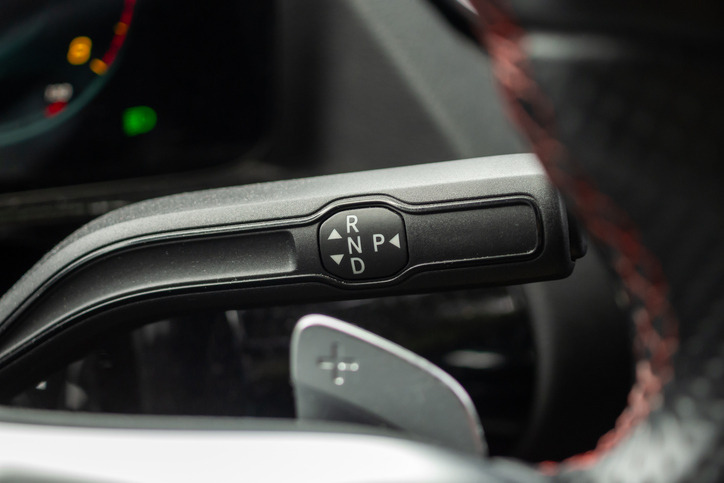
The electronic gear selector is the driver’s interface with the shifting system. It might be a rotary dial, a set of buttons, a steering-column control, or a conventional-looking lever. Regardless of its appearance, the selector communicates the driver’s request electronically.
That means a problem at the selector doesn’t necessarily indicate a mechanical transmission fault. A damaged switch, communication problem, or missing electrical signal may prevent the vehicle from recognizing the requested gear.
Technicians need to distinguish between a selector that isn’t sending the correct command and an actuator that receives the command but cannot complete the movement.
Why Can a Shift-by-Wire Vehicle Become Stuck in Park?
Imagine an EV arrives at the workshop and the driver reports that the vehicle powers on but refuses to leave Park.
Several possible causes need to be considered.
- Low-voltage power problems: A weak 12-volt battery or supply fault may prevent electronic controls or actuators from operating.
- Actuator faults: The motor or mechanism responsible for releasing the parking lock may fail.
- Position-sensor problems: The control module may not receive confirmation that the park mechanism has moved correctly.
- Wiring or communication faults: Damaged connections or network problems may interrupt commands.
- Mechanical loading: Parking on a slope can place force on the locking mechanism, making release more difficult.
A shift-by-wire transmission or EV drive unit can therefore appear mechanically stuck even when the original problem is electrical. The technician’s task is to identify which part of the command-and-response process has failed.
How Do Technicians Diagnose Electronic Park Actuator Problems?
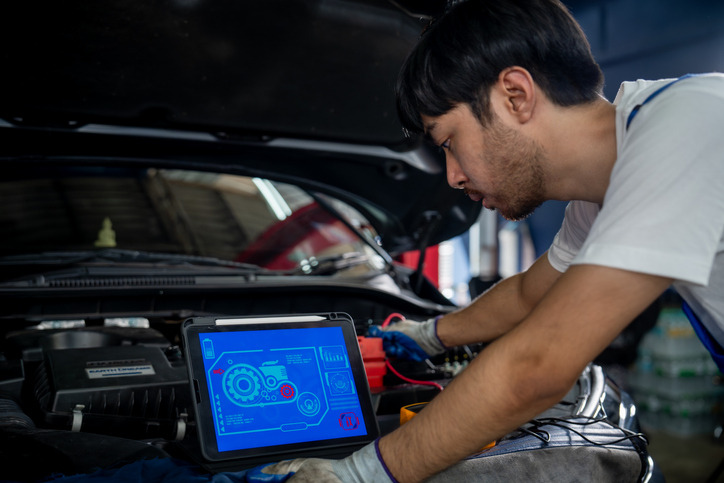
Diagnosis begins by confirming the complaint and checking the vehicle’s operating conditions. A technician may retrieve diagnostic trouble codes, inspect low-voltage system health, and examine live data showing the driver’s selected gear, commanded park position, and actual actuator feedback.
If the selector requests Drive but the park actuator still reports an engaged position, the next step is to determine why the mechanism hasn’t released. Depending on manufacturer procedures, technicians may check accessible wiring, power and ground circuits, actuator commands, and relevant position signals.
They must also consider whether the parking mechanism is under mechanical load. The goal is to distinguish a failed component from a missing command, incorrect feedback, or a condition that prevents normal operation.
How Do Technicians Release and Test a Park Actuator Safely?
A vehicle stuck in Park can create a difficult workshop situation, particularly if it needs to be moved. Before attempting a release, technicians must secure the vehicle against unintended movement using manufacturer-approved procedures. This may involve wheel chocks, suitable lifting equipment, and other specified precautions.
Some vehicles provide a manual or electronically controlled emergency park-release procedure. Others require specialized tools or service steps. Technicians should never force a park mechanism or assume that disconnecting the battery will release it.
Where work involves high-voltage components, the appropriate isolation procedures and electrical safety requirements must also be followed. The safest approach is always to consult the manufacturer’s service information before attempting a release or repair.
Why Should Future Hybrid and Electric Vehicle Technicians Understand Shift-by-Wire Technology?
Modern EVs bring mechanical components, electronic controls, sensors, and software together in ways that can make diagnosis more challenging. A vehicle that won’t leave Park may have a mechanical problem, but it could just as easily involve a low-voltage electrical fault or a communication issue.
As we emphasise at our auto mechanic school in Surrey, understanding how electronic commands lead to mechanical movement is a useful foundation for working with today’s increasingly sophisticated vehicles.
Are you looking for a comprehensive hybrid technology training course?
Contact ATC Surrey for more information.
Key Takeaways
- Shift-by-wire systems communicate gear selections electronically rather than through a direct mechanical linkage.
- Many EVs use an electronic actuator to engage or release a mechanical parking lock.
- A vehicle stuck in Park may have an actuator, power-supply, sensor, wiring, or mechanical-loading problem.
- Technicians compare commanded operation with actual position feedback to narrow down faults.
- Emergency park release and high-voltage service require manufacturer-approved safety procedures.
FAQ
What Is a Shift-by-Wire System?
A shift-by-wire system uses electronic signals to communicate gear-selection requests to vehicle control modules and actuators, replacing the direct mechanical linkage used in conventional arrangements.
How Does an Electronic Park Actuator Lock an EV Drivetrain?
In many EVs, the actuator engages a mechanical parking lock, often using a pawl and toothed gear, to restrict drivetrain rotation. The exact mechanism depends on the vehicle design.
Why Can a Shift-by-Wire Vehicle Become Stuck in Park?
Possible causes include low-voltage electrical faults, actuator failure, damaged wiring, position-sensor problems, communication faults, or mechanical loading on the parking mechanism.
How Do Technicians Release and Test an Electronic Park Actuator Safely?
Technicians secure the vehicle against movement, review diagnostic information, and follow manufacturer-approved testing and emergency release procedures. High-voltage precautions apply wherever relevant.


