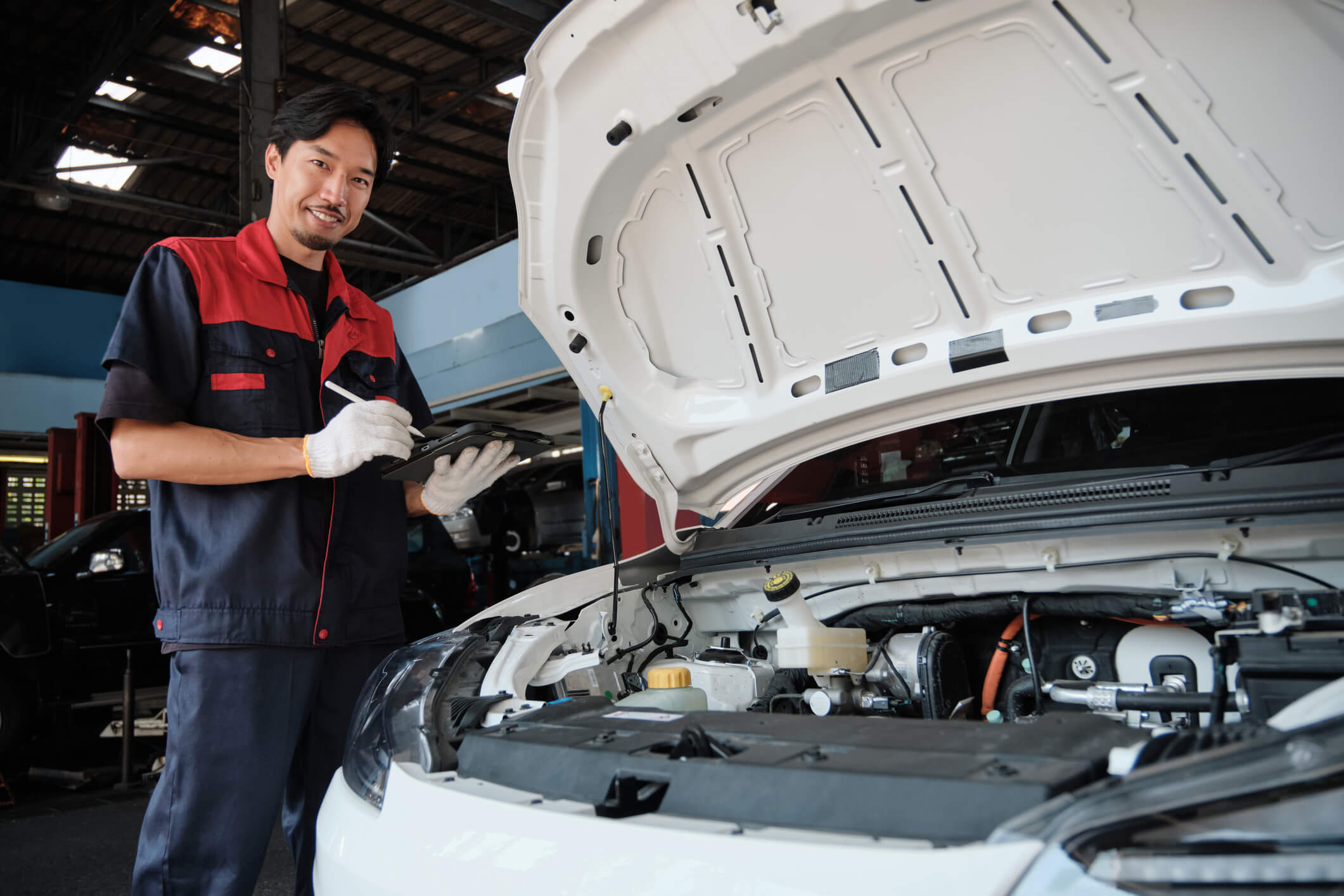
Hybrid Maintenance Cost: What Future EV Technicians Should Explain
In Brief: Understanding Hybrid Maintenance Costs
Understanding hybrid maintenance costs is about more than knowing prices. It’s about understanding the systems that influence long-term vehicle care. Future technicians need to explain maintenance requirements clearly while performing inspections safely and accurately. Training on hybrid technology prepares students to service these increasingly common vehicles with confidence.
As more drivers choose hybrid vehicles, they often ask an important question: “Will maintenance cost more than a traditional gasoline vehicle?” The answer isn’t always straightforward. While many hybrids require less frequent brake service and experience less engine wear in certain conditions, they also include sophisticated electrical systems that demand specialized knowledge.
For future technicians, understanding hybrid maintenance cost isn’t simply about repairs. It’s about helping customers understand what their vehicles need, why regular inspections matter, and how proper maintenance keeps hybrid systems operating safely and efficiently.
How Much Does Hybrid Maintenance Cost?
Is hybrid maintenance expensive? Hybrid maintenance costs depend on the vehicle’s age, mileage, service history, and the condition of its mechanical and electrical systems.
Routine maintenance is often comparable to that of many conventional vehicles and typically includes:
- Tire rotations
- Brake inspections
- Fluid checks
- Cabin and engine air filter replacement
- Cooling system inspections
- Suspension and steering inspections
However, hybrid vehicles also require periodic inspection of high-voltage components and cooling systems that support the battery and electrical equipment. While these services may require specialized training, regular maintenance helps prevent more expensive repairs later.
What Maintenance Does a Hybrid Car Need?
Hybrid car maintenance includes many traditional vehicle services, as well as inspections of hybrid-specific electrical components.
Technicians commonly inspect:
- High-voltage battery cooling systems
- Inverter cooling systems
- Electrical cables and connectors
- Brake systems, including regenerative braking components
- Engine oil and filters (for hybrid gasoline engines)
- Tires and suspension
- Diagnostic trouble codes using manufacturer-approved scan tools
For plug-in hybrid maintenance and PHEV maintenance, technicians may also inspect charging equipment, charging ports, and onboard charging systems to ensure safe operation.
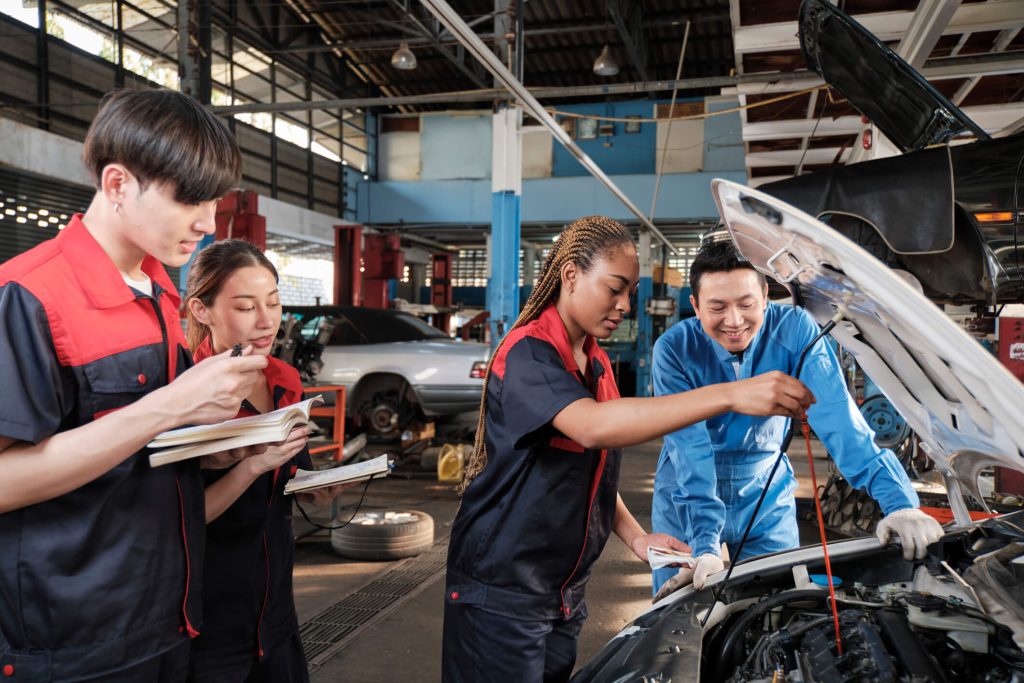
How Is Hybrid Maintenance Different from EV Maintenance?
Hybrid maintenance differs from EV maintenance because hybrids combine an internal combustion engine with an electric drive system.
Unlike fully electric vehicles, hybrids still require many traditional engine services, including:
- Engine oil changes
- Spark plug replacement (when required)
- Fuel system maintenance
- Exhaust system inspections
Battery-electric vehicles eliminate many of these tasks but require their own inspections for battery systems, cooling circuits, software updates, and electrical components.
As a budding hybrid and electric vehicle mechanic, understanding these differences helps you recommend the correct maintenance schedule for each type of vehicle.
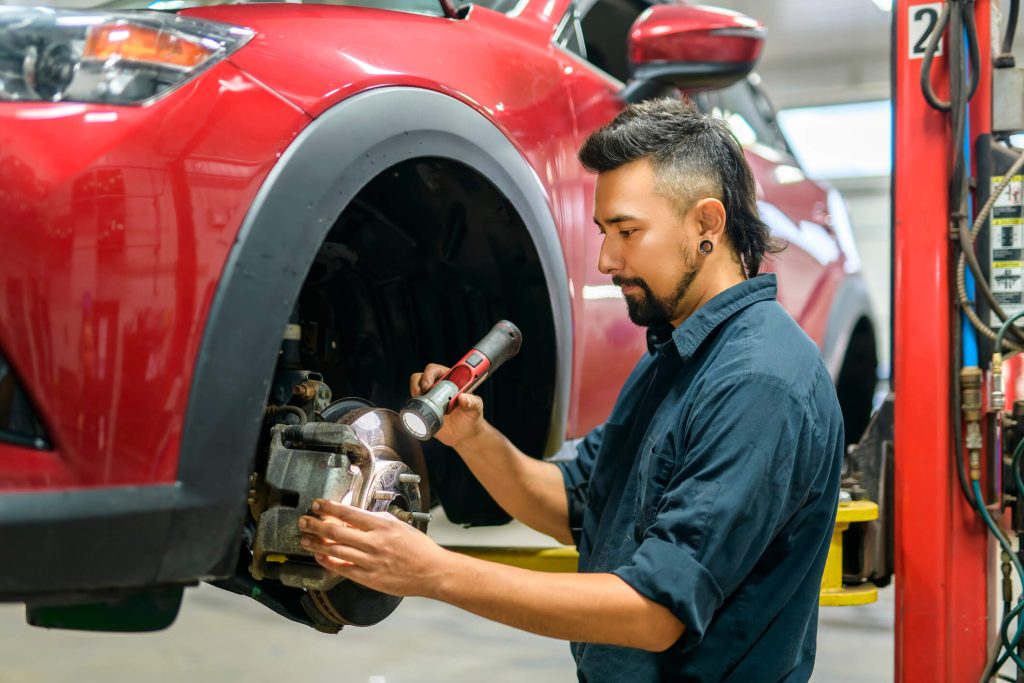
Do Hybrid Technicians Need High-Voltage System Training?
Yes. Anyone working on hybrid or electric vehicles should understand high-voltage safety procedures before servicing these systems.
Modern hybrid vehicles operate with electrical systems that require specialized diagnostic equipment, manufacturer procedures, and strict safety protocols. Technicians learn how to:
- Identify high-voltage components
- Disable electrical systems safely
- Use appropriate personal protective equipment (PPE)
- Perform electrical diagnostics
- Follow manufacturer service procedures
These skills are increasingly valuable as hybrid and electric vehicles become a larger part of today’s automotive industry.
Students enrolled in Auto Training Centre’s Hybrid Technology training course gain exposure to the systems, safety practices, and diagnostic techniques used when servicing hybrid and electric vehicles. Combined with hands-on learning at our auto mechanic school in Surrey, this training helps prepare future hybrid and electric vehicle mechanics for evolving automotive careers.
Are you interested in exploring training options at our auto mechanic school in Surrey?
Contact ATC Surrey for more information.
Key Takeaways
- Hybrid maintenance cost depends on vehicle condition, service history, and proper preventative maintenance.
- Hybrid car maintenance includes both conventional vehicle servicing and inspections of hybrid electrical systems.
- Plug-in hybrid maintenance and PHEV maintenance require additional attention to charging components and battery systems.
- Understanding the differences between hybrid service and EV maintenance helps technicians diagnose and maintain vehicles correctly.
- High-voltage safety training is an essential skill for technicians working with today’s hybrid and electric vehicles.
FAQ
Is hybrid maintenance expensive?
Hybrid maintenance cost varies depending on the vehicle and required services, but routine maintenance is often comparable to that of many conventional vehicles while requiring additional hybrid-specific inspections.
What maintenance does a hybrid car need?
Hybrid car maintenance includes tire and brake inspections, fluid services, battery cooling system inspections, electrical diagnostics, and routine maintenance for gasoline engine components where applicable.
How is hybrid maintenance different from EV maintenance?
Hybrid vehicles require maintenance for both gasoline engine components and electric drive systems, while fully electric vehicles focus primarily on battery, electrical, braking, suspension, and cooling system maintenance.
Do hybrid technicians need high-voltage system training?
Yes. Technicians need specialized high-voltage safety training to inspect, diagnose, and repair hybrid and electric vehicle systems safely.