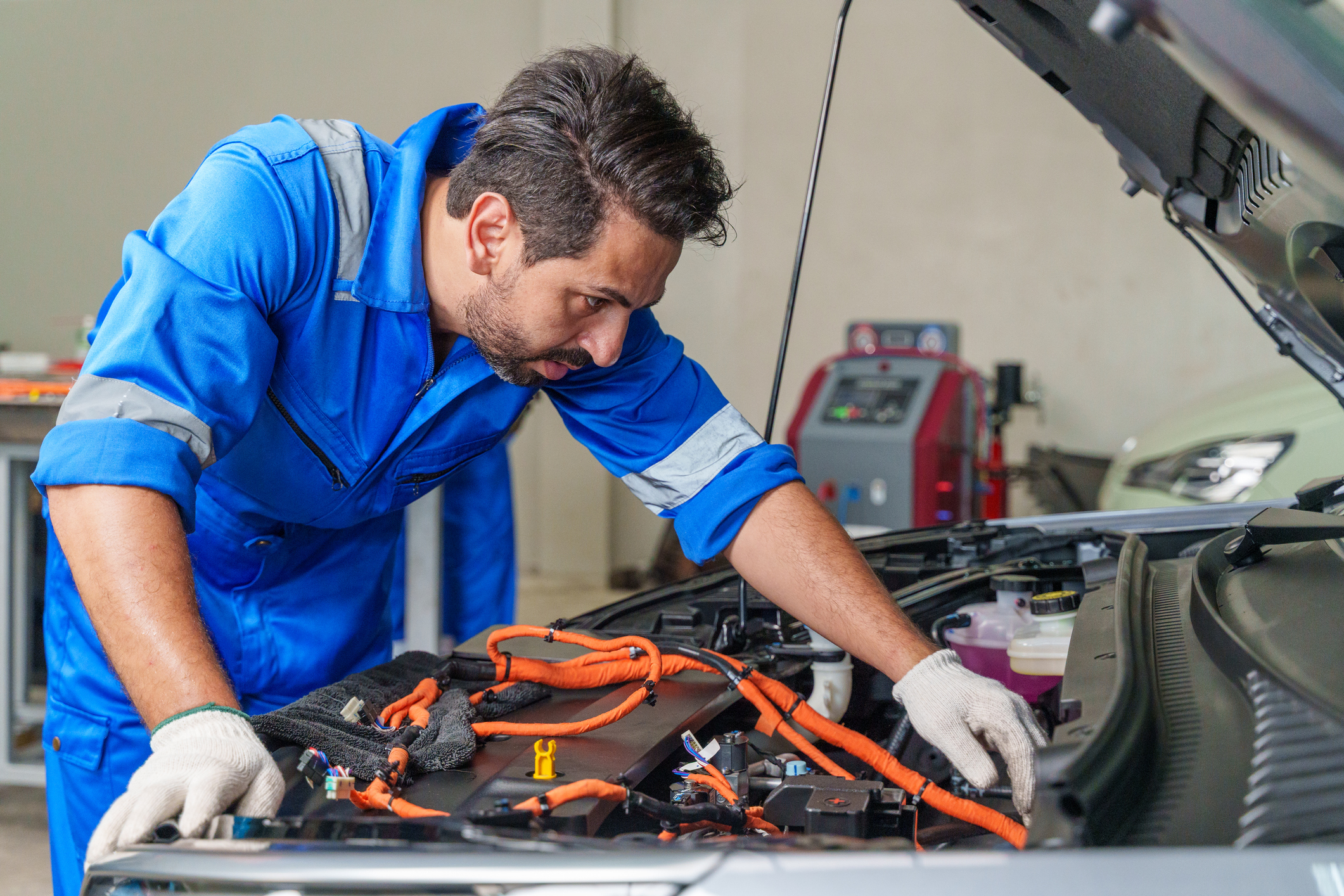
EV Service Disconnect Explained: Safe Shutdown and Zero-Voltage Verification
TL;DR
Working on an electric vehicle begins with safety, not repairs. An EV service disconnect helps isolate the high-voltage battery, but technicians must still verify that no hazardous voltage remains before touching high-voltage components. Learning these procedures is a core part of modern hybrid and electric vehicle training.
Electric vehicles introduce new technologies that require a different approach to vehicle service. Unlike conventional vehicles, EVs contain high-voltage electrical systems that can deliver dangerous levels of electricity even after the vehicle has been switched off.
That’s why technicians follow strict shutdown procedures before beginning any work involving the high-voltage battery or related components. Understanding how an EV service disconnect works and why zero-voltage verification is required is fundamental for anyone preparing to become a hybrid and electric vehicle mechanic.
What Is an EV Service Disconnect?
What is an EV service disconnect? An EV service disconnect is a safety device that allows technicians to isolate the vehicle’s high-voltage battery from the rest of the electrical system before maintenance or repairs.
Depending on the vehicle manufacturer, the disconnect may be a removable plug, lever, or switch located near the battery pack or in another protected area. Removing or activating it interrupts the high-voltage circuit, reducing the risk of accidental electrical exposure during service.
However, disconnecting the battery alone does not guarantee that the system is immediately safe to touch.
Why Must Technicians Isolate High-Voltage Power Before Beginning Repairs?
Why must technicians isolate high-voltage power before beginning repairs? High-voltage EV systems can exceed several hundred volts, making accidental contact extremely dangerous.
Before servicing high-voltage components, technicians follow manufacturer procedures that typically include:
- Powering the vehicle down
- Removing the EV service disconnect
- Waiting the specified discharge time for internal capacitors
- Wearing appropriate personal protective equipment (PPE)
- Performing zero-voltage verification
These steps are critical to high-voltage safety and help protect technicians from electrical shock.
What Does Zero-Voltage Verification Mean in EV Service?
What does zero-voltage verification mean in EV service? Zero-voltage verification is the process of confirming, with properly rated test equipment, that hazardous voltage is no longer present before work begins.
Technicians never assume the system is safe simply because the service disconnect has been removed. Instead, they use approved testing procedures to verify that voltage has dropped to a safe level in accordance with the manufacturer’s service information.
This verification step is one of the most important safeguards when working around a high-voltage battery.

How Are Megohmmeters and Insulation Resistance Tests Used?
After certain repairs or when diagnosing electrical faults, technicians may perform an insulation resistance test to evaluate the integrity of high-voltage insulation.
A specialized instrument called a megohmmeter applies a controlled test voltage to measure insulation resistance between electrical circuits and the vehicle chassis. High insulation resistance generally indicates that the insulation system is functioning properly, while unexpectedly low readings may suggest damaged insulation, moisture intrusion, or contamination.
Because these tests involve high-voltage systems, they are always performed according to manufacturer procedures using the correct equipment.
Is EV Shutdown Safety Taught in Hybrid Technology Training?
Is EV shutdown safety taught in hybrid technology training? Yes. Safe work practices are among the first skills students learn in a hybrid technology training course.
At our auto mechanic school in Surrey, students are introduced to high-voltage awareness, PPE requirements, manufacturer shutdown procedures, lockout practices, and safe diagnostic techniques. As they progress toward becoming mechanics, they learn that accurate diagnostics always begin with proper safety—not with tools.
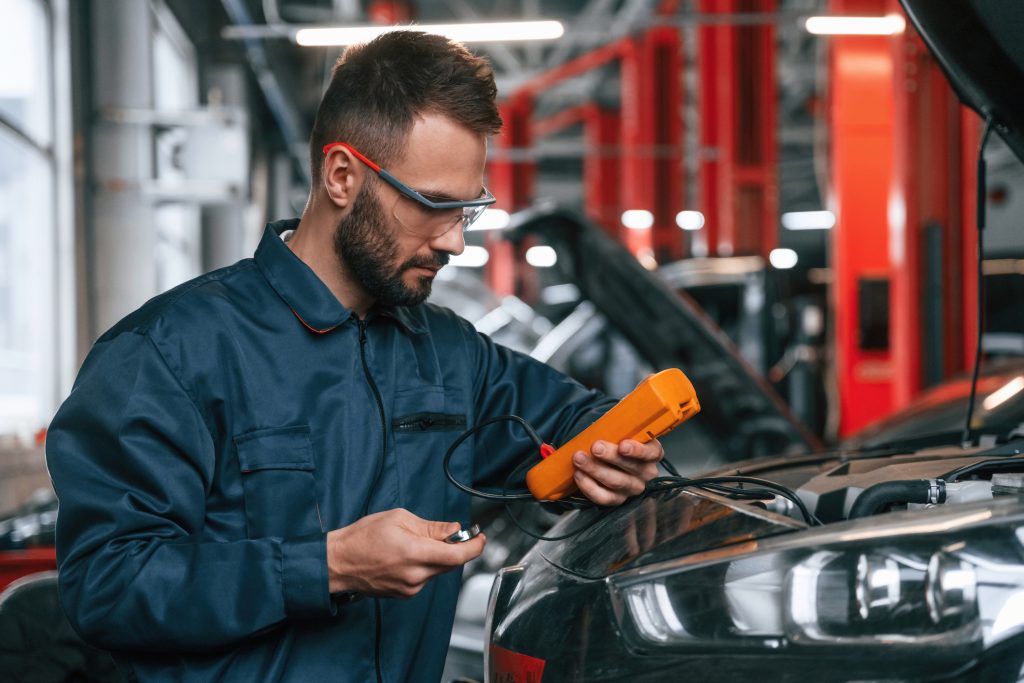
Prepare to Work Safely on Modern Electric Vehicles
Electric vehicles require technicians who understand both advanced technology and disciplined safety procedures. Learning how to isolate high-voltage systems, verify zero voltage, and follow manufacturer service information prepares students to work confidently on today’s growing EV fleet while protecting themselves and others in the workshop.
Would you like to become a hybrid and electric vehicle mechanic?
Contact ATC Surrey for more information.
Key Takeaways
- An EV service disconnect isolates the high-voltage battery before repairs begin.
- Proper high voltage safety procedures include shutdown, isolation, waiting periods, PPE, and voltage verification.
- Zero-voltage verification confirms that hazardous electrical energy is no longer present.
- A megohmmeter is used to measure insulation resistance when evaluating high-voltage electrical insulation.
- Hybrid and electric vehicle training emphasizes safe work practices alongside diagnostic skills.
FAQ
What is an EV service disconnect?
What is an EV service disconnect? It is a device that isolates the vehicle’s high voltage battery from the electrical system, allowing technicians to begin service procedures safely after completing all required verification steps.
Why must technicians isolate high-voltage power before beginning repairs?
Why must technicians isolate high-voltage power before beginning repairs? Isolating the high-voltage system reduces the risk of electrical shock and is a required safety step before servicing EV electrical components.
What does zero-voltage verification mean in EV service?
What does zero-voltage verification mean in EV service? It means testing the electrical system with appropriate equipment to confirm that hazardous voltage has been eliminated before work begins.
Is EV shutdown safety taught in hybrid technology training?
Is EV shutdown safety taught in hybrid technology training? Yes. Students learn shutdown procedures, high voltage safety, PPE requirements, and safe diagnostic practices as part of modern hybrid and electric vehicle education.