
Charge Connector Lock Problems: Why an EV Plug Can Get Stuck
In Brief: EV Charger Stuck in a Car Diagnosis
- A stuck EV charging plug does not always mean the connector is damaged.
- Charging status, locking mechanisms, electrical faults, and software issues can prevent release.
- Some vehicles provide a manual release, but its location and operation vary.
- Technicians diagnose the locking system before replacing the actuator or connector.
You finish charging your electric vehicle, press the release button, and try to remove the plug. Nothing happens. The connector is still locked in place.
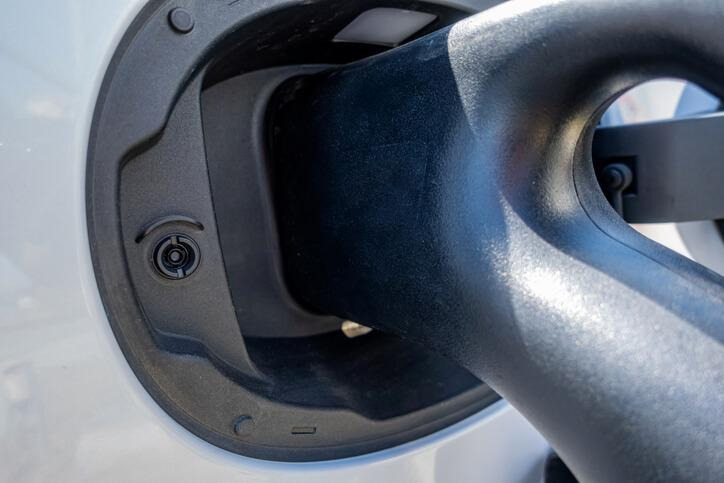
An EV charger stuck in-car situation can be frustrating, but the problem is not always a damaged charging cable. Many electric vehicles have locking mechanisms that keep the connector secured during charging. If the system fails to unlock, the plug may remain attached even after charging appears complete.
For automotive technicians, understanding why this happens is important. A safe diagnosis starts with checking the charging status and release controls before investigating the lock mechanism, electrical supply, or related faults.
Why Is an EV Charger Stuck in a Car?
The connector may remain locked because the charging session has not ended, the vehicle is still securing the plug, or a fault is preventing the locking mechanism from releasing. Some vehicles use a motorized locking pin to secure the connector. Others use different locking arrangements, depending on the charging standard and vehicle design.
Possible causes include:
- An active charging session or an incomplete stop command
- A faulty charge port lock actuator
- A weak 12-volt battery or interrupted electrical supply
- Damaged wiring or connectors
- A software or control-system fault
- A physically jammed locking mechanism
An electric car charger stuck in the charge port, therefore, requires more than pulling harder on the cable. Understanding these systems is increasingly relevant for anyone preparing to become a hybrid and electric vehicle mechanic.
How Can an EV Charging Connector Be Released Safely?
First, stop the charging session using the vehicle or charging station controls, then follow the manufacturer’s normal unlocking procedure. For drivers searching for how to unplug electric car charger equipment safely, the exact sequence depends on the vehicle.
A typical approach may involve:
- Ending the charging session through the vehicle, app, or charger controls.
- Unlocking the vehicle or selecting its charge-port release function.
- Waiting for confirmation that the connector has unlocked.
- Removing the plug gently, without twisting or forcing it.
Some vehicles provide a manual release mechanism, often located near the charge port or behind an access panel. However, this is not a universal procedure. The release must be used exactly as described in the vehicle’s owner’s manual.
Never pull forcefully on a charging cable stuck in car equipment, attempt to dismantle an energized connector, or use tools to defeat the locking mechanism. If the connector remains stuck, professional assistance may be necessary.
Can a Weak 12-Volt Battery Cause the Charging Plug to Remain Locked?
Can a weak 12-volt battery cause the charging plug to remain locked? Yes. In vehicles that rely on a 12-volt electrical system to operate the charging-port lock, low voltage can prevent the actuator from releasing.
Although electric vehicles use high-voltage batteries for propulsion, many still rely on a separate low-voltage system for electronic controls and accessories. If that supply becomes too weak, the vehicle may not be able to complete the normal unlocking command.
However, a weak 12-volt battery is only one possible cause. Technicians must also consider the charging status, control signals, wiring, and mechanical condition of the lock. ATC Surrey’s hybrid technology training course introduces students to the electrical and mechanical systems that make hybrid and electric vehicles different from conventional vehicles.

How Do Technicians Test a Charging-Port Lock Actuator?
They first confirm the charging session has ended and then check whether the vehicle is sending the correct unlock command.
The diagnostic process may include:
- Reading relevant fault codes with a compatible scan tool
- Checking the 12-volt battery and electrical supply
- Inspecting wiring, connectors, and fuses
- Testing lock and unlock commands where supported
- Checking whether the locking pin moves freely
- Inspecting the charge port for damage or obstruction
If the actuator receives the correct command and power but does not operate, the actuator or its mechanism may be faulty. If the command is missing, technicians investigate the related controls rather than replacing the actuator immediately.
This is the type of systematic troubleshooting that matters in training at our auto mechanic school in Surrey, where students learn to connect electrical knowledge with practical vehicle diagnosis.
Are you looking for a comprehensive hybrid technology training course?
Contact ATC Surrey for more information.
Key Takeaways
- EV charging connectors may remain locked because of charging status, mechanical faults, or electrical problems.
- A weak 12-volt battery can prevent unlocking on certain vehicles.
- Manual release procedures are vehicle-specific and must be followed carefully.
- Technicians test control signals, electrical supply, wiring, and actuator movement before replacing components.
- A stuck charging connector should never be forced out of the vehicle.
FAQ
Why Is an EV Charging Plug Stuck in the Vehicle?
An EV charging plug may remain stuck because charging has not stopped, the vehicle is still locking the connector, or an electrical or mechanical fault is preventing release.
How Can an EV Charging Connector Be Released Safely?
Stop charging, use the vehicle’s normal unlock controls, and remove the connector gently once released. If necessary, follow the vehicle-specific emergency release instructions in the owner’s manual. Never force the plug.
Can a Weak 12-Volt Battery Cause the Charging Plug to Remain Locked?
Yes. On vehicles with electrically operated charge-port locks, a weak or discharged 12-volt battery can prevent the mechanism from unlocking.
How Do Technicians Test a Charging-Port Lock Actuator?
Technicians check fault codes, low-voltage power supply, wiring, control signals, and lock movement. They use the manufacturer’s procedures to determine whether the actuator or another component is responsible.