
Electric Vehicle Battery Health: What Future Technicians Should Know Before Recommending Repairs
TL;DR
An electric vehicle battery should never be evaluated based on driving range complaints alone. Modern battery diagnostics involve analyzing state of health, temperature behaviour, charging performance, module balance, fault codes, and safety conditions before recommending repairs. While some battery degradation is normal over time, sudden charging issues, thermal irregularities, warning lights, or isolation faults may indicate repairable problems. Students pursuing Hybrid technology training courses learn how EV battery systems operate, how battery health is evaluated, and why diagnostics play a major role in modern EV repair decisions.
As electric vehicles become more common across Canada, battery diagnostics are becoming an increasingly important part of modern automotive service work. Many EV owners focus primarily on driving range, but reduced range alone does not always mean an electric vehicle battery is failing.
For technicians, battery evaluation involves much more than checking a single number on a scan tool. Modern EV battery systems contain complex electronics, thermal management systems, safety controls, and battery management software that all influence battery behaviour and performance.
This means future technicians must approach battery concerns as diagnostic problems rather than simple replacement decisions.
What Does Electric Vehicle Battery Health Mean?
Battery health refers to the overall condition and performance capability of an electric vehicle battery compared to when it was new.
Battery health is often described using “state of health” (SoH), which estimates how much usable capacity remains within the battery pack over time.
However, battery diagnostics are more complicated than simply reading one health percentage. Experienced technicians learn that common tests, such as capacity measurements and resistance checks, do not capture every form of battery aging or degradation.
This means technicians often evaluate multiple factors together, including:
- Battery temperature behaviour
- Charging performance
- Voltage stability
- Module balance
- Cooling system operation
- Diagnostic trouble codes (DTCs)
- Isolation faults
- Charge acceptance rates
Modern EV batteries operate as highly managed systems rather than standalone components. Because of this, technicians need to understand how electrical, thermal, and software systems interact before recommending repairs.
State of Health vs State of Charge: Why the Difference Matters
One common misunderstanding involves confusing battery state of health with state of charge.
State of charge (SoC) simply refers to how full the battery is at a given moment, similar to a fuel gauge.
State of health, however, refers to the battery’s long-term condition and remaining usable capacity compared to factory specifications.
For example:
- A battery may show 90% charge today
- But only retain 80% of its original total capacity because of aging
This distinction matters because some customers may report reduced range even when the battery is fully charged.
For technicians diagnosing an electric car battery, separating normal aging from abnormal performance issues is an important part of accurate diagnostics.
Why Electric Vehicle Batteries Lose Range Over Time
Some level of battery degradation is considered normal throughout the lifespan of an EV battery pack.
Several factors can contribute to reduced range over time, including:
- Charge and discharge cycling
- High operating temperatures
- Frequent fast charging
- Long-term storage conditions
- Driving habits
- Battery age
- Climate conditions
NREL research also notes that repeated fast charging under certain conditions may contribute to harmful battery aging mechanisms such as lithium plating.
This means changes in EV battery life are not always caused by a repairable fault. In many cases, gradual range reduction may simply reflect expected battery aging over years of use.
However, sudden changes in performance may indicate deeper issues requiring further investigation.

What Signs Can Point to Electric Vehicle Battery Problems?
Although gradual aging is normal, some symptoms may suggest more serious battery-related concerns.
Potential warning signs include:
- Sudden or severe range loss
- Charging failures
- Battery overheating
- Warning lights
- Irregular charging speeds
- Isolation faults
- Reduced vehicle performance
- Uneven module temperatures
- Unusual battery cooling behaviour
Technicians may also investigate abnormal contactor operation, voltage irregularities, or communication faults within the battery management system. As learned in hybrid technology training courses, these risks require safety to be the priority during battery diagnostics, not repairability.
How Technicians Check Battery Health Before Recommending Repairs
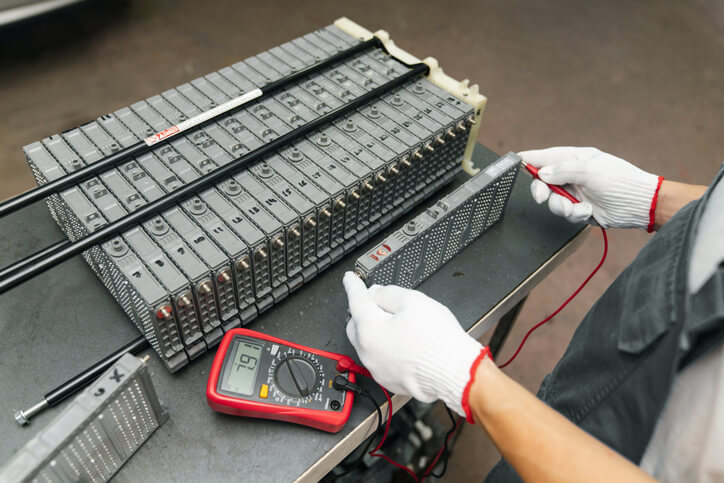
Before recommending repairs on an electric vehicle battery, technicians typically evaluate the battery pack as an entire system rather than focusing on one isolated measurement.
Diagnostic procedures may include:
- Reviewing fault codes
- Checking module voltage balance
- Monitoring charging behaviour
- Evaluating temperature spread across modules
- Testing cooling system performance
- Reviewing charge acceptance data
- Inspecting isolation resistance
- Verifying contactor operation
Technicians must also determine whether symptoms represent:
- Normal aging
- A software-related concern
- A thermal management issue
- A charging problem
- A potentially repairable component fault
Warranty and recall status should also be reviewed before recommending paid repairs. Some manufacturers cover excessive capacity loss under EV battery warranty programs, while certain battery-related concerns may already be addressed through recalls or service campaigns.
This diagnostic approach helps hybrid and electric vehicle mechanics avoid unnecessary repairs while ensuring customer safety and accurate recommendations.
Why Battery Diagnostics Matter for Future Technicians
As EV adoption continues growing, battery diagnostics are becoming one of the most important skill areas within modern automotive repair.
Students attending an auto mechanic school in Surrey are entering an industry where understanding battery systems, diagnostics, and high-voltage safety procedures is increasingly valuable.
Through a hybrid technology training course, students may learn:
- EV battery system basics
- High-voltage safety procedures
- Battery cooling systems
- Diagnostic testing methods
- Charging system operation
- Electrical troubleshooting fundamentals
If you’re interested in becoming a hybrid and electric vehicle mechanic, battery diagnostics represent a major part of the evolving automotive industry.
Are you interested in pursuing hybrid and EV training?
Learn more about the Hybrid technology training course at ATC Surrey.
Key Takeaways
- An electric vehicle battery should be evaluated using multiple diagnostic indicators rather than range complaints alone
- EV batteries naturally experience some battery degradation over time
- State of health and state of charge measure different aspects of battery performance
- Sudden charging issues, overheating, or warning lights may indicate more serious battery concerns
- Understanding diagnostics and safety procedures is becoming increasingly important for future EV technicians
FAQ
What does electric vehicle battery health mean?
Battery health refers to the overall condition and remaining usable capacity of an electric vehicle battery compared to its original factory performance.
What signs can point to electric vehicle battery problems?
Warning signs may include severe range loss, charging failures, overheating, warning lights, irregular charging behaviour, or abnormal cooling system activity.
What is the difference between battery state of health and state of charge?
State of charge measures how full the battery currently is, while state of health estimates the battery’s long-term condition and remaining usable capacity.
Why does an electric vehicle battery lose range over time?
Range loss can result from normal battery degradation, charge cycling, fast charging habits, temperature exposure, and overall battery aging.
How do technicians check electric vehicle battery health before recommending repairs?
Technicians evaluate battery performance using diagnostic tools, voltage analysis, temperature monitoring, cooling system inspections, fault codes, and charging behaviour data.