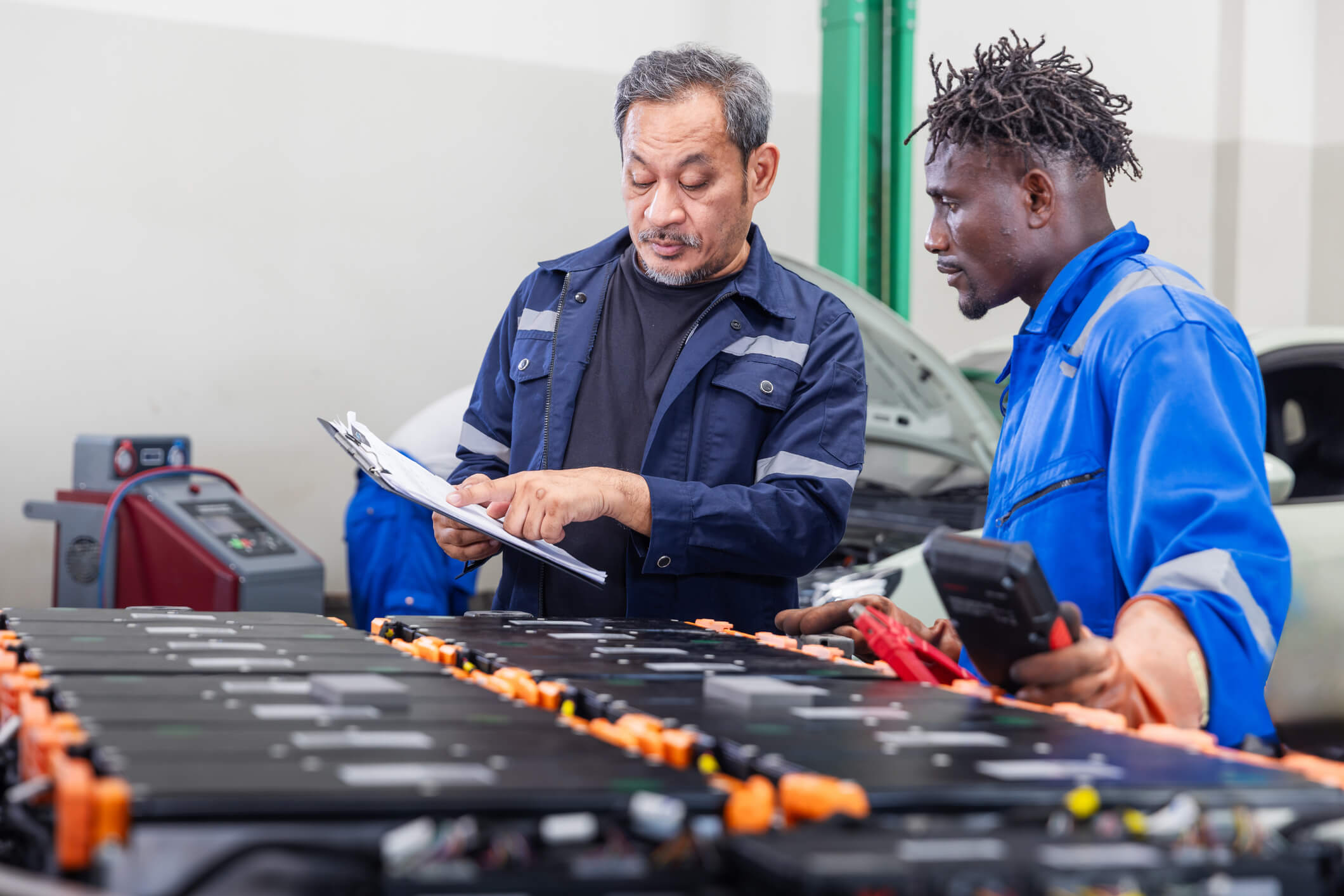
Battery Thermal Management: EV Cooling Basics for New Techs
A Basic Guide to Battery Thermal Management
Battery thermal management helps keep EV batteries within their ideal operating temperature for safety, performance, and long-term reliability. Future technicians need to understand how the battery cooling system, EV coolant, and related components work together. As electric vehicles become more common, these skills are becoming an essential part of modern automotive service.
Electric vehicles rely on sophisticated battery technology, but the battery itself is only part of the story. To perform efficiently in freezing winters, hot summers, and everyday driving, EV batteries must stay within a carefully controlled temperature range. That’s where battery thermal management comes in.
For students preparing for a career as a hybrid and electric vehicle mechanic, understanding how these systems regulate heat is just as important as learning electrical diagnostics. Modern technicians are expected to recognize how cooling and heating systems affect battery performance, charging speed, vehicle range, and long-term reliability.
What Is Battery Thermal Management?
Battery thermal management is the system that regulates the temperature of an electric vehicle’s high-voltage battery pack to keep it operating safely and efficiently.
Rather than allowing the battery to become too hot or too cold, the system continuously monitors temperature and adjusts cooling or heating as needed. Depending on the manufacturer, this may involve liquid cooling, air cooling, refrigerant-based systems, or integrated heating technologies.
Keeping the battery within its ideal temperature range helps maximize performance while reducing unnecessary wear. Training at our auto mechanic school in Surrey prepares future technicians to understand how electrical, mechanical, and thermal systems work together.
Why Do EV Batteries Need Cooling Systems?
During charging and driving, batteries naturally generate heat. Fast charging, climbing steep grades, towing, or driving in high temperatures can all increase battery temperatures significantly.
A properly designed battery cooling system helps:
- Prevent overheating
- Maintain consistent vehicle performance
- Improve charging efficiency
- Extend battery lifespan
- Support safe operation
Many manufacturers use liquid cooling because it removes heat more efficiently than air alone. In these systems, specially formulated EV coolant or electric vehicle coolant circulates through cooling plates or channels around the battery pack before releasing heat through a radiator or heat exchanger.
What Happens If an EV Battery Gets Too Hot?
Excessive heat is one of the biggest factors affecting lithium-ion battery health.
Without effective battery thermal management, high temperatures may lead to:
- Reduced driving range
- Slower charging speeds
- Accelerated battery degradation
- Reduced system efficiency
- Protective power limitations initiated by the vehicle
Likewise, extremely cold temperatures can temporarily reduce battery performance until the system warms the pack. This is why many EVs actively manage battery temperature before and during charging.

How Do EV Heat Pumps and Coolant Systems Work Together?
Modern electric vehicles often use an EV heat pump to improve efficiency while managing cabin comfort and battery temperature. Unlike conventional heaters that rely entirely on electrical resistance, heat pumps transfer existing heat where it is needed, reducing energy consumption.
In many vehicles, the EV heat pump, electric vehicle coolant, and battery cooling circuits work together to maintain optimal operating temperatures across multiple vehicle systems. Understanding these integrated designs helps technicians diagnose cooling concerns more accurately and appreciate how different components influence overall vehicle efficiency.
Do EV Mechanic Programs Teach Battery Cooling and Thermal Systems?
Yes. Students enrolled in a hybrid technology training course learn about many of the systems unique to electric and hybrid vehicles, including battery temperature management, cooling circuits, electrical safety, diagnostics, and high-voltage components.
Rather than replacing parts based on symptoms alone, students learn systematic diagnostic approaches that are increasingly important as EV technology continues to evolve.
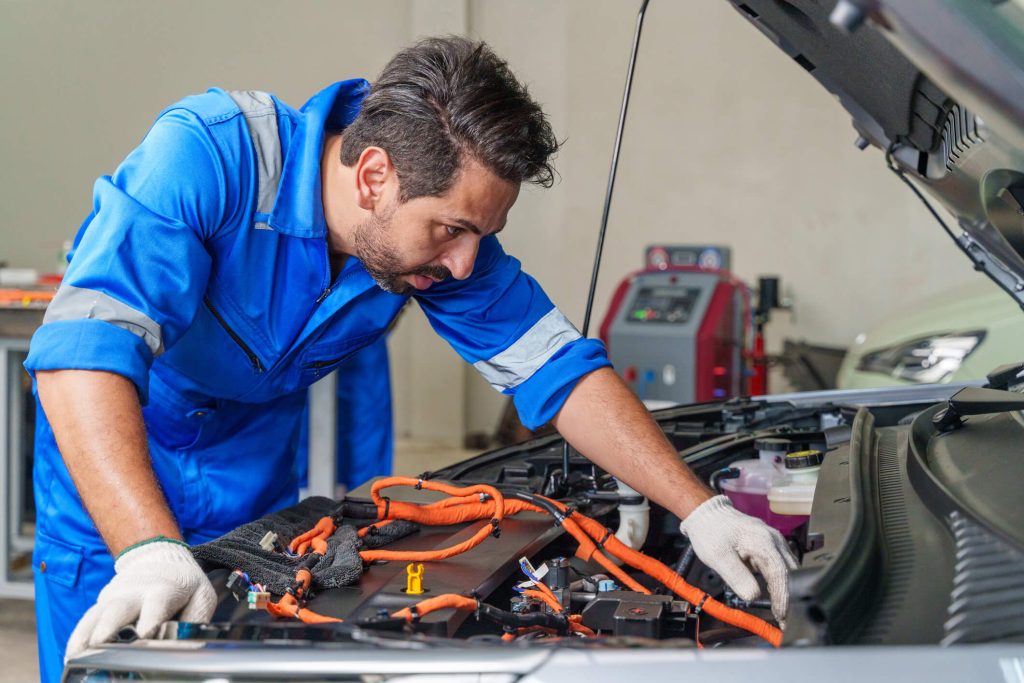
Prepare for the Future of Automotive Service
Electric vehicles continue to introduce new technologies that require specialized knowledge. Understanding battery thermal management, cooling systems, and high-voltage safety helps future technicians build the skills employers increasingly value. Through hands-on automotive training, students gain the foundation needed to service today’s hybrid and electric vehicles with confidence.
Would you like to pursue a career as a hybrid and electric vehicle mechanic?
Contact ATC Surrey for more information.
Key Takeaways
- Battery thermal management protects EV batteries by regulating operating temperatures.
- A properly functioning battery cooling system improves safety, charging performance, and battery life.
- EV coolant and electric vehicle coolant circulate heat away from the battery pack in many modern vehicles.
- An EV heat pump can improve efficiency by managing both cabin and battery temperatures.
- Training as a hybrid and electric vehicle mechanic helps students understand these increasingly important vehicle systems.
FAQ
What is battery thermal management?
It is the system that controls the temperature of an EV battery to improve safety, efficiency, charging performance, and long-term battery health.
Why do EV batteries need cooling systems?
Batteries generate heat during charging and driving. A battery cooling system prevents overheating while helping maintain consistent performance and extending battery life.
What happens if an EV battery gets too hot?
Excessive temperatures can reduce driving range, slow charging, accelerate battery wear, and cause the vehicle to limit performance to protect the battery.
Do EV mechanic programs teach battery cooling and thermal systems?
Yes. Students learn about battery thermal management, EV coolant, cooling circuits, diagnostics, and high-voltage vehicle systems as part of modern hybrid and electric vehicle training.