
Why Does My Car Smell Like Gas? What Montreal Mechanics Check First
Why Does My Car Smell Like Gas? A Quick Answer
Why does my car smell like gas? The answer could range from a loose gas cap to an EVAP system fault or a leaking fuel line. Professional technicians use inspections, scan tools, and pressure testing to pinpoint the exact cause instead of guessing. Learning this process helps future technicians diagnose fuel system problems accurately and safely.
A noticeable fuel smell is never something drivers should ignore. Whether it appears after refuelling, while the engine is idling, or during everyday driving, a persistent gasoline smell in a car often indicates that fuel vapours are escaping somewhere within the fuel or emissions system.
Although some causes are relatively simple, others may affect vehicle safety, performance, or emissions compliance. Rather than replacing parts based on assumptions, professional technicians follow a structured diagnostic process to identify the exact source. This systematic approach is one of the practical skills students develop in an auto mechanic school before beginning careers in today’s automotive industry.
Why Does My Car Smell Like Gas?
In most cases, the smell comes from gasoline vapours escaping somewhere they shouldn’t. Modern vehicles are designed to keep fuel completely sealed inside the tank, fuel lines, injectors, and evaporative emissions (EVAP) system. When one of these components develops a fault, vapours can escape and become noticeable.
Common causes include:
- Loose, cracked, or missing fuel cap
- Damaged fuel lines or fittings
- Worn injector O-rings
- Leaking fuel injectors
- EVAP system leaks
- Damaged charcoal canister
- Fuel tank or filler neck corrosion
The smell may occur only after refuelling, during cold starts, or while driving. These patterns provide valuable clues that help technicians narrow the diagnosis before testing begins. Students at automotive school learn why temperature management matters when diagnosing EV charging and performance concerns.
Is It Safe to Drive a Car That Smells Like Gasoline?
A persistent fuel odour in a car should always be investigated as soon as possible. Fuel vapours are flammable, and an active fuel leak presents obvious safety concerns. Even when no liquid fuel is visible, vapour leaks can trigger warning lights, increase emissions, reduce fuel economy, and create unpleasant cabin odours.
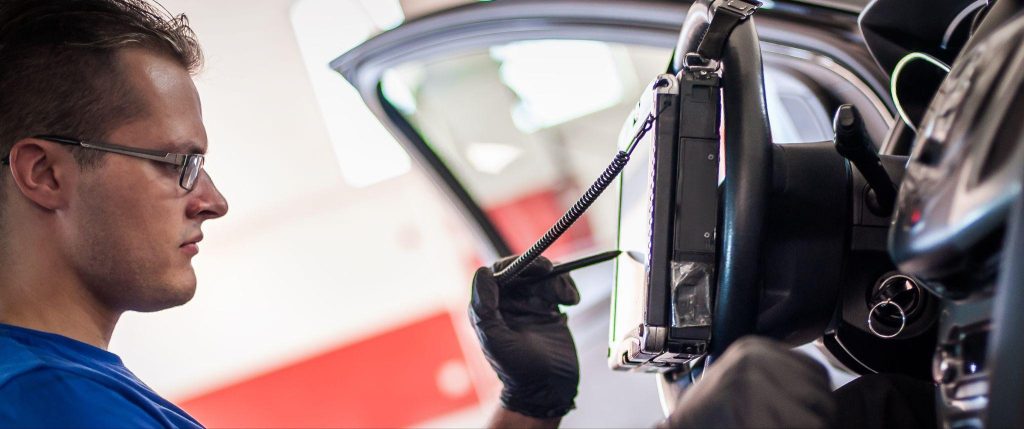
Technicians first determine whether the smell is strongest inside the passenger compartment, around the rear of the vehicle, or under the hood. This helps identify whether the issue is related to the fuel tank, EVAP system, engine compartment, or another component. These practical skills prepare graduates for rewarding auto careers where accurate diagnosis is just as valuable as mechanical repair.
Can an EVAP Leak Cause a Fuel Smell Inside a Car?
Yes. The EVAP system stores and controls gasoline vapours instead of allowing them to escape into the atmosphere. A faulty purge valve, vent valve, cracked vapour hose, leaking charcoal canister, or damaged fuel cap can all allow vapours to escape, creating a noticeable fuel odour inside a car or around the vehicle.
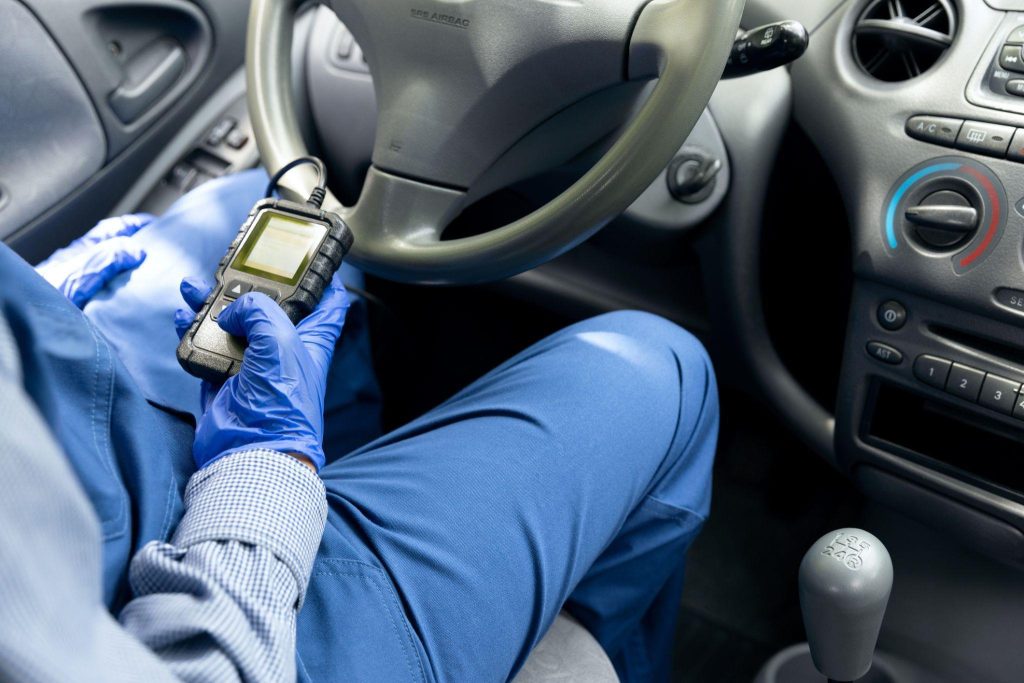
Many EVAP problems also illuminate the Check Engine light. Technicians connect a scan tool to retrieve diagnostic trouble codes before inspecting hoses, seals, and valves. The scan tool doesn’t identify every leak directly, but it helps point technicians toward the affected system.
How Do Mechanics Find the Source of a Fuel Smell?
Experienced technicians combine several diagnostic techniques instead of relying on one test alone. They typically:
- Perform a complete visual inspection.
- Check fuel injectors, rails, and connections.
- Inspect rubber fuel hoses for cracks.
- Examine the fuel tank and filler neck.
- Retrieve diagnostic trouble codes.
- Test the EVAP system for vapour leaks.
- Verify fuel pressure when required.
Some shops also use smoke machines designed specifically for EVAP testing. Harmless smoke is introduced into the sealed system, allowing even tiny vapour leaks to become visible.
Technicians also consider customer observations. For example, if the smell only appears after filling the tank or during hot weather, the diagnosis may focus on EVAP components rather than fuel injectors or fuel lines. Students learn not only how modern fuel systems operate, but also how to interpret symptoms, perform safe inspections, and use diagnostic equipment correctly.
Would you like to explore training opportunities at our auto mechanic school?
Contact ATC Montreal for more information.
Key Takeaways
- Why does my car smell like gas? is a question that should always be investigated promptly.
- A fuel odour inside a car may result from fuel leaks, injector problems, or EVAP system faults.
- Professional technicians use inspections, scan tools, and EVAP testing to locate the exact source.
- Symptoms alone rarely identify the problem, making systematic diagnosis essential.
- Automotive training teaches students how to diagnose fuel system faults safely and accurately.
FAQ
Why does my car smell like gas?
Fuel smells can result from leaking fuel lines, damaged injector seals, EVAP system faults, or a loose fuel cap that allows gasoline vapours to escape.
Is it safe to drive a car that smells like gasoline?
A persistent gasoline smell should be inspected promptly because it may indicate a fuel leak or vapour leak that requires repair.
Can an EVAP leak cause a fuel smell inside a car?
Yes. Damaged EVAP components can release fuel vapours even when no liquid fuel leak is present.
How do mechanics find the source of a fuel smell?
Technicians perform visual inspections, retrieve diagnostic trouble codes, inspect the EVAP system, verify fuel pressure, and test components until the exact source is confirmed.