
Transmission Fluid for Cars: What It Does, When to Change It, and Warning Signs
TL;DR
Transmission fluid for cars lubricates, cools, and enables smooth gear shifts. Over time, it degrades and can lead to shifting issues, overheating, and transmission damage. Checking fluid condition and replacing it at the right intervals helps prevent costly repairs and keeps the transmission operating properly.
Modern transmissions are complex systems that rely on precision, pressure, and clean fluid to function properly. While many drivers focus on engine maintenance, transmission care is just as critical.
At the centre of it all is transmission fluid for cars. This fluid does far more than just lubricate. It plays a key role in shifting performance, cooling, and internal protection. Transmission fluid for cars is a hydraulic fluid that lubricates, cools, and enables gear changes in automatic and some manual transmissions.
For technicians and students entering the field through an Auto mechanic school in Surrey, understanding how transmission fluid works is an essential part of diagnosing drivability issues.
What Is Transmission Fluid For Cars and What Does It Do?
To understand what transmission fluid is, it helps to look at how a transmission operates.
Inside the transmission, multiple moving parts (gears, clutches, and valves) must work together smoothly. Transmission fluid supports this process by performing several critical functions.
It:
- Lubricates internal components to reduce wear
- Transfers hydraulic pressure for gear changes
- Cools internal parts by dissipating heat
- Helps clean and protect against contamination
Without proper fluid condition and level, the transmission cannot function efficiently. Even small issues with fluid quality can lead to noticeable performance problems.
When Should Transmission Fluid Be Changed?
Unlike engine oil, transmission fluid does not always have a universal service interval. However, most manufacturers recommend changing it between 50,000 and 100,000 kilometres, depending on driving conditions. It’s always best to follow the manufacturer’s recommendations and Canada’s safety standards for vehicles.
Vehicles that experience:
- Frequent stop-and-go driving
- Towing or heavy loads
- High temperatures
may require more frequent service.
Technicians often assess fluid condition rather than relying solely on mileage. Students in our automotive service technician program learn to evaluate fluid colour, smell, and performance symptoms to determine when service is needed.
What Colour Should Transmission Fluid Be?
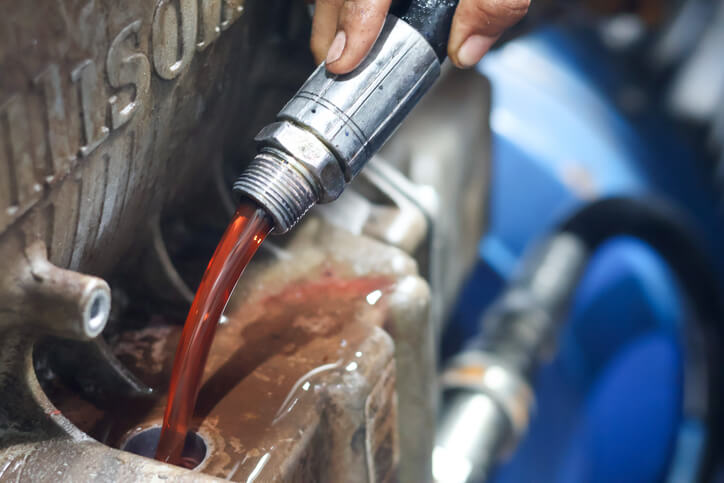
One of the easiest ways to assess fluid condition is by checking transmission fluid colour. Healthy transmission fluid is typically:
- Bright red or pink
- Clear and smooth in consistency
As fluid ages, it begins to change. Common colour changes include:
- Dark red or brown, indicating wear
- Cloudy fluid, suggesting contamination
- Black fluid, often a sign of overheating
A burnt smell is another warning sign. If the fluid smells burnt, it may indicate excessive heat or internal transmission wear.
Understanding what colour transmission fluid is helps technicians quickly identify potential issues before they become serious problems.
What Symptoms Indicate Low or Old Transmission Fluid?
Transmission issues often develop gradually, but fluid condition is usually one of the first factors technicians check. Common warning signs include:
- Delayed or rough shifting
- Slipping between gears
- Unusual noises during acceleration
- Overheating
- Transmission warning lights
In some cases, low or degraded fluid can also affect overall vehicle performance.
These symptoms highlight why regular maintenance is essential. Students in our auto mechanic course gain experience diagnosing these issues and understanding how fluid condition impacts system performance.

What’s the Difference Between a Transmission Flush and a Drain-and-Fill?
When servicing transmission fluid for cars, technicians may choose between two main service methods. A drain-and-fill removes a portion of the old fluid and replaces it with new fluid. This method is simpler but does not remove all contaminants.
A transmission flush replaces nearly all of the fluid in the system using specialized equipment. This provides a more complete refresh but must be performed carefully to avoid disturbing debris in older systems.
Choosing the right method depends on:
- Vehicle condition
- Manufacturer recommendations
- Fluid contamination level
Why Transmission Fluid Knowledge Matters for Technicians
Transmission repairs can be complex and expensive, which is why early diagnosis is so important.
By understanding how fluid condition affects performance, technicians can identify issues before major damage occurs. This skill is a key part of modern automotive service and is emphasized in both classroom and hands-on training environments.
For those pursuing long-term careers in the industry, building a strong foundation in fluid diagnostics supports success across a wide range of vehicle systems.
Would you like to explore programs at our auto mechanic school in Surrey?
Contact ATC for more information.
Key Takeaways
- Transmission fluid for cars lubricates, cools, and supports gear changes.
- Fluid condition should be checked regularly based on colour and smell.
- Dark or burnt fluid can indicate overheating or wear.
- Low or old fluid can cause shifting issues and performance problems.
- Proper training helps technicians diagnose and service transmission systems effectively.
FAQ
What colour should transmission fluid be?
One of the easiest ways to assess fluid condition is by checking transmission fluid colour. Healthy transmission fluid is typically:
- Bright red or pink
- Clear and smooth in consistency
What’s the difference between a transmission flush and a drain-and-fill?
When servicing transmission fluid for cars, technicians may choose between two main service methods. A drain-and-fill removes a portion of the old fluid and replaces it with new fluid.
What symptoms can indicate low or old transmission fluid?
Common symptoms include rough shifting, slipping gears, overheating, and unusual noises during operation.
How do you check transmission fluid level correctly (and when should you check it)?
Most vehicles require checking transmission fluid while the engine is running and warmed up. The vehicle should be on level ground, and the dipstick should be used according to the manufacturer’s instructions.