
Transfer Case Basics: What Techs Inspect Before Wet and Snowy Driving
In Brief: Transfer Case Basics
A transfer case helps many 4WD systems, and some AWD drivetrains, deliver power to more than one axle. Before wet, muddy, or snowy driving, technicians may inspect the case for leaks or damage, verify correct operation, investigate unusual noises, and check transfer case fluid according to manufacturer procedures. Service intervals are vehicle-specific, so there is no universal mileage for a transfer case fluid change. Some manufacturers also prescribe additional servicing after severe use such as driving through deep mud or water.
Surrey drivers do not need to be deep into winter to encounter slippery conditions. Heavy rain, mud, and eventually snow can all put AWD and 4WD systems to work.
That makes fall a useful time to think about the drivetrain components behind that extra traction.
For students at ATC auto mechanic school in Surrey, the transfer case provides a good example of why technicians combine mechanical knowledge with inspection and manufacturer-specific service information.
What Does a Transfer Case Do?
In many four-wheel-drive and all-wheel-drive systems, it helps distribute drivetrain power to the front and rear axles. The exact design varies considerably. Toyota, for example, describes the transfer case in its part-time 4WD systems as a component that redirects and divides engine torque between the front and rear wheels. Some designs also provide a low range for difficult off-road conditions.
Modern systems can use gears, chains, clutches, electronic actuators, sensors, and control modules to manage this process.
That variation matters for future technicians. A part-time 4WD truck with selectable high and low ranges does not necessarily operate like a crossover with an automatically controlled AWD system.
Students in ATC Automotive Service Technician Foundation program therefore need to identify the drivetrain design before deciding how it should be inspected or tested.
What Are the Symptoms of a Bad Transfer Case?
Possible warning signs include fluid leakage, unusual drivetrain noises, difficulty engaging or disengaging 4WD, warning messages, or abnormal operation from the AWD or 4WD system. These symptoms do not automatically mean the complete transfer case needs replacement.
Ford, for example, advises inspection of the transfer case and related areas when 4WD will not engage or disengage. Toyota also recommends checking components such as the transmission, differential, and transfer case for fluid leaks during vehicle inspections.
A technician may therefore inspect:
- The housing for cracks or physical damage
- Output and input areas for leakage
- Transfer case fluid level or condition when applicable
- Driveshafts and related drivetrain components
- Electrical connectors and wiring on electronically controlled systems
- 4WD/AWD engagement and warning indicators
- Diagnostic trouble codes where applicable
- Unusual noises or vibration
A good transfer case repair diagnosis separates a fault inside the case from problems elsewhere in the drivetrain or control system.
How Often Should Transfer-Case Fluid Be Changed?
The correct interval depends on the vehicle, transfer-case design, operating conditions, and manufacturer maintenance schedule. There is no reliable universal interval. Manufacturers direct owners and technicians to the model’s maintenance schedule to determine when transfer-case lubricant should be checked or changed and which fluid specification applies.
Driving conditions can change the requirement, too. Toyota maintenance guidance has specified additional drivetrain-fluid servicing for certain 4WD vehicles operated in severe conditions such as deep sand, mud, or water.
That makes changing transfer case fluid a specification-driven service rather than something technicians should recommend using a single mileage figure for every vehicle. When a transfer case fluid change is required, technicians also need the correct fluid specification. Using the wrong lubricant can affect operation and durability.
Can You Drive With a Transfer-Case Problem?
Whether continued driving is appropriate depends on the fault, but symptoms such as significant leakage, abnormal noises, difficulty engaging or disengaging 4WD, or drivetrain warning messages should not simply be ignored.
Fluid loss is particularly important. Transfer-case lubricant below the specified level should be corrected, and contaminated lubricant can reduce component life.
Continuing to operate a vehicle with insufficient lubrication or an active mechanical fault may allow damage to worsen. A drivetrain problem can also affect whether AWD or 4WD is available when the driver expects it.
For technicians, the correct response is diagnosis rather than assuming every warning sign has the same urgency. They need to identify the condition, consult service information, and determine the appropriate repair procedure for that particular vehicle.
What Should Technicians Check Before Wet and Snowy Driving?
Before the season changes, a transfer-case inspection can form part of a broader drivetrain check.
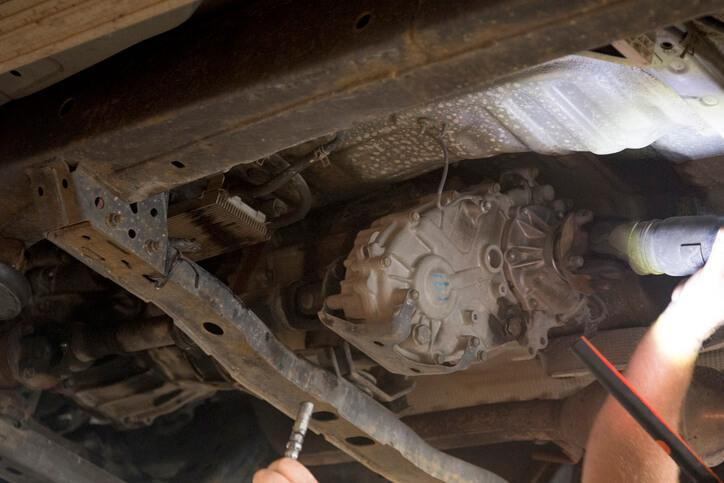
A technician might start by looking underneath for fluid leakage, impact damage, loose components, and problems around the driveshafts or output areas. If the design provides for a fluid-level check, the procedure should follow manufacturer instructions. On some designs, technicians check the transfer-case fluid with the vehicle level and assess the lubricant level relative to the fill opening, following manufacturer instructions.
Technicians can also verify that selectable 4WD modes engage correctly where applicable.
That does not mean engaging every 4WD mode on any surface. Toyota cautions that part-time 4WD is intended for conditions that permit tire slip, such as snow, mud, or dirt, rather than ordinary dry pavement, where driveline binding and increased wear can occur.
For students completing ATC’s auto mechanic course, these checks reinforce an important principle: understand how the system is designed to operate before testing it.
Would you like to explore training opportunities at ATC Auto Mechanic School in Surrey?
Contact us for more information.
Key Takeaways
- A transfer case distributes drivetrain power in many AWD and 4WD systems.
- Designs differ, so technicians should consult vehicle-specific service information.
- Leaks, unusual noises, engagement problems, and warning messages can indicate a problem requiring diagnosis.
- Transfer case fluid requirements and service intervals vary by manufacturer and vehicle.
- Severe operation through mud or water can create additional maintenance requirements on some vehicles.
- Technicians should inspect related drivetrain and electronic components before assuming the transfer case itself has failed.
- Part-time 4WD should be operated according to manufacturer instructions and appropriate road conditions.
FAQ
What does a transfer case do?
It helps distribute drivetrain power between the front and rear axles in many AWD and 4WD vehicles. The exact mechanism and available drive modes depend on the system design.
What are the symptoms of a bad transfer case?
Possible symptoms include leaks, unusual noises, difficulty engaging or disengaging 4WD, drivetrain warnings, or abnormal AWD/4WD operation. These symptoms require diagnosis because related components can produce similar problems.
How often should transfer-case fluid be changed?
There is no universal interval. Technicians should follow the vehicle manufacturer’s maintenance schedule and consider any additional requirements for severe operating conditions.
Can you drive with a transfer-case problem?
It depends on the fault, but significant leakage, abnormal noises, warning messages, or engagement problems should be inspected promptly. Continued operation with inadequate lubrication or a mechanical fault may worsen damage.