TPMS Relearn Made Simple: What New Technicians Need to Know
TL;DR
A TPMS relearn ensures tire pressure sensors are correctly recognized by the vehicle after service. Technicians use different methods depending on the system, from manual resets to scan tools. Understanding the process helps prevent warning lights and repeat repairs.
After a routine tire service, a warning light on the dashboard can quickly turn a simple job into a comeback. This is where understanding TPMS relearn becomes essential for any automotive service technician.
Modern vehicles rely on tire pressure monitoring systems to track sensor positions and maintain safety. When tires are rotated or replaced, those positions change, and the system must be updated to reflect the new configuration. Without a proper relearn, the system may display incorrect information or trigger persistent warnings.
For students entering auto mechanic training, learning how to handle these situations is part of building strong automotive diagnostics skills. It’s not just about fixing the immediate issue; it’s about ensuring the repair is complete and accurate.
What Does TPMS Relearn Actually Do?
A TPMS relearn process allows the vehicle’s control module to identify the location of each tire pressure sensor. Each sensor transmits a unique signal, and the system needs to match that signal to the correct wheel position.
When this information is out of sync, such as after a tire rotation, the system may display incorrect tire pressures or activate a warning light. Relearning restores this connection, ensuring accurate monitoring.
This step is critical for both safety and customer satisfaction, as incorrect readings can lead to confusion or missed issues. At ATC auto mechanic school, students gain hands-on experience with these systems. They learn how to identify different TPMS types, perform relearn procedures, and troubleshoot related issues.
Why Some Vehicles Need Tools, and Others Don’t
Why do some vehicles need a tool while others don’t? Not all TPMS systems function the same way. Some vehicles are designed to relearn sensor positions automatically after driving for a certain period. Others require manual input or the use of a dedicated scan tool.
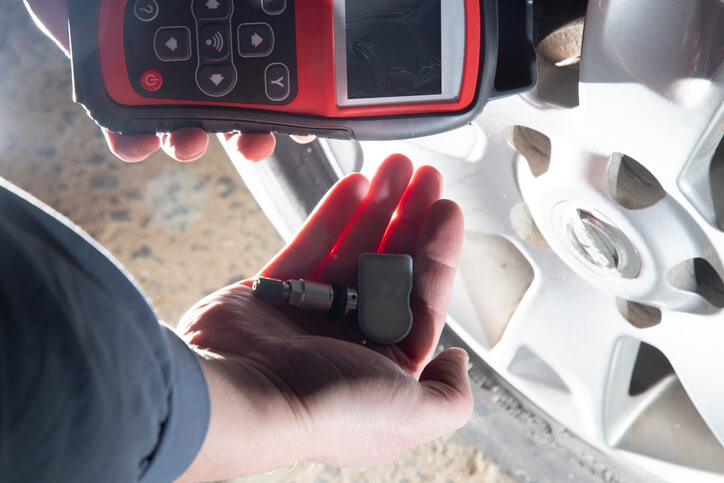
In more advanced systems, technicians use a handheld device to trigger each sensor and communicate directly with the vehicle’s onboard system. This interaction often occurs through the vehicle’s electronic network, which is part of broader automotive diagnostics systems.
Understanding these differences is important, as using the wrong method can lead to incomplete resets and unnecessary troubleshooting.

Common Mistakes That Cause TPMS Lights to Return
What mistakes cause TPMS lights to return after service? One of the most common issues is skipping the relearn process entirely after tire work. Even if the tires are installed correctly, failing to update the system can cause the warning light to remain on.
Another frequent mistake is performing the relearn incorrectly, such as activating sensors in the wrong sequence or not completing the process fully. In some cases, technicians may overlook a faulty sensor, assuming the issue is related to the reset procedure.
Problems like these can lead to repeat visits, which is why attention to detail is critical. Just like diagnosing wheel bearing noise, accurate identification of the issue is key to avoiding unnecessary repairs.
Real Shop Workflow for TPMS Relearn
In a real shop environment, a TPMS relearn is part of a structured workflow. After completing tire service, the technician verifies whether the vehicle requires a manual or automatic relearn.
If a tool is needed, the technician follows a sequence to activate each sensor and confirm communication with the system. Once the process is complete, the system is checked to ensure that all sensors are reporting correctly and that no warning lights remain.
This methodical approach helps technicians maintain efficiency while reducing the risk of comebacks. It also reinforces the importance of following proper procedures rather than relying on assumptions. For those exploring auto careers, these skills are essential. They reflect the shift toward technology-driven diagnostics and prepare students for real-world repair environments.
Is TPMS Relearn Taught in Training Programs?
Do programs teach TPMS and basic electronics troubleshooting? Yes. Learning how to perform a TPMS relearn is part of modern auto mechanic training at ATC Montreal. As vehicles become more reliant on electronic systems, technicians must be comfortable working with sensors, scan tools, and diagnostic procedures.
Would you like to explore programs at our automotive school?
Contact ATC Montreal for more information.
Key Takeaways
- A TPMS relearn ensures tire sensors are correctly matched to wheel positions
- Different vehicles require different relearn methods, including manual and tool-based processes
- Skipping or incorrectly performing a relearn can lead to repeat issues
- Structured workflows help technicians complete repairs accurately
- TPMS diagnostics are a key part of modern auto mechanic training
FAQ
What does TPMS relearn actually do?
It matches tire pressure sensors to their correct positions in the vehicle’s system.
Why do some vehicles need a tool while others don’t?
Different systems use different relearn methods, with some requiring scan tools and others functioning automatically.
What mistakes cause TPMS lights to return after service?
Skipping the relearn process, performing it incorrectly, or overlooking faulty sensors can cause recurring issues.
Do programs teach TPMS and basic electronics troubleshooting?
Yes, these skills are part of modern automotive training programs.