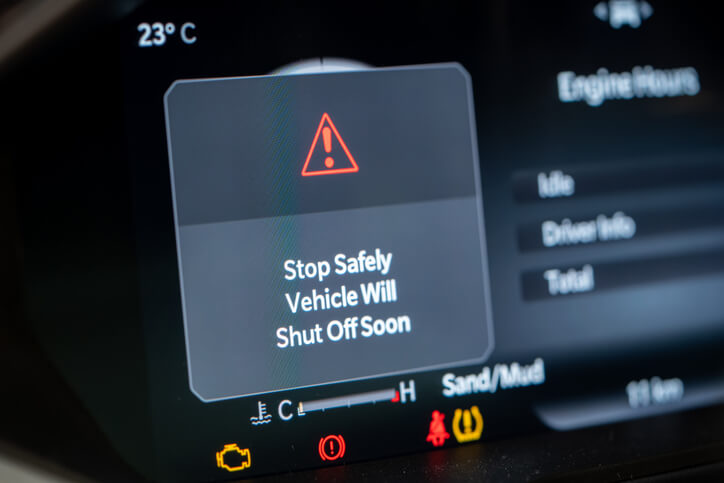
Start-Stop System Problems: How Technicians Diagnose “It Won’t Restart” Complaints
TL;DR
A start-stop system may fail to restart due to battery condition, sensor inputs, or unmet operating conditions. Technicians use automotive diagnostics, scan tools, and system checks to confirm the cause instead of guessing.
Drivers often report a frustrating issue: the engine shuts off at a stop, but doesn’t restart as expected. While it may seem like a simple fault, diagnosing a start-stop system requires a deeper understanding of how multiple systems work together.
Modern vehicles rely on a network of sensors, control modules, and the battery management system to determine when start-stop should activate. If any part of this system is not functioning correctly, or if certain conditions are not met, the system may disable itself or fail to restart.
For students in our Automotive Service Technician Foundation program, this type of issue highlights the importance of structured automotive diagnostics. Instead of assuming a single failure, technicians evaluate the entire system.
Why Start-Stop Stops Working Without Warning
Why does the start-stop stop working even with no warning light? In many cases, the start-stop system will disable itself without triggering a warning light. This happens because the system is designed to protect the engine and electrical components.
If conditions such as battery charge, engine temperature, or cabin climate settings are not within acceptable ranges, the system simply won’t activate. From the driver’s perspective, it may seem like a failure, but it is often normal system behavior.
Understanding this distinction is essential before moving into deeper diagnostics.
The Role of the Battery Management System
How do technicians check battery health for start-stop systems? The battery management system plays a central role in start-stop operation. These systems require batteries that can handle frequent engine restarts and maintain stable voltage under load.
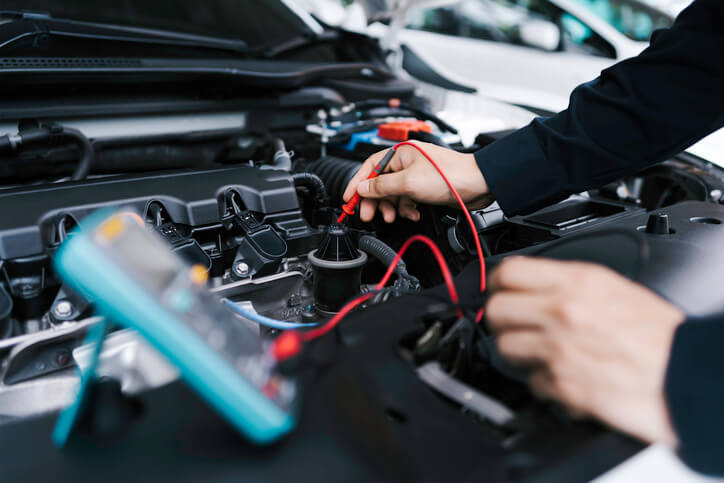
Technicians test battery condition using specialized tools to measure capacity, charge state, and overall health. Even if the vehicle starts normally, a weak battery may not support start-stop functionality. Because of this, battery testing is often one of the first steps when diagnosing start-stop system complaints.
Conditions Required for Start-Stop System Activation
What conditions must be met for start-stop to activate? Start-stop systems depend on multiple inputs before they engage. The engine must be at operating temperature, the battery must be sufficiently charged, and the vehicle must meet specific driving conditions.
Additional factors, such as steering input, brake pressure, and climate control demands, also influence whether the system activates. If any of these conditions are not met, the system will remain inactive.
This complexity is why technicians rely on OBD2 scanner data to verify system status and confirm whether conditions are being met.
Using Diagnostic Tools to Identify the Problem
A proper diagnosis goes beyond observing symptoms. Technicians use an OBD2 scanner to retrieve diagnostic trouble codes and analyze live data from the vehicle.
This allows them to see how the system is responding in real time, including battery status, sensor inputs, and system commands. If a fault is present, it can be identified and verified before any repair is made. This data-driven approach ensures accurate repairs and prevents unnecessary part replacements.
Common Causes of Start-Stop System Failures
While each case is different, several common factors can affect start-stop system performance. These include battery degradation, sensor faults, and software-related issues.
In some cases, the problem may not be a failure at all, but rather a condition preventing activation. This is why understanding system logic is just as important as identifying faults.
For students in our auto mechanic school in Surrey, learning how to interpret these conditions is a key part of modern diagnostics training.

Is Start-Stop Diagnosis Covered in Training?
Is start-stop and modern electrical diagnosis covered in training? Yes. Diagnosing systems like start-stop is a core part of today’s automotive diagnostics curriculum. As vehicles become more reliant on electronics, technicians must be comfortable working with integrated systems.
In our Automotive Service Technician Foundation program, students learn how to test batteries, interpret scan data, and troubleshoot electrical systems. This hands-on experience prepares them for real-world scenarios where multiple systems interact.
Are you looking for a comprehensive auto mechanic course?
Contact ATC Surrey for more information.
Key Takeaways
- A start-stop system depends on battery health, sensors, and operating conditions
- The battery management system plays a critical role in system performance
- Lack of activation does not always indicate a fault
- Tools like an OBD2 scanner and diagnostic trouble codes help confirm issues
- Modern automotive diagnostics require understanding how multiple systems interact
FAQ
Why does the start-stop stop working even with no warning light?
Because the system may disable itself when conditions are not suitable, even without a fault.
How do technicians check battery health for start-stop systems?
They use diagnostic tools to measure battery capacity, charge, and performance under load.
What conditions must be met for start-stop to activate?
Proper battery charge, engine temperature, and system inputs must all be within range.
Is start-stop and modern electrical diagnosis covered in training?
Yes, it is a key part of modern automotive training programs.