
Spark Plugs Explained: Symptoms, Service Intervals, and Misfire Clues
TL;DR
How often to change spark plugs depends on the vehicle, engine design, and plug type. Some plugs wear out sooner, while long-life plugs can last much longer. New technicians inspect spark plugs for wear, deposits, damage, and gap issues because they can help explain rough idle, hard starts, poor fuel economy, and misfire complaints.
Spark plugs may be small, but they play a major role in engine performance. In a gasoline engine, each plug creates the spark that ignites the air-fuel mixture inside the cylinder. Wondering how often to change spark plugs? When that spark is weak, delayed, or missing, the engine quickly shows signs of trouble.
A used plug can point to clean combustion, rich fuel mixture, oil burning, overheating, or misfire activity. For new technicians, the goal is not just learning how to replace spark plugs. It is learning how to read the evidence they leave behind.
When and How Often To Change Spark Plugs
How often should spark plugs be changed? This depends on the manufacturer’s maintenance schedule and the type of plug installed.
Copper plugs usually have shorter service intervals, while platinum and iridium plugs are designed to last longer. NAPA Canada notes that spark plug replacement intervals vary by vehicle type and model, so the owner’s manual should guide service decisions.
Drivers may ask how often spark plugs should be changed if the engine still seems to run normally. Technicians usually explain that plugs wear gradually, so early symptoms may be subtle. As electrodes wear, the spark gap can increase, making it harder for the ignition system to fire consistently.
Common signs that spark plugs may need service include:
- Rough idle
- Hard starting
- Hesitation
- Poor fuel economy
- Misfire codes
If symptoms appear before the recommended interval, technicians inspect the plugs instead of relying on mileage alone.
How Do You Check Spark Plugs?
When checking spark plugs, technicians focus on both condition and context.
The first step is safe removal. The technician allows the engine to cool, removes the ignition coil or plug wire, and carefully removes the plug using the correct socket. Once the plug is out, the inspection begins.
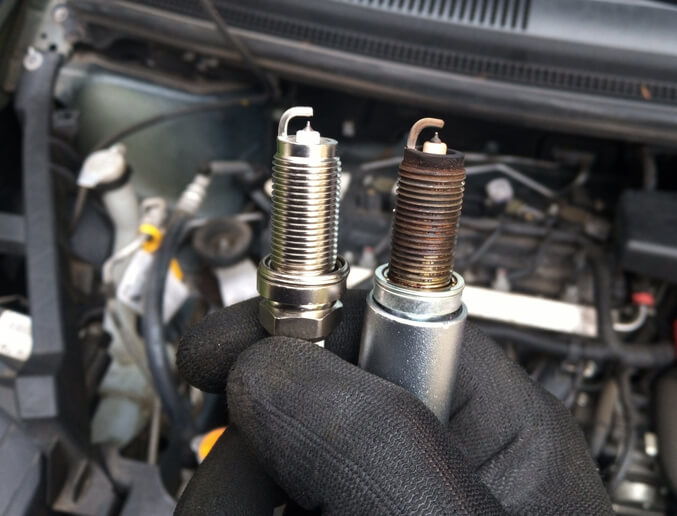
A healthy spark plug usually has light tan or greyish deposits and even electrode wear. Heavy black carbon can suggest a rich fuel mixture, weak ignition, or extended idling. Oily deposits may point to oil entering the combustion chamber. White blistering or damaged electrodes can suggest overheating or an incorrect plug range.
The plug gap also matters. If the gap is too wide, the ignition coil may struggle under load. If it is too narrow, combustion may be weaker than expected.
Students at an auto mechanic school learn that spark plug inspection should be compared with scan data, misfire counts, fuel trims, and the original complaint.
How Can I Test a Spark Plug?
Professional testing goes beyond checking for a visible spark. A plug may fire in open air but fail under cylinder pressure. That means technicians also consider the ignition coil, wiring, compression, and fuel delivery.
In a shop setting, technicians may use scan data to identify the misfiring cylinder. From there, they may swap plugs or coils between cylinders to see whether the misfire follows the component. If a misfire follows the spark plug, the plug becomes a strong suspect. If the misfire stays on the same cylinder, the technician keeps testing.
That diagnostic mindset is important for anyone training to become a mechanic. Spark plugs are simple parts, but misfire diagnosis still requires a complete process.
How Do You Replace Spark Plugs?
The basic idea sounds simple: remove the old plugs and install new ones. However, in practice, accuracy matters. The engine should be cool, the correct replacement plugs must be selected, and the plug wells should be clean before removal. Dirt falling into the cylinder can create serious problems.
After removing the old plug, technicians compare it with the new one, confirm the correct part number, and check the gap if required. Many modern plugs come pre-gapped, but technicians still verify manufacturer guidance.
Installation also requires care. Spark plugs should be threaded by hand first to avoid cross-threading, then tightened to the correct torque specification. Over-tightening can damage cylinder head threads, while under-tightening can cause poor sealing and heat transfer issues.
This is why spark plug replacement is considered a basic job that still requires professional attention.

What Misfire Clues Can Spark Plugs Reveal?
Spark plugs often help technicians narrow down misfire causes.
A plug wet with fuel may suggest that the cylinder is not firing properly. A plug covered in oil may point to internal engine wear or seal issues. Heavy carbon can suggest a rich operation or a weak spark. A damaged electrode may indicate overheating, detonation, or an incorrect plug type.
These clues do not replace diagnosis, but they help guide the next test.
For example, if one plug looks very different from the others, that cylinder deserves closer attention. The issue may involve a coil, injector, compression problem, or vacuum leak, but the plug gives the technician a starting point.
Why Spark Plug Basics Matter for New Technicians
Spark plugs are a useful reminder that small components can reveal larger engine conditions.
Learning how to inspect, test, and replace them builds strong diagnostic habits. A good technician does not just install parts. They ask why the part failed, what symptoms it caused, and whether another issue is contributing to the problem.
That is why spark plug service remains a foundational skill in engine performance training.
Are you ready to begin auto mechanic training?
Contact ATC Cambridge for more information.
Key Takeaways
- Spark plug replacement intervals depend on vehicle specifications and plug type.
- Worn plugs can cause rough idle, hard starts, hesitation, and misfires.
- Spark plug condition can reveal clues about fuel mixture, oil burning, and overheating.
- Testing should connect plug inspection with scan data and misfire diagnosis.
- Proper installation requires correct parts, clean plug wells, careful threading, and correct torque.
FAQ
How often should spark plugs be changed?
Spark plugs should be changed according to the vehicle manufacturer’s maintenance schedule. Plug type matters, as copper plugs usually wear sooner than platinum or iridium plugs. If symptoms like misfires, hard starting, or rough idle appear early, technicians inspect the plugs before waiting for the scheduled interval.
How do you check spark plugs?
Spark plugs are checked by removing them safely and inspecting electrode wear, deposits, colour, cracks, fouling, and gap. Technicians compare all plugs because one unusual plug can point to a cylinder-specific issue.
How do you replace spark plugs?
Spark plugs are replaced by removing ignition coils or wires, taking out the old plugs, confirming correct replacement parts, checking the gap if required, threading new plugs carefully by hand, and tightening them to the manufacturer’s torque specifications.
How do you test a spark plug?
Technicians test spark plugs by inspecting condition, checking gap, reviewing misfire data, and sometimes moving plugs between cylinders to see whether a misfire follows the plug. A visible spark alone does not always prove the plug works properly under engine load.