Choosing Parts in Real Shops: Original Equipment, Aftermarket, and Remanufactured Options Explained
TL;DR
Original equipment vs aftermarket vs remanufactured parts, what’s the difference? Technicians choose between original equipment, aftermarket, and remanufactured parts based on fitment, reliability, warranty impact, and shop standards. The right choice reduces comebacks and protects long-term repair quality.
Parts selection is rarely as simple as “OEM is best” or “aftermarket is cheaper.” In real repair shops, technicians weigh cost, reliability, fitment, warranty risk, and customer expectations before making a decision. Understanding original equipment vs aftermarket vs remanufactured parts helps explain why two shops may approach the same repair differently, and why part choice matters as much as installation skill.
For new technicians, parts selection is a skill learned through experience and training. The wrong part can turn a correct diagnosis into a repeat repair. The right part supports durability, customer trust, and shop reputation.
Original Equipment vs Aftermarket vs Remanufactured Parts: What is the difference?
What is the difference between original equipment, aftermarket, and remanufactured parts? Original equipment (OE) parts are produced by or for the vehicle manufacturer and match factory specifications exactly. They typically offer the best fitment consistency but come at a higher cost.
Aftermarket parts are produced by third-party manufacturers. Quality ranges widely, from premium alternatives that meet or exceed OE standards to budget options with inconsistent tolerances. Remanufactured parts are used components restored to working condition, often replacing wear items, and tested before resale.
When Do Technicians Prefer Original Equipment Parts, and Why?
OE parts are often preferred for complex systems, safety-critical components, or vehicles under warranty. Sensors, electronic modules, and ADAS-related components are common examples where OE fitment and software compatibility reduce risk.
As experienced during automotive Service Technician programs, OE parts are also chosen when repeat repair risk is high or when manufacturer procedures specifically require them. In shops focused on minimizing comebacks, OE parts are often viewed as a risk-reduction strategy rather than a default choice.
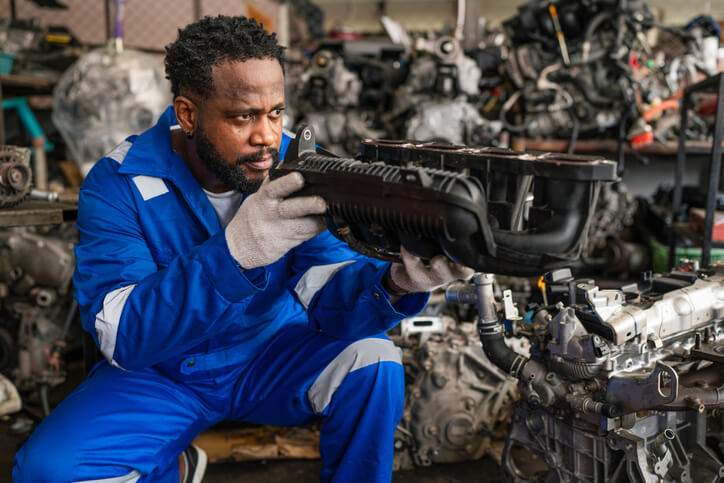
What Are the Most Common Fitment or Quality Risks With Aftermarket Parts?
Aftermarket parts may differ slightly in dimensions, materials, or connector design. These small differences can cause noise issues, premature wear, warning lights, or improper operation.
That doesn’t mean aftermarket parts are always inferior. High-quality aftermarket manufacturers invest heavily in testing. The challenge for technicians is identifying which suppliers deliver consistent aftermarket parts quality and which increase comeback risk.
When Are Remanufactured Parts a Smart Option?
Remanufactured components, such as alternators, starters, or steering racks, can be cost-effective and reliable when sourced from reputable suppliers. These parts are typically rebuilt with new wear components and tested to meet specifications.
Reliability of remanufactured parts depends heavily on the rebuilding process and quality control. Technicians often choose reman parts when OE parts are prohibitively expensive and quality reman options are available.
How Does Parts Choice Affect Warranties and Repeat Repair Risk?
Parts selection directly influences warranty coverage and customer satisfaction. Some warranties require OE components, while others allow equivalent aftermarket parts.
Incorrect part selection can lead to misdiagnosed “failures” that are actually compatibility issues. That’s why reducing comebacks with correct parts is emphasized in training at our auto mechanic school in Surrey.
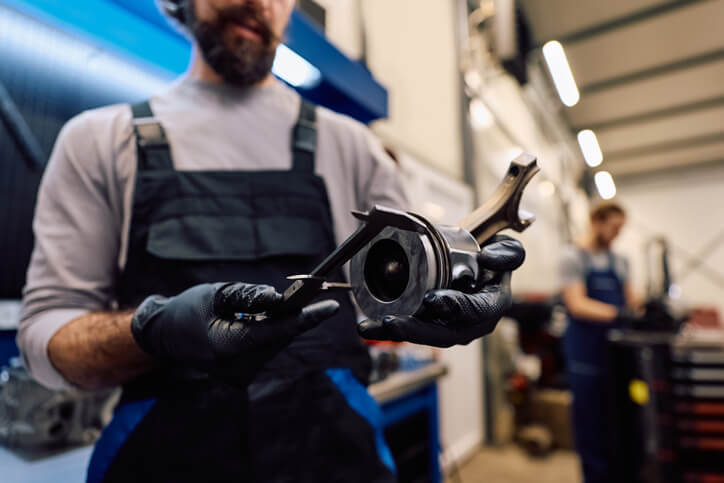
How Technicians Learn to Make Better Parts Decisions
Parts selection is taught alongside diagnostics in our Automotive Service Technician Foundation program. Students learn to evaluate supplier reputation, service information, and repair context, not just price.
Over time, technicians build judgment by tracking outcomes. The goal isn’t memorizing brands, it’s understanding risk, application, and long-term repair quality.
Are you looking for a comprehensive auto mechanic course?
Contact ATC Surrey for more information.
Key Takeaways
- Parts choice directly affects fitment, durability, and comeback risk
- OE parts offer consistency but a higher cost
- Aftermarket parts vary widely in quality
- Remanufactured parts can be reliable when sourced correctly
- Skilled technicians balance cost, risk, and repair context
FAQ: Parts Selection in Auto Repair
What is the difference between original equipment, aftermarket, and remanufactured parts?
Original equipment (OE) parts are produced by or for the vehicle manufacturer and match factory specifications exactly.
When do technicians prefer original equipment parts, and why?
OE parts are often preferred for complex systems, safety-critical components, or vehicles under warranty.
What are the most common fitment or quality risks with aftermarket parts?
Aftermarket parts may differ slightly in dimensions, materials, or connector design.
When are remanufactured parts a smart option?
Remanufactured components, such as alternators, starters, or steering racks, can be cost-effective and reliable when sourced from reputable suppliers.
How does parts choice affect warranties and repeat repair risk?
Parts selection directly influences warranty coverage and customer satisfaction. Some warranties require OE components, while others allow equivalent aftermarket parts.