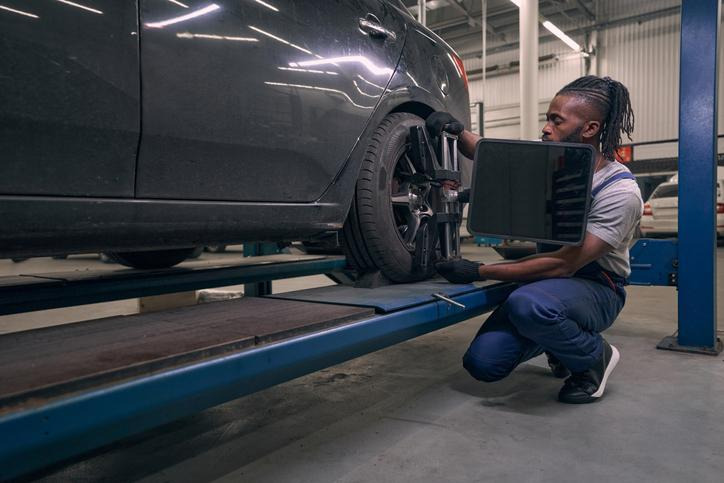
Montreal Pothole Damage: What Technicians Check After a Hard Impact
In Brief: Can Hitting a Pothole Mess Up Alignment?
Can hitting a pothole mess up alignment? Yes. A sufficiently hard impact can contribute to alignment changes and may also damage a tire, bend a wheel, or affect steering and suspension components. Signs such as a crooked steering wheel, pulling, vibration, or new noises deserve attention. Technicians inspect the complete affected area rather than assuming alignment adjustment alone will solve the problem.
Montreal drivers are no strangers to rough roads. After repeated winter freeze-thaw cycles, a pothole can seemingly appear overnight, and hitting one at speed can deliver a significant force through the tire, wheel, steering, and suspension.
So, can hitting a pothole mess up alignment? It can, but alignment is only one potential concern. A hard impact may also damage a tire, bend a wheel, or affect steering and suspension components.
For students beginning auto mechanic school, pothole damage provides a useful lesson in systematic diagnosis: inspect what took the impact, consider the driver’s symptoms, and look for both visible and less obvious damage.
Can Hitting a Pothole Mess Up Alignment?
Can hitting a pothole damage wheel alignment? Yes. A severe impact can contribute to wheel alignment issues, particularly if the force affects steering or suspension components.
CAA-Quebec identifies misalignment as one possible consequence of pothole impacts and notes that strong impacts can also damage components such as control arms and tie rods.
A driver might notice the steering wheel not straight while travelling on a level road, the vehicle pulling toward one side, or unusual tire behaviour. Why is my steering wheel crooked after hitting a pothole? An alignment change is one possibility, but it should not automatically be assumed to be the only problem.
During automotive school, students learn why technicians inspect the mechanical condition of the steering and suspension before treating an alignment adjustment as the complete solution.
What Car Parts Can Be Damaged by a Pothole?
The tire and wheel absorb much of the initial impact, but the force can travel into several connected components.
CAA-Quebec lists possible damage involving tires, wheels, suspension and steering components, shock absorbers, and even lower body or undercarriage areas. It also notes that tire sidewalls can tear or deform, and wheels can bend or crack.
Technicians performing a suspension diagnosis may therefore inspect areas such as:
- Tire tread and sidewalls
- Wheel rims
- Control arms
- Tie rods and steering components
- Ball joints and related suspension parts
- Shocks or struts
- Alignment angles and vehicle tracking
Not every hard impact causes extensive damage, but checking connected systems helps prevent one obvious problem from hiding another.
How Can You Tell Whether a Pothole Bent a Wheel?
Some damage is visible during inspection, while other cases may first become apparent through vibration or unusual vehicle behaviour.
A technician can examine the wheel for deformation, cracks, and other impact damage. The tire also needs attention because a damaged sidewall or internal structure can produce symptoms that resemble wheel problems.
A new wheel wobble or vibration after an impact deserves investigation. Check tires, rims, suspension, and related areas after pothole damage. Collateral damage is not always immediately visible.
For students interested in auto careers, this illustrates why the timing of a symptom matters. If a vibration begins immediately after a pothole strike, the impact becomes valuable diagnostic context, but technicians still need to identify the exact source.

Should a Car Be Inspected After Hitting a Large Pothole?
If the impact was severe or the vehicle behaves differently afterward, an inspection is a sensible precaution.
Warning signs can include pulling, vibration, a new steering-wheel position, unusual noises, visible tire damage, loss of tire pressure, or a wheel that appears damaged. It is recommended to schedule an inspection after a hard pothole impact because some damage may not be immediately visible.
A technician may begin by asking what happened: Which wheel hit the pothole? How fast was the vehicle travelling? Did the symptoms appear immediately? Has tire pressure changed?
The inspection can then progress from the tire and wheel toward steering, suspension, and alignment checks as necessary. When vehicle handling appears affected after an impact, an inspection can determine whether it remains safe to drive and identify repairs requiring prompt attention.
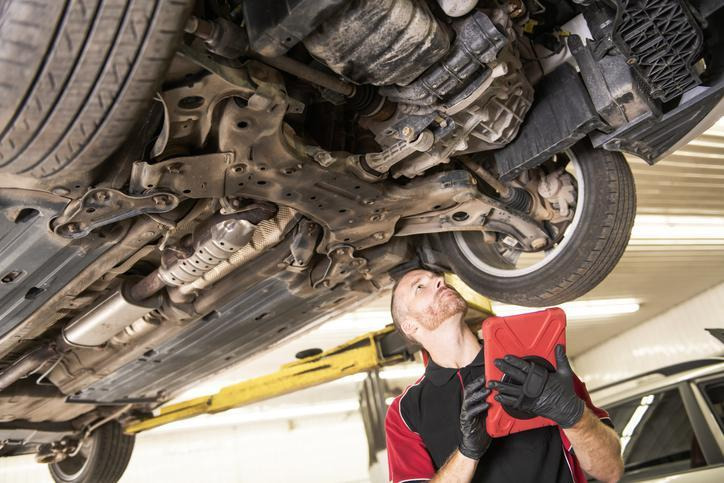
Why Systematic Pothole Diagnosis Matters
Pothole damage demonstrates why technicians should avoid diagnosing a vehicle from a single symptom. A crooked steering wheel might indicate an alignment concern, but the impact that caused it may also have affected a steering or suspension component. Vibration could originate from a wheel, tire, or another damaged part.
Strong diagnostic practice means following the force of the impact and examining the systems that could realistically have been affected.
For future technicians working in Montreal, that process can become particularly relevant during periods when damaged road surfaces generate more customer complaints. Knowing how to connect an impact with tires, wheels, steering, suspension, and alignment helps technicians move from “the car feels different” to evidence-based repair recommendations.
Are you interested in explore training options at our auto mechanic school?
Contact ATC Montreal for more information.
Key Takeaways
- Can hitting a pothole mess up alignment? Yes, a severe impact can contribute to alignment changes.
- Tires and wheels can also sustain immediate impact damage.
- A steering wheel not straight, pulling, vibration, or unusual noise can indicate the need for inspection.
- Wheel wobble should not automatically be attributed to alignment because tire or wheel damage may also be involved.
- Suspension diagnosis may include checking steering and suspension components affected by the impact.
- Damage is not always immediately visible, making a professional inspection valuable after a particularly hard pothole strike.
FAQ
Can hitting a pothole damage wheel alignment?
Yes. A strong pothole impact can affect alignment, particularly when steering or suspension components are displaced or damaged. Pulling or a crooked steering wheel may indicate that further inspection is needed.
What car parts can be damaged by a pothole?
Potentially affected areas include tires, wheels, steering components, control arms, shocks or struts, other suspension components, alignment, and parts of the undercarriage.
How can you tell whether a pothole bent a wheel?
A bent wheel may sometimes be visible during inspection or may contribute to vibration or wobbling. Technicians inspect both the wheel and tire because either can be damaged during the same impact.
Should a car be inspected after hitting a large pothole?
An inspection is advisable when the impact was severe or new symptoms appear afterward, including vibration, pulling, unusual noises, tire-pressure loss, visible wheel damage, or a change in steering-wheel position.