How to Remove Water Spots From a Car: Causes, Fixes, and Prevention
TL;DR
If you’re wondering how to remove water spots from car surfaces, the key is acting early and using the right method. Light spots can often be removed with washing or mild cleaners, while etched spots may require polishing. Preventing water spots comes down to proper drying, water quality, and paint protection.
Water spots may seem like a minor cosmetic issue, but they can quickly become a serious problem if ignored. What starts as a faint outline on the paint can turn into a permanent etching that damages the clear coat.
That’s why understanding how to get rid of car water spots is not just about appearance; it’s about protecting the vehicle’s finish over time. For students learning professional techniques through auto detailing training, water spot removal is a foundational skill that connects chemistry, technique, and surface care.
What Causes Water Spots on Car Paint?
Water spots form when water droplets are left to dry on the surface of the vehicle. As the water evaporates, it leaves behind mineral deposits such as calcium and magnesium.
At first, these deposits sit on top of the paint. However, if exposed to heat, especially sunlight, they can bond with the surface and begin to etch into the clear coat. This is why some spots wipe off easily, while others require more aggressive correction.
Hard water is one of the most common causes. Vehicles washed with untreated tap water are more likely to develop stubborn spotting. Over time, repeated exposure without proper removal leads to buildup, making removing hard water spots from car paint a more complex process.
Why Do Some Water Spots Permanently Etch the Paint?
Etching occurs when minerals chemically interact with the paint surface, especially under heat. When water sits on a hot panel, the evaporation process accelerates. This leaves concentrated minerals behind, which can begin to break down the clear coat.
Once etching occurs, simple washing is no longer effective. The damage is no longer on the surface; it is within the paint layer itself. This is why timing matters. The sooner water spots are addressed, the easier they are to remove.
What’s the Safest Way to Remove Water Spots?
So, how to remove water spots from car paint? When approaching this, professionals follow a structured process rather than jumping straight to aggressive methods.
The safest approach always starts with the least invasive option. First, the vehicle should be thoroughly washed to remove loose dirt and contaminants. This prevents scratching during further steps.
If spots remain, a chemical treatment, such as a dedicated water spot remover, can help dissolve mineral deposits. In some cases, a mild acid-based solution may be used carefully. Following best practices for safe handling of cleaning chemicals in automotive environments helps reduce the risk of damage to both the vehicle and the technician. For more stubborn spots, a clay bar may be used to remove bonded contaminants from the surface.
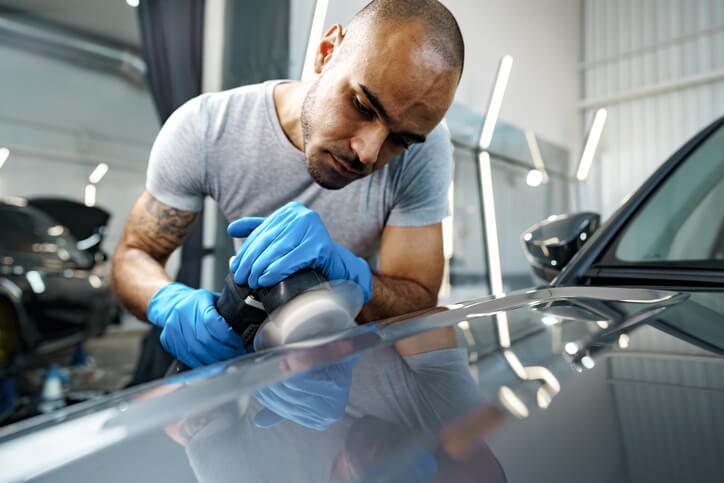
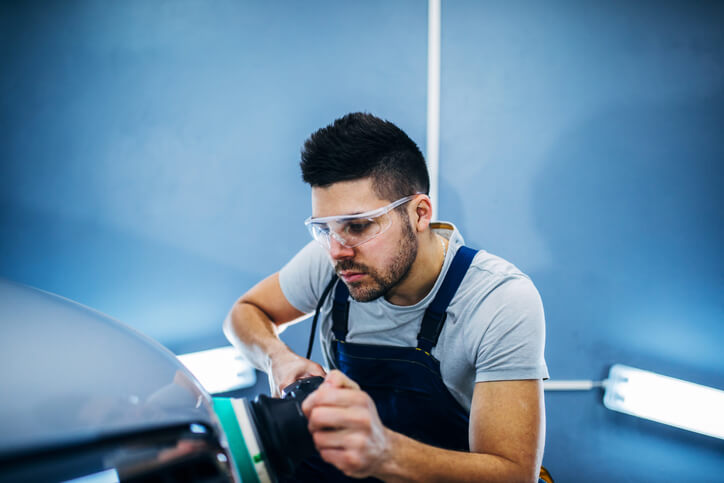
If etching is present, polishing becomes necessary. This step removes a very thin layer of clear coat to level the surface and eliminate the defect. Students pursuing a professional auto detailing certificate at ATC learn to evaluate paint condition before choosing the appropriate method, ensuring safe, effective results.
Is Vinegar Safe for Removing Water Spots?
Vinegar is often suggested as a DIY solution because of its mild acidity. It can help dissolve mineral deposits in light cases.
However, it must be used carefully. If applied incorrectly or left on the surface too long, vinegar can affect protective coatings or even damage sensitive finishes.
It is generally safer to use products specifically designed for automotive paint, especially when dealing with more severe spotting. Understanding when to use household solutions and when to avoid them is part of professional-level detailing knowledge developed in an automotive school environment.
How Do You Prevent Water Spots From Coming Back?
Removing water spots is only part of the solution. Preventing them is what protects the vehicle long-term. The most effective prevention method is proper drying. Allowing water to air dry is the primary cause of spotting.
Using clean microfiber towels or forced air drying helps eliminate standing water before minerals can settle. Water quality also plays a role. Using filtered or deionized water reduces mineral content and lowers the risk of spotting.
Applying protective layers such as wax, sealant, or ceramic coating creates a barrier between the paint and contaminants. This makes it harder for minerals to bond with the surface. These habits are standard practice in professional detailing because they reduce the need for corrective work later.
Why Water Spot Removal Skills Matter in Detailing
Water spot removal may seem simple, but it reflects a broader skill set in surface care.
It requires understanding:
- Paint structure and clear coat sensitivity
- Chemical reactions between minerals and surfaces
- Proper tool and product selection
For those building a career in detailing, mastering these fundamentals is essential. It ensures not only better results but also safer work practices that protect the vehicle.
Are you looking for comprehensive auto detailing training?
Contact ATC Montreal for more information.
Key Takeaways
- Water spots form when minerals are left behind after water evaporates.
- Heat can cause spots to etch into the paint permanently.
- Safe removal follows a step-by-step process from washing to polishing.
- Vinegar may help in light cases, but should be used cautiously.
- Proper drying and paint protection help prevent future water spots.
FAQ
Is vinegar safe for removing water spots?
Vinegar can help remove light mineral deposits, but it should be used carefully. It is best avoided on sensitive finishes or heavily etched spots.
What causes water spots on car paint?
Water spots form from mineral deposits left behind after water evaporates. Heat can cause these minerals to bond with and etch into the paint.
What’s the safest step-by-step order to remove water spots (wash, chemical, clay, polish)?
The safest process starts with washing, followed by chemical removal, then clay if needed, and finally polishing for etched spots.
How do you prevent water spots after washing (drying technique, water quality, protection)?
Dry the vehicle immediately using microfiber towels or air, use filtered water if possible, and apply protective coatings to reduce mineral bonding.