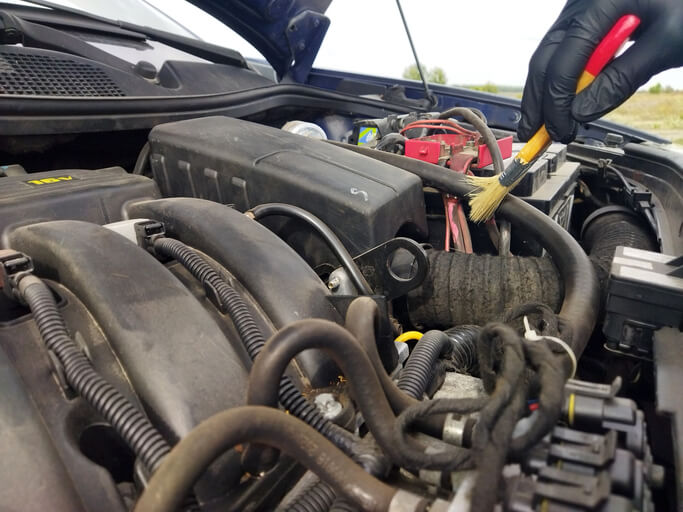
How to Clean Battery Terminals: Preventing Corrosion and No-Start Issues
TL;DR
Learning how to clean battery terminals is an important maintenance skill that helps prevent starting problems and electrical faults. Corrosion buildup around battery posts can interrupt electrical flow, leading to weak starts or warning lights such as the battery light on dash. Cleaning the terminals safely and protecting them afterward helps maintain a reliable charging system.
Car batteries rely on strong electrical connections to supply power to the starter, ignition system, and onboard electronics. When corrosion forms around the terminals, that connection weakens.
In many cases, drivers experiencing starting problems or noticing a battery light on in the car may actually be dealing with corrosion buildup rather than a failed battery.
Understanding how to clean battery terminals in car systems properly is a basic but essential skill for technicians and vehicle owners alike.
What Causes Battery Terminal Corrosion?
Before learning how to clean battery terminals, it helps to understand why corrosion forms in the first place.
Battery corrosion typically appears as a white, blue, or green powdery substance around the battery posts.
Common causes include:
- Hydrogen gas released during battery charging
- Electrolyte leakage from inside the battery
- Temperature changes that cause condensation
- Poor electrical connections or loose terminals
Over time, this corrosion creates resistance in the electrical circuit. According to the Canadian Automobile Association (CAA), corrosion on battery terminals can interfere with electrical flow and lead to starting issues if not addressed promptly.
In some cases, corrosion may even trigger electrical warnings like the battery light on dash if the charging system cannot maintain proper voltage.
How to Clean Battery Terminals Step-by-Step
Technicians follow a safe and consistent process when cleaning battery terminals.
Step 1: Turn Off the Vehicle
Make sure the engine and all electrical systems are turned off before beginning work.
Step 2: Disconnect the Battery
Disconnect the terminals in the correct order:
- Remove the negative (–) terminal first
- Remove the positive (+) terminal second
This sequence helps reduce the risk of electrical shorts.
Step 3: Inspect the Terminals
Look for:
- Heavy corrosion buildup
- Loose clamps
- Damaged cables
If the corrosion is severe, additional cleaning may be required.
Step 4: Apply a Cleaning Solution
Several safe solutions can break down corrosion, including:
- Baking soda mixed with water
- Battery terminal cleaning spray
Apply the solution directly to the corroded area.
Step 5: Scrub the Terminals
Use a wire brush or battery terminal cleaning tool to scrub away corrosion until the metal surfaces are clean.

Step 6: Rinse and Dry
Wipe away the residue and ensure the terminals are dry before reconnecting.
Step 7: Reconnect the Battery
Reconnect the terminals in the opposite order of removal:
- Connect the positive (+) terminal first
- Connect the negative (–) terminal last
This restores power safely. Through hands-on experience in our automotive service technician program, students practice battery service procedures and electrical system inspections.
What Household Solutions Work to Clean Corrosion (And What Should You Avoid)?
Many technicians use simple household solutions to clean battery terminal corrosion.
The most common option is baking soda mixed with water. This mixture neutralizes battery acid and helps loosen corrosion deposits.
Other helpful tools include:
- A toothbrush or a small wire brush
- Clean cloths or shop towels
- Protective gloves and eye protection
However, certain products should be avoided.
Avoid using:
- Strong acids
- Household bleach
- Excessive water near sensitive electrical components
Using the correct cleaning solution protects both the battery and the surrounding components. Students at our auto mechanic school in Surrey explore battery maintenance techniques in safe environments.
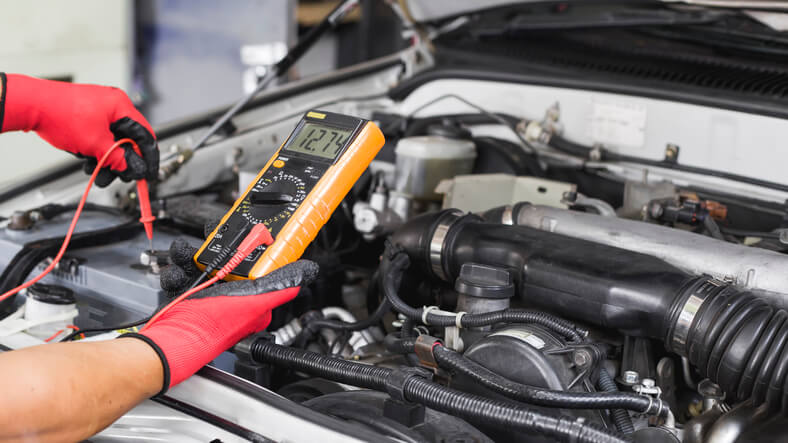
How Do You Prevent Corrosion From Returning?
Cleaning the terminals is only part of the process. Preventing corrosion from coming back is equally important.
Technicians typically apply protective coatings after cleaning.
Common prevention methods include:
- Applying dielectric grease to the terminals
- Using battery terminal protection spray
- Installing anti-corrosion washers
- Ensuring the battery clamps are tightened properly
These steps reduce moisture exposure and help maintain a strong electrical connection.
Preventive maintenance can also reduce issues related to charging system warnings, including situations where drivers ask, “What does the battery light mean?” when it appears on the dashboard.
Completing an Auto mechanic course that includes electrical diagnostics helps technicians build strong foundational skills for modern vehicle repair.
Are you looking for a comprehensive auto mechanic course?
Contact ATC Surrey for more information.
______
Key Takeaways
- Learning how to clean battery terminals helps prevent starting and charging problems.
- Corrosion forms due to battery gases, moisture, and electrolyte leakage.
- Always disconnect the negative terminal first and reconnect it last.
- Baking soda and water are commonly used to remove corrosion safely.
- Protective coatings help prevent corrosion from returning.
FAQ
What causes battery terminal corrosion?
Corrosion usually forms due to hydrogen gas released during battery charging, electrolyte leakage, or moisture buildup around the battery posts.
What household solutions work to clean corrosion (and what should you avoid)?
Baking soda mixed with water is commonly used to neutralize corrosion. Avoid strong acids, bleach, or excessive water around electrical components.
How do you prevent corrosion from returning?
Technicians often apply dielectric grease, anti-corrosion washers, or protective sprays to the terminals after cleaning to prevent future buildup.
What’s the safest order for disconnecting and reconnecting battery terminals?
Always disconnect the negative terminal first and reconnect it last. This helps reduce the risk of electrical short circuits.