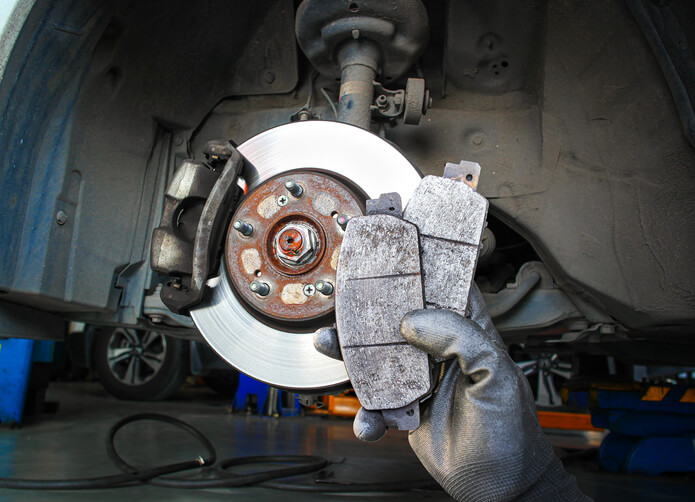
Brake Pads Explained: Wear Signs, Replacement Clues, and What New Techs Inspect
TL;DR
Learning how to check brake pads is one of the most important skills for new automotive technicians. Brake inspections involve more than simply measuring pad thickness. Technicians also inspect rotors, calipers, brake hardware, hoses, and fluid systems while listening carefully to customer concerns. Common warning signs include squealing, grinding, vibration, soft pedal feel, and increased stopping distance. Understanding when to change brake pads and recognizing abnormal brake wear patterns helps future technicians build strong diagnostic habits early in their careers.
Brake systems are among the most frequently inspected components in automotive repair shops. Whether a customer complains about noise, vibration, reduced braking performance, or warning lights, technicians often begin by carefully inspecting the braking system.
For students entering the automotive industry, understanding how to check brake pads properly is one of the first foundational inspection skills they develop. Brake service requires attention to detail, strong safety awareness, and the ability to recognize wear patterns that may point to deeper system concerns.
Although brake pads are considered normal wear items, brake inspections involve much more than simply deciding whether the pads look thin.
How Do You Check Brake Pads?
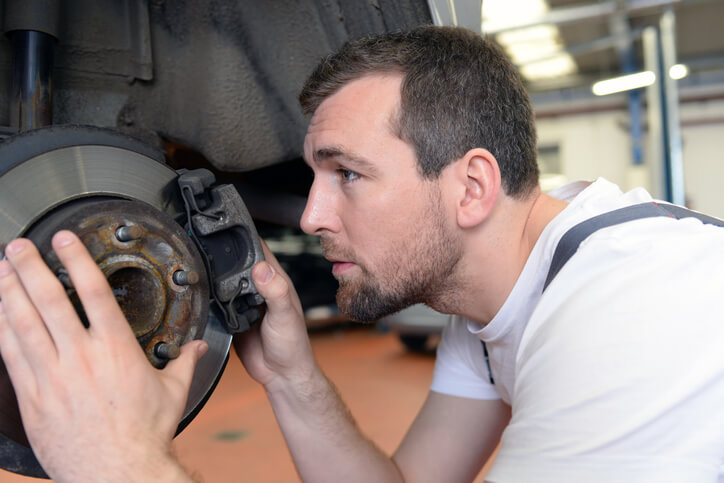
Proper brake inspection starts before the wheels are even removed. Experienced technicians first listen carefully to the customer’s description of the problem because symptoms such as squealing, grinding, vibration, or soft pedal feel can help narrow down possible causes.
Once the vehicle is inspected, technicians evaluate:
- Brake pad thickness
- Rotor condition
- Caliper operation
- Brake hoses and fluid lines
- Brake hardware wear
- Signs of leaks, cracks, or overheating
Manufacturer service guidance generally emphasizes that brake inspections should include the full braking system rather than focusing only on pad wear. Technicians also look for uneven wear patterns that may suggest sticking calipers, seized hardware, hydraulic problems, or rotor damage. Students at our auto mechanic school learn that careful inspection habits help prevent misdiagnosis and unnecessary repairs.
Common Brake Pad Warning Signs New Techs Should Recognize
Brake systems often provide warning signs before serious damage occurs. Future technicians learn to recognize these symptoms early so they can recommend inspections before braking performance worsens.
Some common warning signs include:
- High-pitched squealing or chirping
- Grinding noises
- Increased stopping distance
- Brake vibration or steering wheel shudder
- Soft or spongy brake pedal feel
- Brake warning lights
- Burning smells during braking
A squealing sound may indicate that brake wear indicators are contacting the rotor. Grinding, however, can suggest the brake pad friction material has worn away completely, potentially causing metal-to-metal contact.
Technicians also understand that symptoms such as vibration or pulling during braking may involve rotor condition issues or uneven braking force rather than brake pads alone. This is why learning how to check brake pads properly also means learning how the entire braking system works together.
How Long Do Brake Pads Last?
One of the most common customer questions is how long brake pads last, but there is no single mileage answer that applies to every vehicle.
Brake pad lifespan depends on factors such as:
- Driving habits
- Traffic conditions
- Vehicle weight
- Brake system design
- Driving environment
- Towing or heavy-load use
Aggressive braking and stop-and-go city driving can shorten brake life significantly, while highway driving may allow pads to last longer.
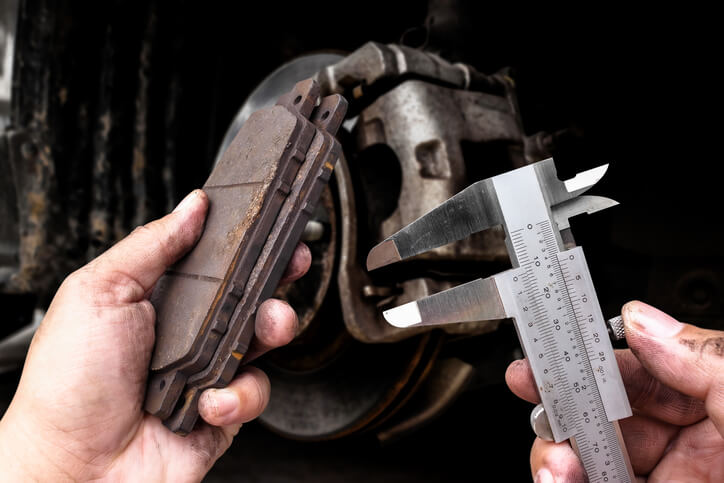
This is also why technicians avoid relying only on mileage when deciding when to change brake pads. Routine inspections provide more accurate information than estimated mileage intervals alone. Government brake inspection standards also emphasize the importance of proper brake measurements rather than visual guesses.
When Should Brake Pads Be Replaced?
Understanding when to change brake pads involves evaluating both measurements and overall brake system condition.
Brake pads may need replacement if technicians observe:
- Friction material near minimum thickness
- Uneven pad wear
- Cracked or damaged pads
- Heat damage or glazing
- Noise caused by wear indicators
- Rotor scoring from excessive wear
However, technicians also inspect rotor thickness, surface condition, and brake hardware during the repair process.
A customer complaint that initially sounds like worn brake pads may actually involve:
- Rotor warping
- Hydraulic concerns
- Brake fluid problems
- Sticking calipers
- Damaged hardware
This diagnostic approach helps future technicians avoid replacing parts unnecessarily while improving repair accuracy.
Why Brake Inspections Matter for New Technicians
Brake systems directly affect vehicle safety, which makes brake inspections one of the most important responsibilities in automotive service work.
Students in our automotive training programs learn how to:
- Inspect brake wear patterns
- Measure brake components properly
- Identify warning signs
- Understand brake system operation
- Recognize safety concerns
- Communicate findings clearly to customers
These foundational inspection skills help prepare students for a wide range of repair environments and future auto careers within the automotive industry.
Because brake systems appear in nearly every repair shop daily, strong brake inspection habits become an important part of long-term technician development.
Would you like to explore a wide range of auto careers in the automotive industry?
Contact ATC Toronto for more information.
Key Takeaways
- Learning how to check brake pads involves inspecting the entire brake system, not just pad thickness
- Common warning signs include squealing, grinding, vibration, and soft pedal feel
- Questions such as “How long do brake pads last?” depend heavily on driving habits and vehicle conditions
- Understanding when to change brake pads requires accurate measurements and a full system inspection
- Brake inspection skills are an important foundation for students entering automotive repair careers
FAQ
How do you check brake pads?
Technicians inspect brake pad thickness, rotor condition, calipers, brake hardware, hoses, and fluid systems while also evaluating customer-reported symptoms.
How long do brake pads last?
Brake pad lifespan varies depending on driving habits, traffic conditions, vehicle type, and braking patterns. There is no universal mileage interval.
When should brake pads be replaced?
Brake pads should be replaced when the friction material reaches minimum thickness or when wear patterns, damage, or braking symptoms indicate replacement is necessary.
How often should brake pads be changed?
Brake pads should be inspected regularly during routine service visits because wear rates vary significantly between vehicles and driving conditions.