
Glow Plug Problems: Hard Starts, Warning Lights, and Cold-Weather Diesel Checks
In Summary: Glow Plug Problems And Checks
- Glow plugs add heat to support diesel combustion during cold starting.
- Failed plugs can cause hard starts, rough running, smoke, or warning lights.
- Cold weather often makes Glow Plug Problems more noticeable.
- Diagnosis should include the plugs, wiring, power supply, relay, or control unit.
A diesel engine may start normally in summer but become harder to start on a cold Surrey morning. That change can be an important diagnostic clue.
Glow plugs provide additional heat when a cold diesel engine cannot reach favourable combustion temperatures through compression alone. Modern systems can also continue operating after startup to improve combustion and emissions during warm-up.
At ATC auto mechanic school in Surrey, glow plug problems demonstrate why technicians need to diagnose the entire starting-assistance system instead of replacing a component based on one symptom.
Glow Plug Problems: What Are the Symptoms?
What are the symptoms of bad glow plugs? Common clues include difficult starting, rough idling or misfiring after startup, white or black exhaust smoke, and a pre-glow or engine warning light.
Temperature matters. A glow plug that causes little noticeable trouble in warmer weather may become much more obvious once ambient temperatures fall. NGK specifically recommends checking glow plugs before winter because a fault can remain unnoticed during warmer months and then cause cold-start trouble.
However, bad glow plug symptoms can overlap with battery, starter, fuel-delivery, compression, wiring, or control-system problems. Technicians use the symptoms to guide testing rather than treating them as proof.
Can Bad Glow Plugs Cause Hard Starting in Cold Weather?
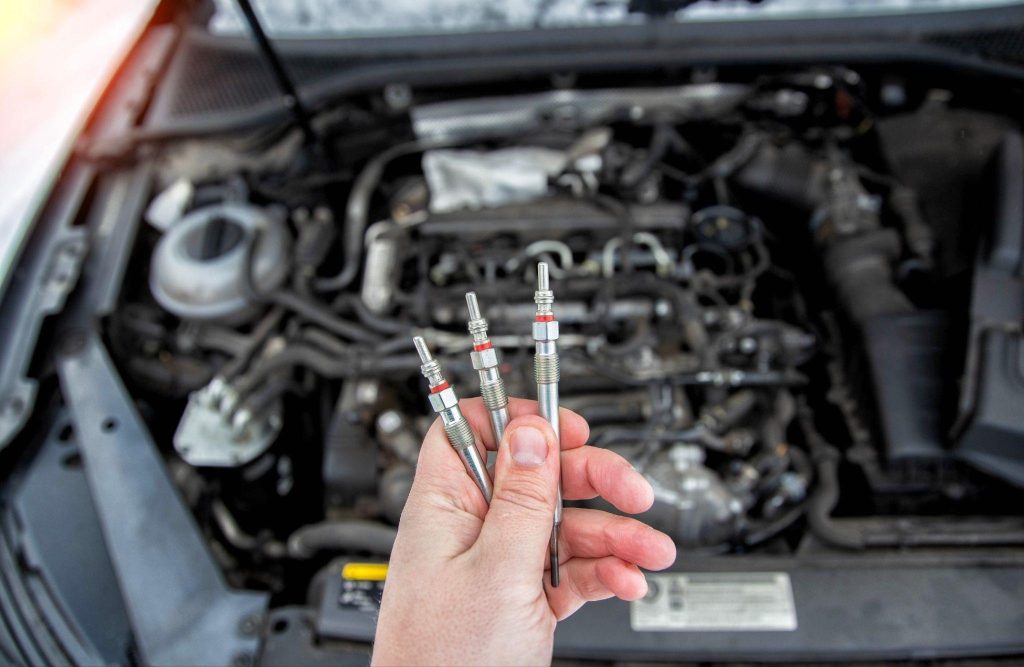
Yes, because colder combustion chambers remove heat from the compressed intake air, making diesel self-ignition more difficult. So, how do glow plugs work? Electrical current heats the plug’s tip inside the combustion chamber, supplying additional heat for more stable combustion during cold starting. Depending on the system, modern plugs may continue operating after the engine starts.
Students in our Automotive Service Technician Foundation program learn to connect that operating principle with diagnostic symptoms. Understanding what the component is supposed to do makes it easier to determine why the engine behaves differently when temperatures fall.
Cold-start complaints become particularly useful clues when glow-plug performance deteriorates.
How Do You Test Glow Plugs With a Multimeter?
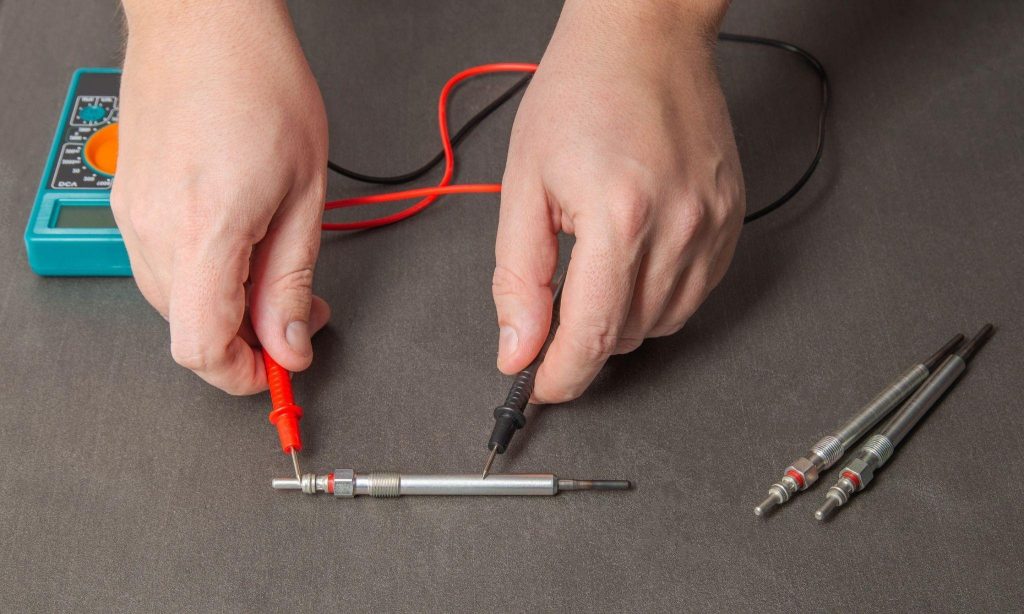
The exact procedure depends on the vehicle and glow-plug design, so technicians first consult the manufacturer’s specifications and wiring information.
Depending on the system, testing may involve checking resistance or continuity, voltage supply, wiring and connections, or current draw. Comparing cylinders can also reveal an abnormal plug. BERU’s dedicated tester, for example, evaluates glow plugs under load and compares their current consumption, illustrating why a simple static measurement is not the only diagnostic method available.
A technician should therefore avoid applying one universal resistance specification to every diesel engine. Modern glow systems vary considerably. Our auto mechanic course emphasizes this broader diagnostic approach: check the circuit and vehicle specifications before condemning the plug.
Diagnosis can extend beyond the plugs to wiring, electrical supply, relays, and control units.
Can a Glow-Plug Relay Cause the Warning Light to Stay On?
A relay or control-system fault can affect glow-plug operation, but warning-light behaviour varies by vehicle and should be interpreted using manufacturer-specific diagnostic information.
Older systems may use a glow-plug relay, while newer diesels can use an electronic control unit communicating with the engine ECU. BERU explains that modern control units can use inputs including coolant temperature, engine speed, injected fuel quantity, and glow requests to manage plug voltage.
Possible glow plug relay symptoms can include incorrect glow duration or plugs that receive no power. BERU also identifies defective or corroded connectors, broken wiring, and defective glow plugs as possible contributors to control-unit or relay problems.
A relay that remains energized too long can be significant as well. BERU notes that excessive power duration from a stuck relay can damage glow plugs.
That is why a glow plug warning light should lead to diagnosis of the complete system: fault codes, plugs, power and ground, wiring, connections, relay or control module, and relevant engine inputs.
Would you like to explore training options at our auto mechanic school in Surrey?
Contact ATC Surrey for more information.
Key Takeaways
- Glow plugs provide additional heat for diesel cold starting and can remain active after startup.
- Hard starting, rough operation, smoke, and warning lights can indicate Glow Plug Problems.
- Cold weather can expose a weak plug that was less noticeable during warmer conditions.
- Multimeter results need to be interpreted against vehicle-specific specifications and system design.
- A fault may involve the plug, wiring, connections, relay, control module, or another engine system.
- Technicians confirm the cause before replacing parts.
FAQ
What are the symptoms of bad glow plugs?
Common bad glow plug symptoms include difficult cold starting, rough running or misfiring after startup, exhaust smoke, and warning-light activity.
Can bad glow plugs cause hard starting in cold weather?
Yes. Glow plugs supply additional heat that supports diesel combustion when the engine and incoming air are cold, so defective plugs can make starting more difficult as temperatures fall.
How do you test glow plugs with a multimeter?
Depending on the vehicle, technicians may use a multimeter to check resistance or continuity and verify the electrical supply. Results should always be compared with manufacturer specifications because glow-plug designs differ.
Can a glow-plug relay cause the warning light to stay on?
A relay or glow-control fault can affect system operation, but the meaning of a warning light varies by vehicle. Technicians should retrieve fault information and test the plugs, circuit, relay, or control module before identifying the cause.