Fuel Pressure Testing: How Technicians Separate Pump, Injector, and Sensor Problems
In Brief: Fuel Pressure Testing
A fuel pressure test helps technicians determine whether performance problems are caused by the fuel pump, injectors, pressure regulator, or another component. Instead of replacing parts based on symptoms alone, professionals use diagnostic testing and scan data to identify the root cause. This systematic approach is an essential skill for future automotive technicians.
When an engine hesitates, struggles to start, or loses power under acceleration, it’s tempting to blame the fuel pump. In reality, several fuel system components can produce nearly identical symptoms. Faulty injectors, clogged filters, pressure regulator issues, or electronic sensor problems can all affect engine performance.
That’s why professional technicians begin with a fuel pressure test instead of guessing. Measuring fuel pressure provides valuable information about how the fuel system is operating and helps narrow the diagnosis before any parts are replaced. Learning this process is an important part of modern auto mechanic training because accurate diagnostics save both time and money.
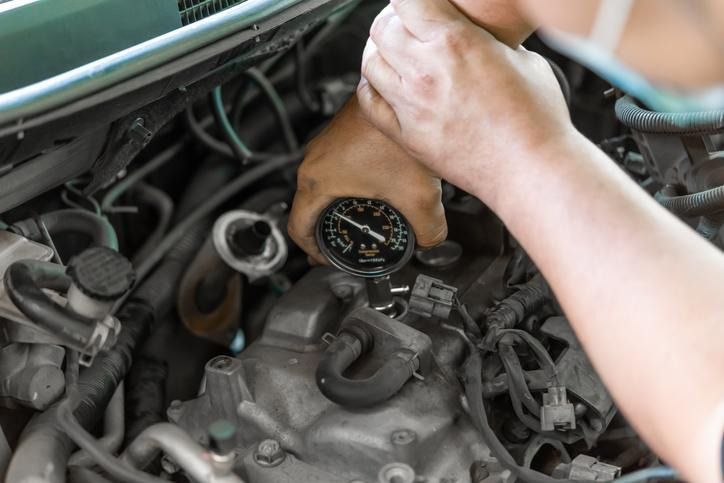
How is a Fuel Pressure Test performed on a Car?
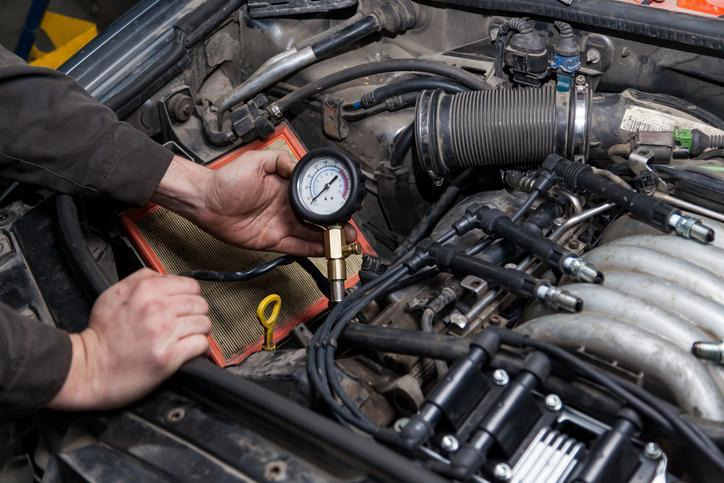
How do you test fuel pressure in a car? Technicians use a fuel pressure gauge or manufacturer-approved diagnostic equipment to measure the amount of pressure being delivered to the engine.
The measured pressure is then compared with the vehicle manufacturer’s specifications under different operating conditions, such as:
- Key on, engine off
- Engine idling
- Engine under load
- After the engine is switched off
Many newer vehicles also allow technicians to monitor fuel system data using scan tools alongside a physical fuel pressure test. Comparing these readings helps determine whether the problem is mechanical, electrical, or electronic.
Pressure readings alone rarely tell the entire story, but they provide an excellent starting point for a structured diagnosis. An evidence-based approach is a key part of training at ATC Cambridge auto mechanic school.
What Are the Symptoms of Low Fuel Pressure?
An engine that isn’t receiving enough fuel often develops noticeable drivability issues.
Common symptoms include:
- Hard starting
- Rough idle
- Loss of power during acceleration
- Engine hesitation
- Stalling
- Poor fuel economy
These symptoms can also resemble bad fuel injector symptoms, making additional testing necessary. Likewise, clogged fuel filter symptoms, such as reduced engine performance or hesitation under load, may appear almost identical to those caused by a weak fuel pump.
Because multiple faults can create similar complaints, technicians never replace components based solely on driver observations.
How Do Technicians Tell a Bad Fuel Pump from a Bad Injector?
They combine fuel pressure readings with scan tool data, injector testing, and visual inspections. For example:
- Low fuel pressure throughout the system may indicate a weak fuel pump, restricted fuel filter, or fuel pressure regulator symptoms.
- Normal pressure with one misfiring cylinder may point toward fuel injector symptoms affecting a single injector.
- Proper pressure combined with abnormal sensor readings may lead technicians to investigate electronic controls instead of mechanical components.
Technicians also evaluate fuel trim values, injector operation, and engine performance before deciding which component requires repair. If you’d like to become a mechanic, these practical skills enable you to solve increasingly complex problems on today’s electronically controlled vehicles.

Can a Fuel-Pressure Sensor Cause Starting Problems?
Can a fuel-pressure sensor cause starting problems? Yes. On many modern vehicles, the engine control module relies on accurate pressure information to calculate fuel delivery.
If the fuel-pressure sensor sends incorrect data, the engine may receive too much or too little fuel during starting or acceleration. The result can be extended cranking, poor performance, warning lights, or diagnostic trouble codes.
However, technicians avoid assuming the sensor has failed simply because a code is stored. They verify sensor readings against actual fuel pressure and inspect the wiring and connectors before recommending replacement. Students learn to interpret scan tool information, use specialized testing equipment safely, and diagnose complete fuel systems rather than individual parts in isolation.
Are you looking for comprehensive auto mechanic training?
Contact ATC Cambridge for more information.
Key Takeaways
- A fuel pressure test helps technicians diagnose fuel delivery problems accurately.
- Low fuel pressure can result from pump, filter, regulator, injector, or sensor issues.
- Bad fuel injector symptoms and clogged fuel filter symptoms often resemble each other.
- Technicians combine pressure testing, scan tool data, and inspections before replacing components.
- Hands-on automotive training teaches future technicians how to diagnose complete fuel systems systematically.
FAQ
How do you test fuel pressure in a car?
Technicians use a fuel pressure gauge or manufacturer-approved diagnostic equipment to compare actual fuel pressure with factory specifications under different operating conditions.
What are the symptoms of low fuel pressure?
Common symptoms include hard starting, rough idle, hesitation, poor acceleration, loss of power, and engine stalling.
How do technicians tell a bad fuel pump from a bad injector?
They compare fuel pressure readings with scan tool data, injector performance, fuel trim values, and additional diagnostic tests to isolate the actual fault.
Can a fuel-pressure sensor cause starting problems?
Yes. Incorrect sensor readings can affect fuel delivery calculations, leading to hard starting or poor engine performance, but technicians always confirm the diagnosis through testing.