
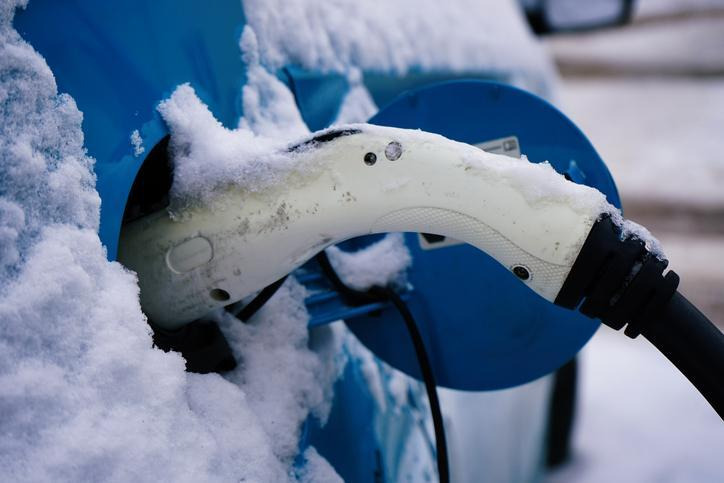
EV Charge Port Icing: Safe Checks When a Connector Freezes
In Brief: EV charging cable stuck: Connector Icing & Safety Checks
An EV charging cable stuck in a frozen charge port may be caused by ice around the connector or a locking mechanism that cannot release. Drivers should stop charging, use the vehicle’s normal unlock procedure, and follow manufacturer-approved thawing instructions rather than pulling forcefully. Technicians investigate persistent problems by checking the connector, charge-port latch, seals, and related electronic controls.
An EV charging cable stuck in a frozen charge port can turn an ordinary winter charging stop into a frustrating problem. Moisture from rain, melting snow, or condensation may freeze around the connector or latch, making it difficult to insert, lock, or remove the charging cable. For drivers in Surrey, where wet winter conditions can occasionally turn icy, understanding what to do next matters.
These situations also highlight an important aspect of modern automotive service. A frozen connector does not necessarily indicate a failed charging component, but repeated release problems may require diagnosis. For aspiring technicians, learning to distinguish environmental interference from mechanical and electrical faults is an increasingly useful skill.
Why Do EV Charge Ports Freeze in Winter?
EV charge ports can freeze when moisture collects around the charging inlet, connector, or locking mechanism and temperatures fall below freezing.
Water may enter the surrounding recess during rain, snowfall, or vehicle washing. When temperatures drop, ice can restrict the movement of a charge-port door or interfere with the connector’s fit.
The problem may appear in several ways:
- The charge-port door will not open.
- The charging connector cannot be fully inserted.
- The connector seats but fails to lock.
- Charging finishes, but the connector will not release.
These symptoms can have different causes, so identifying exactly which part is stuck is an important first step.
What Should You Do When an EV Charging Cable Gets Stuck?
When a charging connector will not release, the safest approach is to stop charging and follow the vehicle manufacturer’s normal unlocking procedure before attempting any other action.
A practical sequence includes:
- Confirm charging has stopped. Use the vehicle’s charging controls or the charging equipment’s normal stop function.
- Unlock the vehicle or charge port. Follow the manufacturer’s instructions, as some connectors remain locked while the vehicle is secured or charging.
- Check for visible ice. Look around the charge-port opening, connector housing, and latch area without inserting tools into the electrical contacts.
- Use approved thawing methods. Follow vehicle-specific guidance, such as activating a charge-port heater or using the vehicle’s preconditioning features where available.
- Attempt a normal release. Once the area has thawed, try the prescribed release procedure without excessive force.
- Seek assistance if it remains stuck. A persistent problem may require inspection rather than repeated attempts to remove the connector.
Drivers should not force the connector or insert tools into the charging inlet. Any thawing method should follow the vehicle manufacturer’s instructions.
Why Might a Tesla Charge Port Freeze or Refuse to Open?
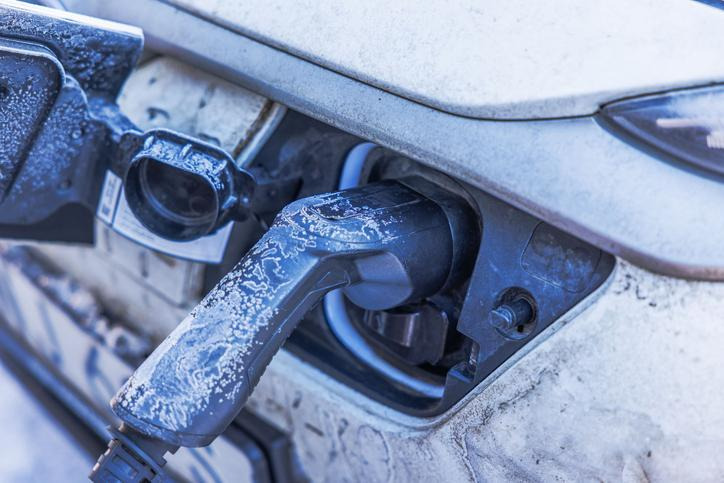
A Tesla charge port frozen during winter may involve ice around the charge-port door, connector, or locking mechanism.
Tesla provides cold-weather features on supported vehicles, including charge-port inlet heating. Depending on the model and software configuration, preconditioning or defrost functions may help thaw affected components.
A Tesla charge port not opening can also have causes unrelated to ice, including a door mechanism problem or an issue with the vehicle’s controls.
For this reason, drivers should consult the owner’s manual for their specific model and model year rather than assume that every Tesla uses the same release procedure.
Tesla also provides manual charge-cable release instructions for certain models. These procedures are intended for specific circumstances and must be followed exactly, with charging stopped. They should not be treated as a general method for forcing a frozen plug loose.
What Do Technicians Check When a Charging Latch Fails?
A charge-port latch may fail to operate because of ice, physical damage, a misaligned connector, or an electrical control issue.
Technicians begin by confirming the complaint and checking whether the problem occurs only during freezing conditions.
A systematic inspection may include:
- Connector condition: Checking for cracks, damaged housings, contamination, or signs of overheating.
- Charge-port seals: Looking for damaged seals or areas where water may collect.
- Latch operation: Confirming that the locking mechanism moves as intended under approved test conditions.
- Electrical controls: Reviewing relevant diagnostic trouble codes and charge-port status information.
- Wiring and connections: Inspecting accessible low-voltage circuits according to manufacturer procedures.
- Repeatability: Determining whether the fault remains after the area has thawed.
Charging equipment and high-voltage components require appropriate safety procedures. Technicians should never probe energized charging contacts or bypass a connector interlock to force operation.
These diagnostic principles are relevant to students considering an Automotive Service Technician Foundation program, where understanding the interaction between mechanical and electrical systems is an important part of modern vehicle service.
How Can Drivers Prevent EV Charge-Port Icing?
Preventing charge-port icing involves reducing moisture buildup and using the vehicle’s available winter features appropriately.
Useful precautions include:
- Keeping the charge-port area free of accumulated snow and slush.
- Checking that the port door and surrounding seals are clean and undamaged.
- Avoiding unnecessary exposure to water immediately before freezing temperatures.
- Using manufacturer-recommended preconditioning or defrost functions.
- Ensuring the connector is properly seated before leaving the vehicle to charge.
For EV charging in cold weather, prevention is often easier than dealing with a frozen connector after charging has finished.
However, drivers should avoid applying unapproved lubricants, sprays, or de-icing chemicals to electrical connectors. Manufacturer instructions should guide any cleaning or maintenance.
Why Is Charge-Port Diagnosis Relevant to Future Automotive Technicians?
Modern electric vehicles combine electrical systems with mechanical components that must operate reliably in changing environmental conditions.
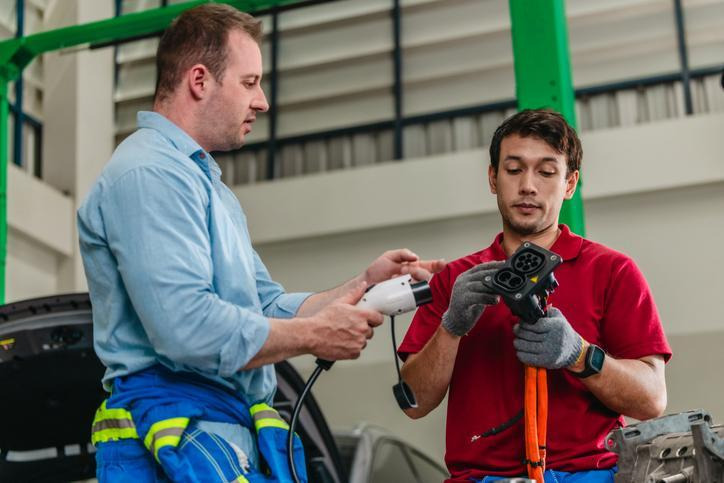
A charging complaint may involve something as simple as ice around a latch or a more complex problem with electronic controls. Diagnosing the difference requires observation, service information, and a methodical approach.
Budding mechanics interested in electric powertrains can explore our hybrid technology training course to learn more about the systems involved in hybrid and electric vehicles.
Explore Automotive Training at ATC Surrey
A frozen EV charging connector demonstrates how everyday vehicle problems can involve mechanical components, electronic controls, and environmental conditions. Explore ATC Surrey’s automotive programs to learn more about vehicle inspection, troubleshooting, and the skills involved in servicing modern automotive technology.
Would you like to explore training opportunities at our auto mechanic school in Surrey?
Contact ATC Surrey for more information.
Key Takeaways
- Ice can prevent an EV charging connector from seating, locking, or releasing properly.
- A stuck charging cable does not automatically indicate a mechanical or electrical failure.
- Drivers should stop charging, follow the manufacturer’s unlocking instructions, and use approved thawing methods.
- Never force a frozen connector, insert sharp tools into the charge port, or apply boiling water.
- Tesla charge-port heating and release procedures vary by model and configuration.
- Technicians inspect connector condition, seals, latch operation, and electronic controls when problems persist.
- Understanding EV charging systems is increasingly relevant to automotive service and diagnostics.
FAQ
What should you do when an EV charging port freezes?
Stop charging and follow the vehicle manufacturer’s recommended unlocking and thawing procedures. Where supported, use the vehicle’s preconditioning or charge-port heating functions. Avoid excessive force, boiling water, and sharp tools. If the connector remains stuck after thawing, arrange a professional inspection.
Can you force a frozen EV charging connector out?
No. Pulling forcefully on a frozen connector can damage the locking mechanism, charge-port housing, or electrical components. Charging should be stopped, and the manufacturer’s approved release procedure should be followed. If the connector will not release normally, seek qualified assistance.
How do you prevent charge-port icing?
Keep the charging area clear of snow and slush, check that the charge-port seals are in good condition, and use manufacturer-recommended winter features where available. Avoid introducing unnecessary moisture before freezing temperatures and do not apply unapproved chemicals to electrical contacts.
When should a frozen charging latch be inspected?
A charging latch should be inspected if it repeatedly sticks, fails to lock or release after thawing, displays charging-related warnings, or shows visible damage. Technicians can assess the mechanical latch, connector condition, seals, and relevant electronic controls to identify the cause.


