
EV Brake Maintenance in Winter: Why Regenerative Braking Does Not Eliminate Caliper Service
In Brief: The Importance Of Electric Car Brakes: Maintenance in Winter
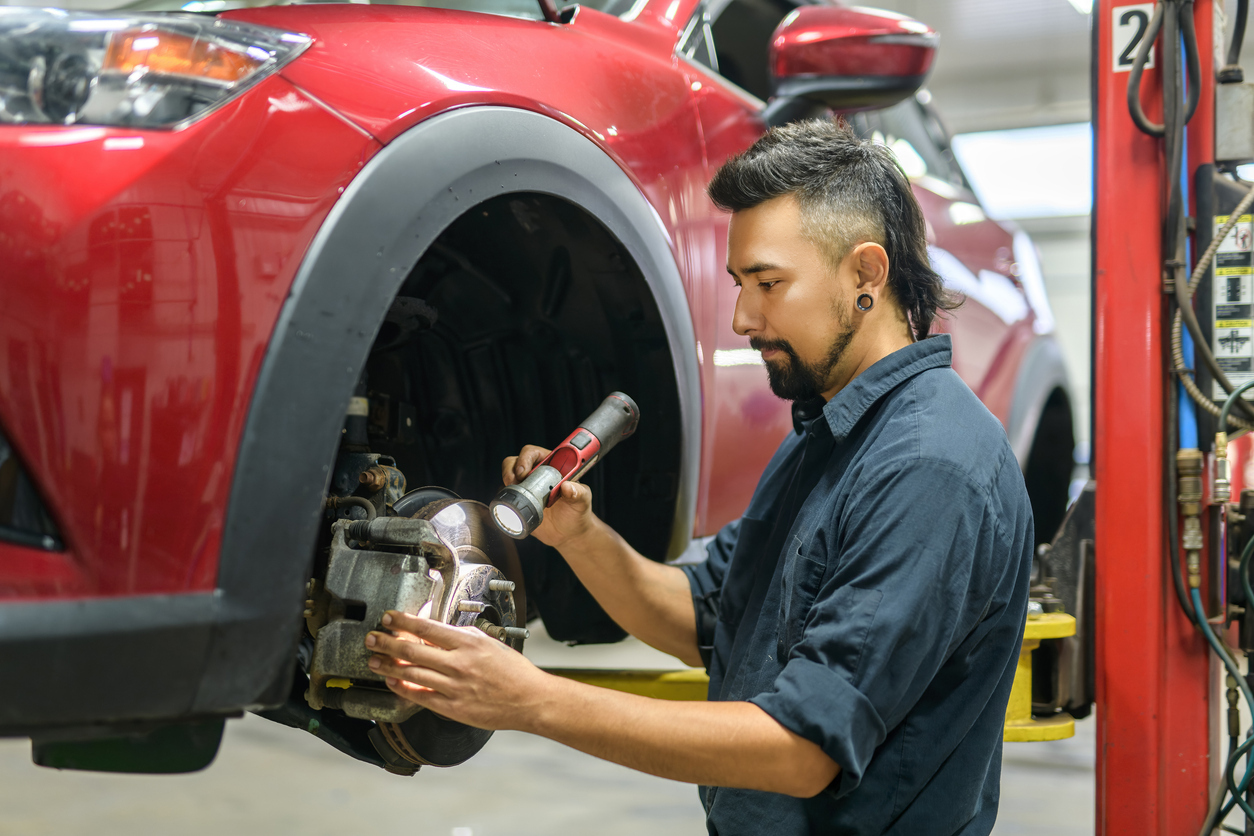
Electric car brakes combine regenerative braking with conventional friction brakes. Although regeneration can reduce brake pad wear, it does not eliminate the need for maintenance. Moisture, road salt, and infrequent friction-brake use can contribute to rotor corrosion and sticking caliper hardware. Technicians should inspect pads, discs, calipers, slide pins, and related components according to manufacturer procedures, especially before and during winter.
One of the advantages of driving an electric vehicle is that its brake pads may last longer than those in a conventional gasoline-powered car. Regenerative braking handles some of the work of slowing the vehicle, reducing how often the friction brakes are needed. But electric car brakes still face wear, corrosion, and mechanical problems, particularly during winter.
For aspiring automotive technicians in Surrey, this creates an interesting maintenance challenge. A vehicle with relatively little brake pad wear can still have corroded rotors or seized caliper components. Understanding why helps explain how electric vehicle technology changes maintenance priorities without eliminating traditional mechanical service.
How Do Electric Car Brakes Work?
Electric vehicles typically use two complementary braking systems. Regenerative braking uses the electric drive motor as a generator during deceleration. The motor converts some of the vehicle’s kinetic energy into electrical energy, which can be returned to the battery.
Friction braking uses conventional brake components to slow or stop the wheels through mechanical friction. Modern EVs coordinate these systems according to factors such as braking demand, battery conditions, vehicle speed, and available traction.
Regeneration cannot handle every braking situation. Friction brakes remain essential for stronger deceleration, certain low-speed conditions, and situations where regenerative braking is limited.
This answers a common beginner question: do electric cars have brake pads? Yes. Most passenger EVs have conventional brake pads, discs, and calipers, even though their electric motors can contribute to deceleration.
Why Can EV Brake Rotors Rust During Winter?
Brake rotors are commonly made from cast iron, which can develop surface rust when exposed to moisture and oxygen.
In Surrey, winter rain, damp conditions, and road contaminants can contribute to corrosion. Vehicles driven on salted roads may face additional exposure. On conventional vehicles, frequent friction braking helps remove some light surface corrosion from the rotor’s swept area.
EVs may use their friction brakes less frequently because regenerative braking handles part of the deceleration. As a result, surface corrosion may remain longer, particularly when a vehicle is driven gently or parked for extended periods.
Light surface rust is not automatically a sign that a rotor needs replacement. However, persistent corrosion, pitting, uneven contact, or deterioration affecting braking performance requires further assessment. Technicians must distinguish normal surface oxidation from damage that affects safe operation.
Why Doesn’t Regenerative Braking Prevent Caliper Problems?
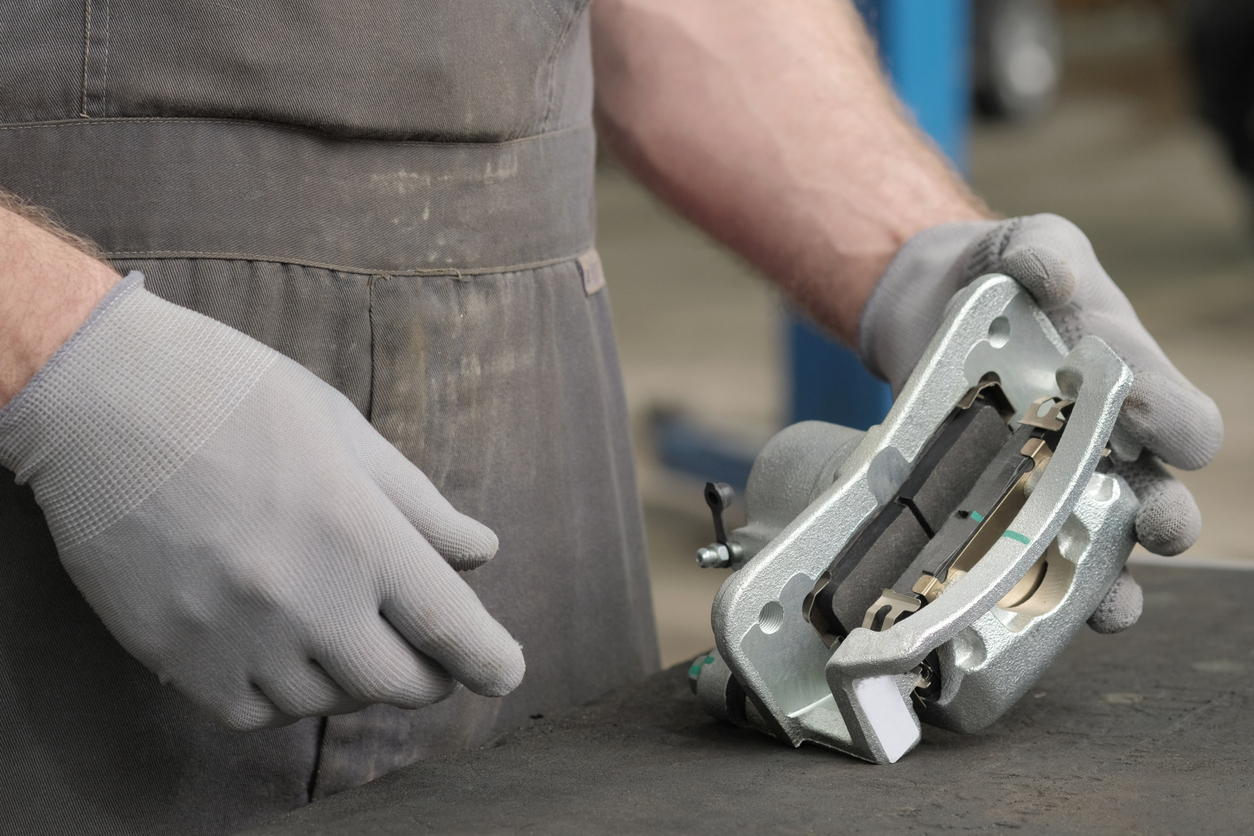
Regenerative braking reduces some friction-brake use, but it does not protect the caliper assembly from moisture, contamination, or deterioration. A brake caliper contains components that must move correctly when the friction brakes are applied.
Depending on the design, these may include pistons, sliding pins, boots, seals, and associated hardware. When corrosion or contamination interferes with movement, the brake pads may not apply or release as intended.
Possible warning signs include:
- Uneven brake pad wear.
- A wheel that becomes unusually hot.
- Dragging or resistance while driving.
- Pulling during braking.
- Unusual noises or reduced braking performance.
Because electric car brake pads may wear slowly, technicians should not assume that substantial remaining pad material means the entire brake assembly is healthy. A caliper can develop a mechanical problem even when its pads have considerable service life remaining.
What Does Tesla Brake Maintenance Tell Us About EV Service?
Tesla brake maintenance provides a useful example of why regenerative braking does not replace conventional brake servicing. Tesla’s maintenance guidance for certain models recommends cleaning and lubricating brake calipers every 12 months or 20,000 km in areas where roads are salted during winter.
This recommendation addresses the potential effects of road salt and corrosion on brake components. However, service intervals and procedures can differ between Tesla models, model years, and other EV manufacturers.
Technicians should always consult the specific vehicle’s current maintenance schedule rather than applying one manufacturer’s recommendation to every electric vehicle. The broader lesson is that reduced friction-brake use does not eliminate exposure to harsh environmental conditions.
What Brake Components Should Technicians Inspect Each Winter?
A winter brake inspection should evaluate the condition and operation of the complete friction-brake system.
| Component | What technicians check | Why it matters |
|---|---|---|
| Brake pads | Thickness, uneven wear, glazing, and contamination | Confirms pad condition and contact quality |
| Brake rotors | Corrosion, pitting, scoring, thickness, and surface condition | Identifies deterioration that may affect braking |
| Calipers | Leaks, corrosion, piston operation, and physical condition | Helps detect sticking or damaged components |
| Slide pins and hardware | Free movement, lubrication, and damaged boots | Supports proper pad application and release |
| Brake hoses and lines | Leaks, damage, and corrosion | Helps maintain hydraulic system integrity |
| Parking brake components | Correct operation and signs of binding | Supports reliable parking brake function |
Inspection procedures must follow manufacturer requirements. Some EVs use electronically controlled braking systems or electric parking brakes that require a specific service mode before work begins.
Technicians should never assume that a brake component can be serviced using the same procedure as a conventional vehicle.
How Do Technicians Service EV Brakes Safely?
Brake service on an electric vehicle combines familiar mechanical procedures with vehicle-specific electronic considerations.
A typical approach involves:
- Identify the vehicle and braking system. Review manufacturer service information and maintenance requirements.
- Check for relevant faults. Investigate brake or stability-system warnings before beginning repairs.
- Follow the required service procedure. Activate the appropriate brake service mode where specified.
- Inspect mechanical components. Check pads, rotors, calipers, seals, slide pins, and hardware.
- Clean and lubricate approved components. Use manufacturer-specified materials and procedures, keeping friction surfaces free of lubricant.
- Verify correct operation. Complete required system checks before returning the vehicle to service.
Technicians must also understand that some EV systems can activate automatically under certain conditions.
Appropriate isolation, lifting, and electronic brake procedures are therefore essential. These responsibilities show why an Automotive Service Technician Foundation program must address both mechanical fundamentals and modern vehicle systems.
Why Is EV Brake Maintenance Important for Future Technicians?
Electric vehicles are changing how technicians approach routine maintenance. Brake pads may last longer because of regenerative braking, but reduced use can introduce different inspection priorities.
A technician needs to understand how regeneration interacts with hydraulic braking, recognize corrosion-related problems, and follow electronic service procedures. Students interested in electrified powertrains can also explore hybrid technology training to better understand the systems that distinguish hybrid and electric vehicles from conventional models.
Explore Automotive Training at ATC Surrey
Regenerative braking can reduce wear, but it cannot replace the mechanical condition of brake pads, rotors, and calipers. For future technicians, understanding this distinction is part of learning how to inspect and maintain modern vehicles.
Explore ATC Surrey’s programmes to discover how automotive service skills connect with evolving electric and hybrid vehicle technologies.
Would you like to explore automotive training options at our auto mechanic school in Surrey?
Contact ATC Surrey for more information.
Key Takeaways
- Electric car brakes use regenerative braking alongside conventional friction brakes.
- Regeneration can reduce brake pad wear but does not eliminate the need for inspections and maintenance.
- Winter moisture and road salt can contribute to rotor corrosion and sticking caliper components.
- Reduced friction-brake use may allow corrosion to remain on rotor surfaces longer.
- Caliper pistons, slide pins, seals, and hardware can deteriorate even when brake pads have substantial material remaining.
- Tesla recommends periodic brake caliper cleaning and lubrication for certain models driven on salted winter roads.
- Technicians should follow vehicle-specific brake service modes and manufacturer procedures.
- EV brake maintenance combines mechanical inspection skills with knowledge of electronic braking systems.
FAQ
Do EVs need regular brake maintenance?
Yes. Electric vehicles still have conventional friction brakes that require inspection and maintenance. Although regenerative braking can reduce pad wear, brake rotors, calipers, hydraulic components, and associated hardware remain subject to corrosion and deterioration.
Why can electric-car brake rotors rust?
Most brake rotors contain iron, which reacts with moisture and oxygen to form rust. Winter road salt and damp conditions can accelerate corrosion. Because regenerative braking reduces some friction-brake use, light surface rust may not be removed as frequently.
Does regenerative braking prevent caliper problems?
No. Regenerative braking reduces the workload on friction brakes but does not prevent moisture, dirt, or corrosion from affecting caliper pistons, slide pins, seals, and other components. Mechanical inspection remains necessary.
What brake components should technicians inspect each winter?
Technicians should inspect brake pads, rotors, calipers, slide pins, seals, hardware, hydraulic lines, and parking brake components. They should look for corrosion, uneven wear, leaks, restricted movement, and other signs of deterioration while following the manufacturer’s service procedures.


