Essential Tools for Auto Mechanic Students: Learning What Really Matters
Completing auto mechanic school is an exciting achievement. Thereafter, walking into a mechanic’s shop for the first time can be overwhelming. With wrenches, torque tools, diagnostic scanners, compressors, and the list goes on. For auto mechanic school students just starting their journey, it can be tempting to believe they need everything all at once. But successful technicians know: it’s not about quantity, it’s about knowing your essentials and how to use them.
Students at ATC Toronto learn how to build their toolkit the smart way, adding tools as their skills grow and their needs evolve.
What Every Beginner Needs in Their Toolbox
In your first few months of auto mechanic school, you’ll be introduced to tools that you’ll use daily for the rest of your career. These include:
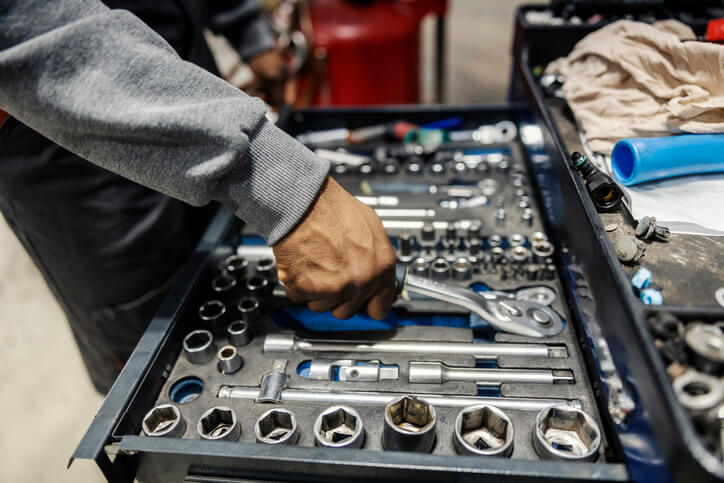
- Socket and wrench sets
- Screwdrivers (flat and Phillips)
- Torque wrench
- Multimeter
- Pliers and cutters
- Pry bars
- Work light and safety gear (gloves, glasses, boots)
These are your foundation. In automotive training, students work with these tools in hands-on labs: replacing brakes, testing voltage, diagnosing engine faults, and more.
Buying Tips: Quality Over Quantity
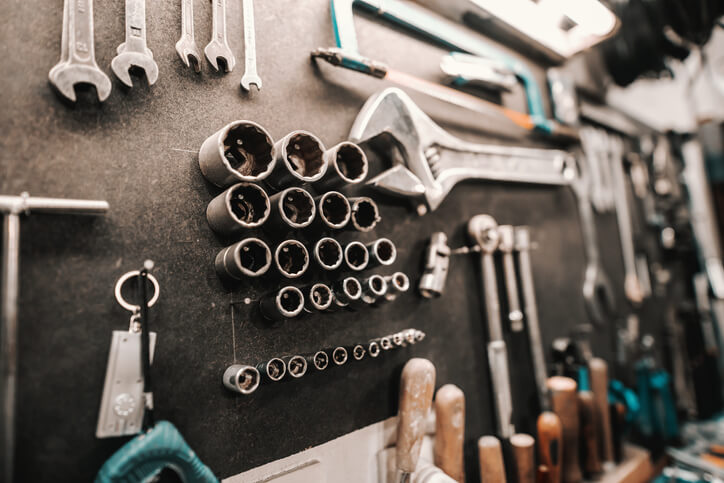
Tools are a major investment. During class, instructors will often guide students on which brands offer durability and precision without breaking the bank. The focus is always on investing wisely, not necessarily expensively.
Here are a few lessons automotive training students often hear:
- Start with a modest set and add specialty tools over time
- Avoid no-name brands for torque or electrical tools
- Take advantage of student discounts from tool truck vendors
- Protect your gear with labeled toolboxes and foam inserts
Some students worry about what’s “missing” in their toolkits, but instructors at ATC remind them: it’s not about having every gadget. It’s about knowing how to use what you’ve got.
How ATC Auto Mechanic School Prepares Students for Real-World Work
Tool knowledge is one of many soft and hard skills students develop in the program. Beyond hands-on practice, students learn:
- Proper tool maintenance and storage habits
- Safety procedures for power tools
- Ergonomic handling to reduce strain
- Collaborative tool-sharing in team environments
And perhaps most importantly, students learn professional habits such as putting tools back, treating equipment with respect, and understanding that being organized and efficient matters just as much as technical know-how.

Your Tools Are Your Signature
Every seasoned technician has their own setup. Some carry specialized tools for performance engines, while others focus on quick-access basics. Your collection becomes your signature, and employers notice.
Whether you’re entering the field or preparing for your first interview, having the right tools and knowing how to use them can help you stand out. Instructors at ATC Toronto auto mechanic school make sure you graduate with the mindset and discipline to do just that.
Start Your Training with Confidence
If you’re ready to build your skills and your toolbox, the first step is finding the right learning environment. At auto mechanic school like ATC Toronto, you’ll receive automotive training that’s designed for long-term success.
Get industry insights, real-world practice, and professional guidance to set your auto career in motion.
Contact ATC Toronto now!