Engine Timing Explained: Why Timing Matters in Vehicle Performance
Engine Timing: A Summary for Students
Engine timing determines when an engine’s valves open and the spark occurs, directly affecting performance, efficiency, and reliability. Although modern vehicles manage much of this electronically, technicians still need to understand concepts like ignition timing and ignition advance to diagnose drivability issues effectively. Building these fundamentals prepares students for a wide range of auto careers.
A well-running engine depends on more than fuel and spark, it depends on precise timing. Every combustion event must happen at exactly the right moment to deliver smooth performance, strong fuel economy, and reliable operation.
That’s why engine timing remains one of the most important concepts students learn in an auto mechanic school. Even though today’s vehicles rely on sophisticated electronic controls, understanding how timing affects engine operation gives future technicians the knowledge they need to diagnose problems with confidence.
What Is Engine Timing?
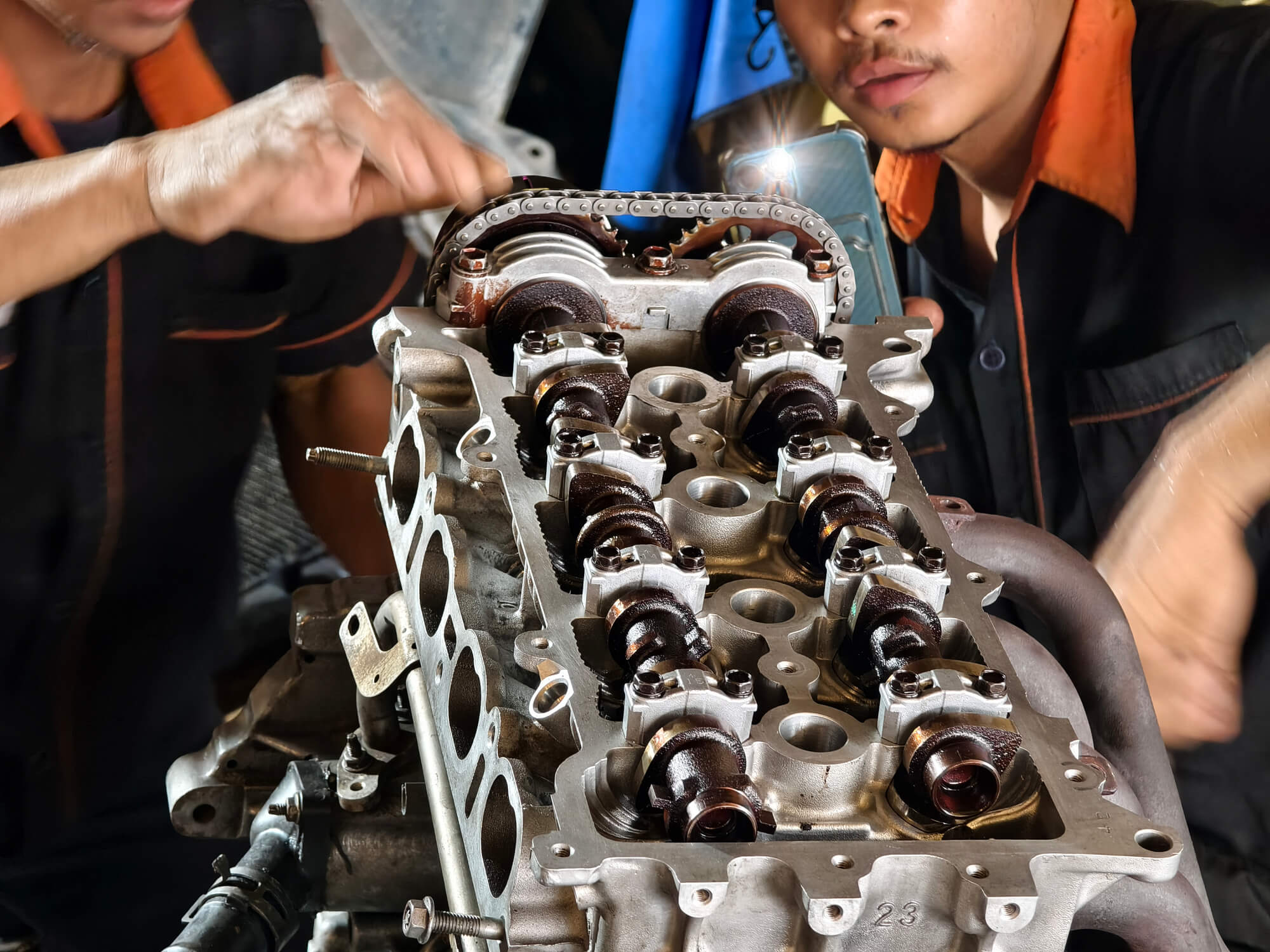
Engine timing refers to the precise coordination between the engine’s moving components and the spark that ignites the air-fuel mixture inside the cylinders.
Two systems work together:
- Valve timing, which controls when intake and exhaust valves open and close.
- Ignition timing, which determines exactly when the spark plug fires.
In older vehicles, technicians often adjusted ignition advance timing manually. Modern vehicles use sensors and the engine control module (ECM) to continually optimize ignition timing based on engine speed, load, temperature, and driving conditions.
Understanding these principles helps technicians recognize when timing-related issues may be affecting vehicle performance.
Why Does Engine Timing Matter?
Engine timing matters because it directly influences engine power, fuel efficiency, emissions, and drivability.
Proper timing allows combustion to occur at the ideal point in the piston’s movement. When ignition advance is properly controlled, the engine can deliver:
- Better acceleration
- Improved fuel economy
- Lower emissions
- Smoother operation
- Greater engine reliability
If timing occurs too early or too late, combustion efficiency decreases, and performance suffers.
What Happens if Engine Timing Is Wrong?
Incorrect engine timing can reduce engine performance, increase fuel consumption, and cause drivability problems.
Common symptoms include:
- Rough idling
- Poor acceleration
- Engine knocking or pinging
- Hard starting
- Reduced fuel economy
- Increased emissions
- Illuminated warning lights
Although modern engine computers automatically adjust ignition timing under many operating conditions, technicians must still understand how sensors, actuators, and mechanical components work together when diagnosing these symptoms.
How Do Technicians Diagnose Engine Timing Problems?
Technicians diagnose engine timing problems by combining scan tool data, visual inspections, service information, and performance testing. Rather than guessing, they follow a logical process to determine whether a fault is mechanical or electronic.
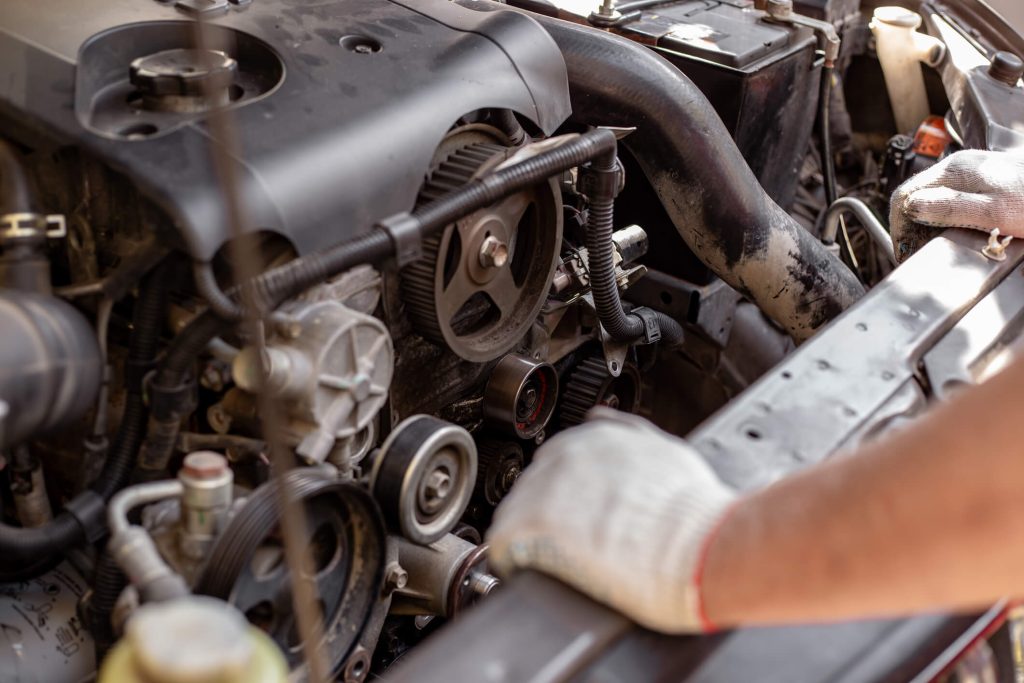
For example, technicians may compare crankshaft and camshaft sensor readings, check for diagnostic trouble codes, inspect timing belts or chains for wear, and evaluate variable valve timing system operation. They also review live data to see how the engine control module manages ignition timing and ignition advance under different driving conditions. Learning these diagnostic techniques during hands-on training helps students develop the confidence to troubleshoot timing-related issues accurately and prepare for a wide range of auto careers.
Do Technicians Still Need to Understand Timing on Modern Vehicles?
Yes. While modern control systems automatically manage many timing functions, technicians still need a strong understanding of timing principles to diagnose engine performance concerns accurately.
Students enrolled in an automotive school learn how electronic controls, variable valve timing systems, crankshaft and camshaft sensors, and scan tools all contribute to modern engine diagnostics.
Hands-on auto mechanic school training also teaches students how to interpret live scan data, recognize timing-related faults, and understand why manufacturers use different ignition advance strategies under varying driving conditions.
These foundational skills prepare graduates for a wide variety of auto careers, where diagnostic ability is becoming just as valuable as mechanical repair skills.

Ready to Build Your Automotive Skills?
Our auto mechanic school provides practical automotive school training that helps students understand engine systems, diagnostics, electronics, and modern repair techniques. Hands-on learning prepares graduates for rewarding auto careers in today’s evolving automotive industry.
Would you like to explore a wide range of auto careers?
Contact ATC Montreal for more information.
Key Takeaways
- Engine timing controls when combustion events occur and plays a major role in vehicle performance.
- Ignition timing, ignition advance, ignition advance timing, and proper ignition time all contribute to efficient engine operation.
- Incorrect timing can cause rough running, poor fuel economy, and reduced performance.
- Modern vehicles manage timing electronically, but technicians still need to understand the underlying mechanical and electronic principles.
- Hands-on training at an auto mechanic school helps students build the diagnostic skills needed for today’s auto careers.
FAQ
What is engine timing?
Engine timing is the synchronization of valve movement and spark plug firing to ensure efficient combustion and smooth engine operation.
Why does engine timing matter?
Proper engine timing improves engine performance, fuel efficiency, emissions control, and overall drivability.
What happens if engine timing is wrong?
Incorrect timing can lead to rough idling, poor acceleration, increased fuel consumption, engine knocking, and reduced engine performance.
Do technicians still need to understand timing on modern vehicles?
Yes. Even though computers control most timing adjustments, technicians need to understand timing principles to accurately diagnose engine and drivability problems.