Developing Diagnostic Confidence: How Students Learn to Trust Their Own Process
Every engine noise, flickering dash light, or performance issue tells a story, and it’s the job of the auto technician to interpret it. For students at an auto mechanic school, learning how to diagnose a problem correctly is one of the most important and intimidating skills they’ll develop.
Unlike straightforward tasks like oil changes or tire rotations, diagnostics involve problem-solving, patience, and confidence. But that confidence doesn’t come overnight. It’s built, step by step, through structured learning and guided experience.
Learning the Diagnostic Process: From Foundation to Execution
At a reputable automotive school, students don’t jump into troubleshooting blindly. They learn a systematic process:
- Interview the driver or client to understand symptoms.
- Recreate the issue through road tests or in-shop simulations.
- Perform visual inspections for leaks, corrosion, damage, or wear.
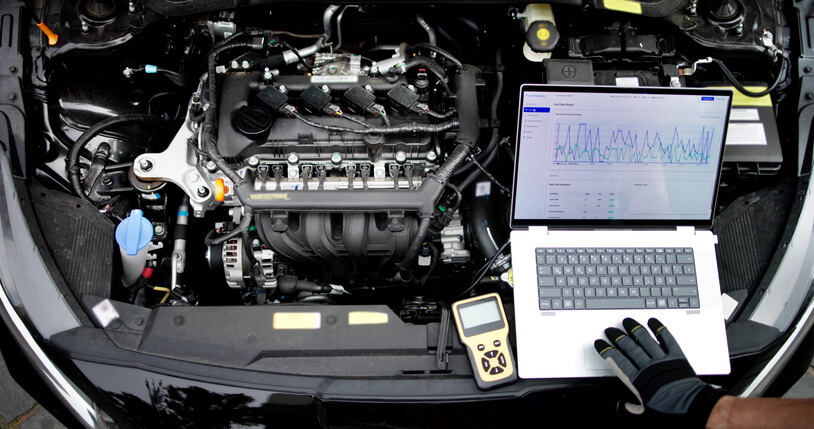
- Use scan tools to read fault codes or sensor data.
- Cross-reference symptoms with possible component failures.
- Test components such as ignition coils, oxygen sensors, or fuses.
By following a logical sequence, students build a mental checklist they can rely on. This reduces guesswork and increases accuracy, making students better prepared for real auto careers.

Why Hands-On Auto Mechanic Training Practice Is Non-Negotiable
In the classroom, a faulty fuel injector is just a concept. On the shop floor, it’s a challenge waiting to be diagnosed. That’s why auto mechanic training programs emphasize real-world experience. Students work on live vehicles with real problems, under the supervision of seasoned instructors.
Each hands-on repair becomes an opportunity to:
- Recognize common failure patterns.
- Practice interpreting error codes.
- Troubleshoot step-by-step before jumping to conclusions.
This kind of practice helps students shift from “What if I mess this up?” to “I’ve seen this before, I know what to check.”
Learning From Mistakes Without Fear
Mistakes are part of the process. No one gets every diagnosis right the first time, and instructors know this. That’s why a strong auto mechanic school culture focuses on learning from errors.
When a student misdiagnoses an issue, it becomes a teaching moment:
- What step was skipped?
- What assumption was made too early?
- Was the right tool used?
These reflections help students course-correct and internalize the importance of process, not just intuition.

Building Confidence Through Repetition and Mentorship
Confidence in diagnostics is about consistency. Students gain confidence when they:
- Repeat key diagnostic steps across different vehicles.
- Troubleshoot various systems (electrical, emissions, fuel, etc.).
- See patterns emerge across seemingly unrelated issues.
Instructors play a crucial role, providing encouragement and constructive feedback. Over time, students transition from nervous observers to proactive problem-solvers.
Why Diagnostic Skills Matter for Long-Term Auto Careers
In today’s tech-driven vehicles, diagnostic accuracy can make or break a mechanic’s reputation. Whether working at a dealership, running a personal garage, or exploring performance tuning, sharp diagnostic skills open the door to more responsibility, faster turnaround times, and higher-paying roles.
By investing in a training program that emphasizes diagnostics, students learn more than how to fix cars and how to prepare for auto careers.
Are You Ready to Start Your Diagnostic Journey?
Whether you’ve been around cars your whole life or are just starting to explore the world under the hood, trust in your ability to learn, grow, and improve. A solid education at an auto mechanic school helps you develop not only technical skills but also the confidence to diagnose with precision.
Explore our automotive school in Cambridge and get ready to build a career where your instincts and your skills work hand in hand.
Contact ATC Cambridge Now!