
Flickering Dashboard Lights: How Technicians Trace Charging and Wiring Faults
In Summary: What Dashboard Lights Flickering Can Mean
Dashboard lights flickering can indicate unstable electrical voltage, but the alternator is not automatically to blame. A weak battery, poor ground, loose connection, damaged wiring, charging-system problem, or other electrical fault may produce similar symptoms. Technicians narrow down the cause by checking when the flickering occurs, testing the battery and charging system, inspecting connections, and performing voltage-drop and other appropriate electrical tests.
A dashboard that suddenly begins flickering can make an electrical problem seem obvious: the alternator must be failing.
Sometimes it is. Sometimes it isn’t.
Modern vehicles depend on stable electrical power for everything from lighting and instrumentation to control modules and engine-management systems. When voltage becomes unstable, the driver may first notice relatively simple symptoms such as dimming or dashboard lights flickering. The real diagnostic challenge is identifying why the voltage is changing.
For students beginning auto mechanic training, complaints like this demonstrate why electrical diagnosis should follow a logical testing process. In Ontario, diagnosing and repairing charging systems, panel instruments, wiring, and other electrical and electronic systems fall within the automotive service technician’s scope of practice.
Why Are My Dashboard Lights Flickering?
Fluctuating electrical supply is one possible explanation, but technicians need to determine where that instability originates.
The first clues often come from the circumstances surrounding the complaint. Do the dash lights flickering symptoms appear only at idle? Does the brightness change when the engine speed increases? Does it happen when the heater blower, headlights, heated seats, or other electrical loads are switched on?
Technicians may also ask whether other symptoms occur at the same time. For example, if the headlights and dash lights flicker when the car is running, the problem may involve something shared by multiple electrical circuits rather than the instrument panel alone.
A visual inspection can reveal loose battery terminals, corrosion, damaged cables, worn drive components, or obvious wiring concerns. From there, measurements help replace assumptions with evidence.
Do Flickering Dashboard Lights Mean the Battery or Alternator Is Bad?
Not necessarily. Either component can contribute to electrical problems, but testing is needed before condemning one.
The battery provides electrical energy for starting and helps stabilize the vehicle’s electrical supply, while the alternator supplies power and maintains battery charge once the engine is running. Charging faults can also originate in the regulator, wiring, connections, or drive system rather than inside the alternator itself.
Students at our auto mechanic school learn why the battery and charging system should be considered together. A technician may evaluate battery condition and then measure charging-system behaviour with the engine running and under different electrical loads.
Vehicle specifications matter here. Modern computer-controlled charging systems do not necessarily maintain one fixed voltage under every operating condition, so technicians should compare readings with the manufacturer’s service information rather than relying on a universal number.
That broader approach is particularly useful when dashboard lights flicker while driving. A fault that appears only under certain loads, temperatures, vibrations, or engine speeds may require technicians to reproduce the conditions before they can isolate it.
Can a Bad Ground Cause Dashboard Lights to Flicker?
Yes. Excessive resistance in a ground connection can interfere with normal current flow and create voltage-related electrical symptoms.
Ground circuits complete the electrical path back to the battery. A connection may look acceptable from the outside, while corrosion, looseness, damaged cables, or poor contact creates excessive resistance.
This is why visual inspection alone may not be enough.
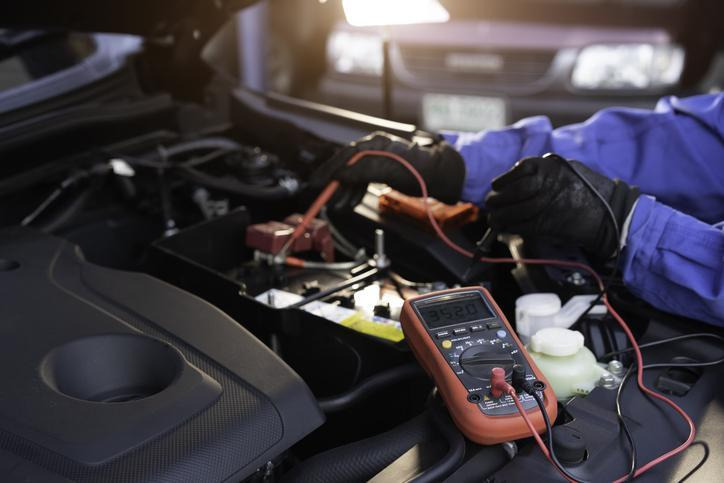
A voltage-drop test allows technicians to measure voltage lost across a connection or section of a circuit while current is flowing. Excessive voltage drop can direct attention toward a high-resistance connection instead of an expensive component that is still functioning correctly. Poor battery-cable and ground connections are recognized causes of charging-system problems.
If you want to become a mechanic, learning involves more than knowing component names. Students need to understand circuits well enough to determine whether power and ground are reaching those components correctly.
How Do Technicians Diagnose Flickering Dashboard Lights?
They typically work from the symptom toward the electrical source, using inspections and measurements to narrow the possibilities.
The process may include:
- Confirming when the flickering happens
- Checking battery condition and terminal connections
- Inspecting charging-system wiring and grounds
- Measuring charging performance under appropriate conditions
- Comparing behaviour with and without additional electrical loads
- Performing voltage-drop tests where excessive resistance is suspected
- Checking applicable diagnostic trouble codes and scan data
- Inspecting the affected lighting, instrument, or module circuits when necessary
If the dash lights are flashing while other lights remain stable, technicians may investigate the instrument cluster, its power and ground circuits, communication networks, or related controls more closely.
If several electrical systems fluctuate together, the investigation may move toward shared power, ground, battery, or charging-system components.
Alternator problems can also take different forms. For example, failed alternator diodes can reduce output, and appropriate testing equipment can identify abnormal ripple patterns associated with diode or winding faults. The important principle is to test before replacing.
Why Is Electrical Diagnosis an Important Skill for Future Technicians?
Electrical complaints can be deceptive because several faults may create very similar symptoms.
Replacing an alternator because the lights flicker might appear to solve the obvious possibility, but it will not repair a corroded ground connection or a damaged charging cable. Likewise, replacing a battery without determining why it became discharged may leave the underlying problem untouched.
Flickering lights, therefore, provide a useful introduction to diagnostic reasoning. Students learn to reproduce a complaint, understand the circuit, gather measurements, compare those measurements with specifications, and gradually eliminate possible causes.
That process becomes increasingly important as vehicles incorporate more electronic modules, networked systems, sensors, and electronically controlled components.
For future technicians, the goal is not simply to recognize that something electrical is wrong. It is to trace the fault far enough to explain what is wrong, where it is occurring, and why the evidence supports the recommended repair.
Are you looking for comprehensive auto mechanic training?
Contact ATC Cambridge for more information.
Key Takeaways
- Dashboard lights flickering can have battery, charging system, wiring, ground, connection, or electronic causes.
- Flickering does not automatically mean the alternator has failed.
- The conditions under which the symptom occurs can provide important diagnostic clues.
- A poor ground or high-resistance connection can interfere with electrical system performance.
- Voltage-drop testing can help technicians locate unwanted resistance in wiring and connections.
- When headlights and dashboard lights fluctuate together, technicians may investigate electrical sources shared by multiple circuits.
- Accurate electrical diagnosis relies on inspection, testing, specifications, and evidence before parts are replaced.
FAQ
Why are my dashboard lights flickering?
Dashboard lights may flicker because of unstable electrical voltage, a charging-system problem, poor battery connections, bad grounds, wiring faults, or problems affecting the instrument circuit itself.
Do flickering dashboard lights mean the battery or alternator is bad?
Not necessarily. A battery or alternator problem is possible, but poor connections, wiring resistance, grounds, regulators, or other electrical faults can produce similar symptoms. Testing is required to identify the source.
Can a bad ground cause dashboard lights to flicker?
Yes. A loose, corroded, or high-resistance ground connection can interfere with current flow and cause voltage-related electrical symptoms, potentially including flickering lights.
How do technicians diagnose flickering dashboard lights?
Technicians may check battery condition, charging-system performance, terminals, wiring, and grounds; reproduce the symptom under different electrical loads; perform voltage-drop tests; and use scan data or other diagnostic equipment when appropriate.