
How Mechanics Develop Critical Thinking: Asking the Right Questions Before the Repair Starts
As discovered in automotive school, great diagnostics begin with great questions. In the automotive repair world, the best mechanics don’t just turn wrenches blindly; they think critically from the very start. This means gathering information, questioning assumptions, and planning a strategy before any repair begins. Critical thinking allows mechanics to “think clearly and precisely when faced with complicated problems,” and to question how things work to solve issues systematically.
For students in auto mechanic training, learning this skill is essential. Let’s explore why asking the right questions is so important and how aspiring mechanics develop this critical thinking ability through structured questioning.
Why Critical Thinking Matters in Automotive Repair
In auto repair, rushing in without a plan can lead to misdiagnosis and wasted time. A professional technician knows that solving complex car problems requires a logical, step-by-step approach, not guesswork.
Critical thinking forces a mechanic to collect information, ask thoughtful questions, and analyze possible solutions rather than grab the first tool in sight. By taking a moment to diagnose systematically, mechanics save time, money, and protect their reputation for quality work.
Critically minded mechanics behave a bit like detectives. They know that an unusual vehicle issue might not be obvious at first glance, so they remain curious and methodical. Instead of accepting the problem at face value, they dig deeper and consider multiple angles. This mindset is invaluable when facing a rare or puzzling malfunction. Good critical thinkers will keep probing and look at the problem from different angles until the real cause is found.
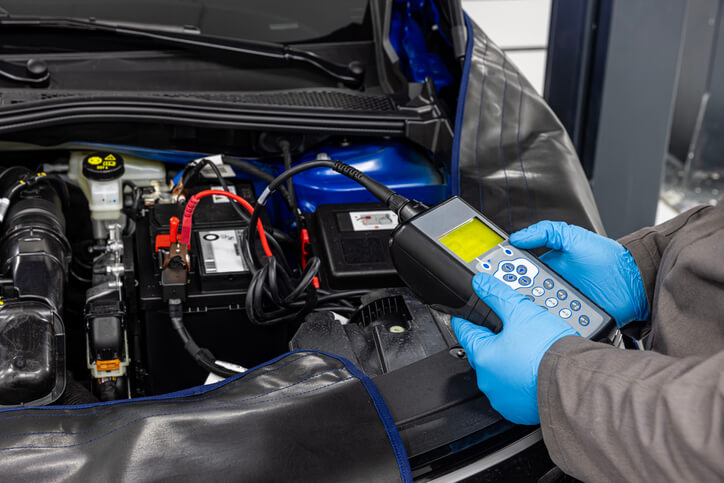
Asking the Right Questions: The First Step in Diagnosis
The moment a car rolls into the shop with a problem, a skilled mechanic’s first tool isn’t a wrench; it’s a question. Mechanics typically begin by interviewing the customer and examining the situation, which helps frame the issue clearly.
So, what kind of questions does a critical-thinking mechanic ask before any repair? Often, they revolve around the classic who, what, where, when, why, and how of the car’s symptoms. By covering these bases, a technician gathers a 360° view of the issue. Here are some key questions mechanics ask before a repair:
- When does the problem occur? Timing can be crucial.
- Under what conditions does it happen? Context matters.
- Has any work been done recently? Changes to the vehicle can introduce new problems.
- What are the symptoms and sounds? Mechanics ask customers to describe exactly what they observe, any strange noises, dashboard warning lights, odd smells, or performance issues.
- How often does it happen? Determining if the problem is consistent or intermittent is another important piece of the puzzle.

By the end of this questioning phase, a critical-thinking mechanic will have a working hypothesis of what might be wrong. They are essentially testing their understanding of the problem before testing any parts.
In practice, this might involve the technician rephrasing the issue back to the customer: “So to recap, every morning when you first start the car, you hear a loud screeching belt noise for a few seconds, especially on damp days, and it started after your last maintenance service, is that correct?” Confirming details like this ensures nothing is overlooked.
Crucially, once the mechanic has gathered all the info, they will attempt to verify the concern themselves. A fault that can’t be observed or replicated is notoriously hard to fix. That’s why an expert will take the car for a test drive or run initial tests to reproduce the symptom under the described conditions.
Structured Thinking and Diagnosis Training in Auto Mechanic School
Critical thinking is a skill honed through training and experience. In an automotive school, students are taught to approach vehicle issues using structured diagnostic procedures from day one. Rather than fixing things by trial and error, aspiring mechanics learn to follow industry-proven steps: verify the concern, perform preliminary checks, research possible causes, test hypotheses, and only then repair. This systematic approach reinforces critical thinking at each stage.
Instructors also introduce frameworks like the aforementioned Three C’s (Concern, Cause, Correction) to ingrain a disciplined thought process. By focusing heavily on the Concern stage, students see firsthand how a well-defined problem is already half-solved. They come to understand that skipping straight to a supposed fix without a full picture is a recipe for frustration.
Moreover, automotive training programs often incorporate real-world diagnostic projects where students must apply critical thinking under supervision. They might be presented with a car exhibiting multiple trouble codes and have to decide what to investigate first, using service manuals and technical bulletins as guides.
From Classroom to Career: Lifelong Benefits of Critical Thinking
Developing critical thinking through structured questioning does more than help you succeed as it also prepares you for a successful automotive career. Every experienced mechanic has faced complex diagnostics where careful reasoning made all the difference. Whether you work at a dealership, a local garage, or run your own shop, the ability to ask the right questions leads to more accurate diagnoses, faster repairs, and satisfied customers.
Building these skills early helps you stand out as a reliable technician who gets it right the first time. Employers value critical thinking because it reduces comebacks and builds trust with clients. It allows technicians to make informed decisions and solve complex problems, exactly what today’s auto shops need.
Great mechanics aren’t just skilled with tools; they’re skilled thinkers. Before replacing parts, they take the time to understand the problem fully by consistently asking “why?” and “what if?” You sharpen your diagnostic ability and move beyond being a parts-changer to becoming a true automotive diagnostician. Great diagnostics begin with great questions, and that’s a skill that will drive your career forward.
Are you looking for a training program to launch a new career in the automotive industry?
Contact us today to explore the courses offered at our auto mechanic school in Montreal!