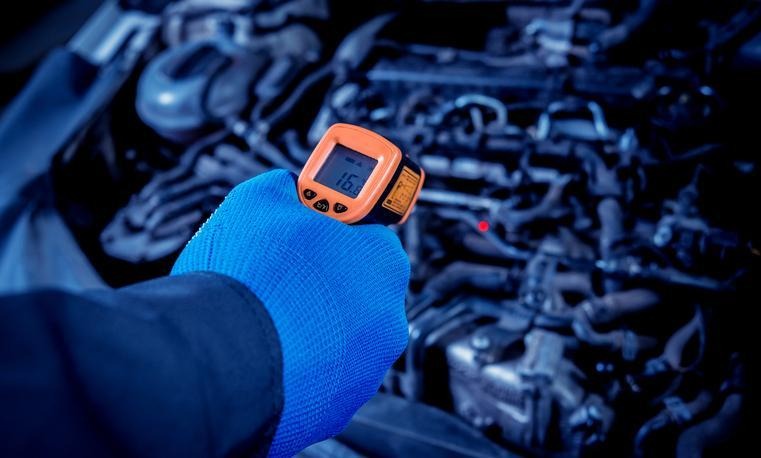
Coolant Temperature Sensor Problems: Cold-Start, Fuel-Mixture, and Scan-Data Clues
In Brief: Coolant Temperature Sensor Symptoms
- The engine coolant temperature sensor provides temperature information used by the engine-management system.
- Coolant Temperature Sensor Symptoms can include hard starting, abnormal fuel-mixture behaviour, warning lights, unusual fan operation, and implausible scan data.
- Cold-engine scan data provides a useful starting point because the temperature reading should make sense for actual conditions.
- A faulty sensor or circuit can affect cooling-fan control on vehicles that use ECT data for fan operation.
- Technicians should test the sensor and its circuit rather than replacing the sensor based on symptoms alone.
A vehicle arrives at the shop first thing in the morning. The engine is completely cold, yet the scan tool reports a coolant temperature that looks more appropriate for a warmed-up engine.
That is a clue.
Understanding Coolant Temperature Sensor Symptoms means learning how a relatively small sensor can influence several vehicle systems and, just as importantly, how to prove where the fault actually lies.
For students in our auto mechanic training, coolant-temperature diagnosis is a practical introduction to combining customer symptoms, scan data, electrical testing, and service information.
What Are Coolant Temperature Sensor Symptoms?
Possible bad engine coolant temperature sensor symptoms include hard starting, abnormal fuel-mixture behaviour, poor engine operation, a warning light, unusual cooling-fan operation, or temperature data that does not match actual engine conditions.
The engine coolant temperature sensor provides the engine control module with information about engine temperature. That information can influence operating strategies such as fuel delivery and cooling-fan control.
This means coolant temperature sensor problems can sometimes appear to be unrelated issues.
A scan tool can provide an important clue. Manufacturer diagnostic procedures use live coolant-temperature data when investigating temperature-system faults. If the reported value is clearly implausible, the technician can investigate further rather than immediately replacing a component.
Can a coolant-temperature sensor cause hard cold starts?
Yes, an inaccurate coolant-temperature signal can contribute to cold-start problems because engine-management systems use temperature information when determining operating strategy. Think about what the computer needs to know on a cold Cambridge morning. A genuinely cold engine has different requirements from one that has already reached operating temperature.
If the temperature information is inaccurate, the commanded fuel mixture may not suit actual engine conditions.
That makes cold-start behaviour useful diagnostic context, but not proof of sensor failure. Fuel-delivery problems, ignition faults, wiring issues, intake-air measurement problems, and other conditions can also affect starting. Students at our auto mechanic school learn to use the complaint to guide testing rather than letting it predetermine the answer.
Resistance testing is one method manufacturers may specify when diagnosing a temperature sensor
How Do You Test An Engine Coolant-Temperature Sensor?
Technicians can use scan data, electrical measurements, visual inspection, and manufacturer specifications to determine whether the sensor and its circuit are operating correctly. A useful starting point is scan-tool data before a cold engine is started. Does the reported coolant temperature make sense for a vehicle that has been sitting long enough to cool down?
From there, diagnosis may include:
- Checking diagnostic trouble codes
- Monitoring coolant-temperature live data
- Inspecting the sensor and connector
- Checking wiring and reference/ground circuits as applicable
- Measuring sensor resistance when specified
- Comparing measurements with manufacturer specifications
- Watching temperature data change as the engine warms
One OEM diagnostic procedure, for example, specifies resistance checks at different coolant temperatures and replacement only when measurements fail the stated specification.
This matters because engine coolant temperature sensor problems can originate outside the sensor. GM service information documents a case where coolant contamination and corrosion affected the ECT circuits and ECM connector.
Testing before replacement prevents a technician from changing a good sensor while leaving the actual electrical fault untouched.
Wiring and connector faults can produce symptoms that resemble a failed sensor
Can a bad coolant sensor cause the radiator fan not to work?
Yes, on vehicles where the engine-management system uses coolant-temperature information to command cooling fans, an incorrect temperature signal or related circuit fault can interfere with normal fan-control strategy.
However, fan behaviour varies considerably by vehicle. An inoperative radiator fan could involve the fan motor, fuse, relay, wiring, control module, temperature input, or another component. Conversely, some temperature-related faults can cause a fan to run continuously as a protective strategy rather than stop operating. Volkswagen service information, for example, documents temperature-system faults accompanied by a fan running permanently.
That is why future technicians should consult vehicle-specific service information before deciding what a particular fan symptom means.
If you want to become a mechanic, this is the larger lesson behind coolant-temperature diagnosis: a trouble code or strange data value identifies where the investigation should begin, not necessarily which part should be replaced.
Are you looking for comprehensive auto mechanic training
Contact ATC Cambridge for more information.
Key Takeaways
- The engine coolant temperature sensor supplies important temperature information to the engine-management system.
- Hard starts, unusual fan behaviour, warning lights, and implausible scan data can be associated with sensor or circuit faults.
- Cold-engine scan data can provide a valuable diagnostic reference.
- Wiring and connector problems can imitate a failed temperature sensor.
- Resistance and circuit testing should follow vehicle-specific specifications.
- Diagnosis should confirm the fault before sensor replacement.
FAQ
What are the symptoms of a bad coolant-temperature sensor?
Possible symptoms include difficult starting, abnormal fuel-mixture behaviour, poor engine operation, warning lights, unusual cooling-fan behaviour, and implausible coolant-temperature scan data.
Can a coolant-temperature sensor cause hard cold starts?
Yes. An inaccurate temperature signal can affect engine-management strategies used during a cold start, although technicians should test for other possible causes before blaming the sensor.
How do you test an engine coolant-temperature sensor?
Technicians can examine trouble codes and live data, inspect the connector and wiring, and perform resistance or circuit tests according to manufacturer specifications.
Can a bad coolant sensor cause the radiator fan not to work?
It can on systems that use coolant-temperature information for fan control. However, fan motors, relays, wiring, control modules, and other components can also cause fan problems, so diagnosis is necessary.