
Catalytic Converter Symptoms: What Techs Check Before Replacing Expensive Parts
TL;DR
Recognizing catalytic converter symptoms is important, but symptoms alone don’t confirm failure. Technicians use automotive diagnostics, including scan data and testing methods, to verify restrictions and identify root causes before replacing expensive components.
When a vehicle loses power or triggers emissions-related warnings, the catalytic converter is often blamed first. However, many catalytic converter symptoms can be misleading, pointing to issues that originate elsewhere in the engine or exhaust system.
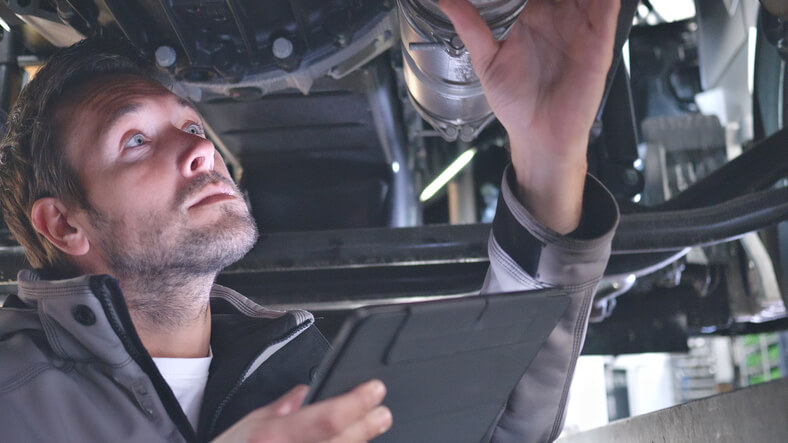
For an automotive service technician, replacing parts without confirming the cause is not an option, especially when dealing with expensive components. This is why structured automotive diagnostics are essential. Technicians rely on tools like an OBD2 scanner and supporting tests to determine whether the converter is actually at fault.
In auto mechanic training, students learn early that accurate diagnosis is about understanding system behavior, not just reacting to symptoms or codes.
Common Catalytic Converter Symptoms
What are the most common symptoms of a failing catalytic converter? Typical catalytic converter symptoms include reduced engine power, sluggish acceleration, unusual exhaust smells, and illuminated warning lights. In some cases, drivers may notice the vehicle struggling to maintain speed, especially under load.
However, these symptoms can also be caused by issues such as ignition misfires, fuel system imbalances, or airflow problems. This overlap makes it critical to verify the source before assuming the converter itself has failed.
Why Codes Alone Don’t Confirm Failure
Many vehicles will trigger diagnostic trouble codes related to emissions efficiency, but these codes do not always indicate a failed catalytic converter. Instead, they often reflect how the system is performing overall.
For example, an upstream issue such as incorrect air-fuel balance, visible through fuel trim data, can affect how the converter operates. If the engine is running too rich or too lean, the converter may not function efficiently, even if it is not damaged.
This is why technicians use scan data as a starting point rather than a final answer. In ATC auto mechanic school, hands-on experience allows students to work with real vehicles and develop the skills needed to diagnose complex issues accurately.
Tests That Confirm a Restricted Converter
Which tests help confirm a catalytic converter restriction? To determine whether a converter is restricted, technicians use a combination of tests. One common method involves measuring exhaust backpressure to see if gases are flowing freely.
Another approach is comparing engine performance before and after temporarily relieving exhaust pressure. If performance improves significantly, it may indicate a blockage.
Technicians may also perform a compression test to rule out internal engine problems that could produce similar symptoms. This layered process ensures that the diagnosis is accurate before any major repair is made.

What Causes Catalytic Converters to Fail Prematurely?
In many cases, the catalytic converter itself is not the root cause of the problem. Failures are often the result of underlying issues that go unaddressed.
Persistent misfires, improper fuel mixtures, or oil contamination can damage the converter over time. When these conditions are not corrected, even a new converter can fail quickly after replacement.
This is why identifying and resolving the root cause is a critical part of automotive diagnostics during and after auto mechanic training.
The Role of the OBD2 Scanner in Diagnosis
An OBD2 scanner allows technicians to analyze live data and monitor how the engine and emissions system are performing. By reviewing sensor readings, fuel trim values, and system responses, technicians can determine whether the converter is functioning correctly.
This data-driven approach reduces guesswork and helps prevent unnecessary repairs. It also highlights the importance of understanding how different systems interact within the vehicle.
Is Emissions Diagnosis Taught in Training Programs?
Is exhaust and emissions diagnosis covered in training?
Yes. Diagnosing emissions systems, including identifying catalytic converter symptoms, is a key part of automotive mechanical training. Students learn how to use diagnostic tools, interpret data, and apply structured troubleshooting methods. For budding mechanics, these diagnostic skills are essential for long-term success in the industry.
Would you like to become a mechanic?
Contact ATC Cambridge for more information.
Key Takeaways
- Catalytic converter symptoms can be caused by multiple underlying issues
- Diagnostic trouble codes alone do not confirm converter failure
- Tests like backpressure checks and a compression test help verify restrictions
- Root causes such as misfires or fuel imbalance must be addressed first
- Strong automotive diagnostics skills are essential for accurate repairs
FAQ
What are the most common symptoms of a failing catalytic converter?
Loss of power, poor acceleration, unusual exhaust smells, and warning lights are common indicators.
Which tests help confirm a catalytic converter restriction?
Backpressure testing, performance comparisons, and supporting diagnostics like compression tests help confirm restrictions.
What causes catalytic converters to fail prematurely?
Issues like misfires, incorrect fuel mixtures, and oil contamination can damage the converter over time.
Is exhaust and emissions diagnosis covered in training?
Yes, it is a core part of modern automotive training programs.