Brake Master Cylinder Problems: Sinking Pedal, Internal Bypass, and Diagnostic Clues
Brake Master Cylinder Problems at a Glance: Symptoms and Diagnostic Clues
Brake master cylinder bad symptoms can include a pedal that slowly sinks under steady pressure, a low or spongy pedal, fluid loss, and reduced hydraulic braking performance. Internal bypass occurs when brake fluid moves past worn piston seals inside the master cylinder instead of maintaining hydraulic pressure. However, a sinking pedal does not automatically prove the master cylinder is faulty: external leaks, trapped air, brake hoses, and even some ABS hydraulic faults can produce similar symptoms. Technicians diagnose the system before deciding which component needs repair.
You stop at a red light, keep steady pressure on the brake pedal, and notice something unsettling: the pedal gradually moves closer to the floor.
A failing master cylinder is one possible explanation—but it is not the only one.
That makes brake master cylinder bad symptoms a useful diagnostic lesson for students pursuing auto mechanic training. A technician’s job is not simply to recognize a sinking pedal. It is to determine where hydraulic pressure is being lost and why.
What Are the Symptoms of a Bad Brake Master Cylinder?
What are the symptoms of a bad brake master cylinder? Common clues include a brake pedal that gradually sinks under steady pressure, a low or spongy pedal, external brake-fluid leakage, and difficulty maintaining hydraulic pressure.
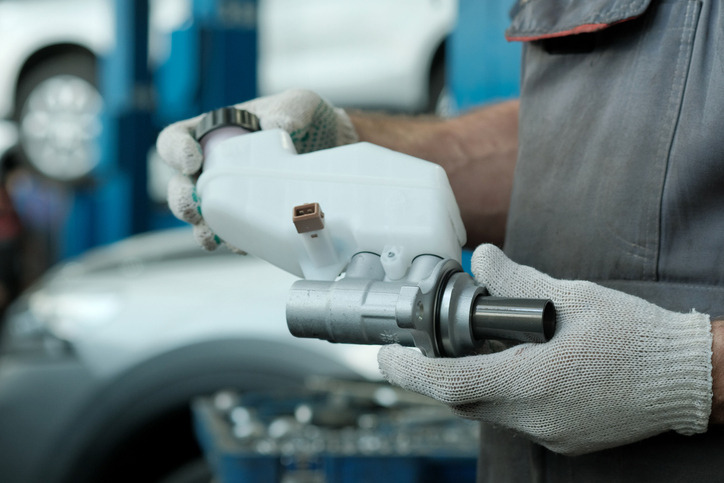
The master cylinder converts pedal input into hydraulic pressure. Inside it, pistons and seals help pressurize the brake circuits. When seals wear or the cylinder bore becomes damaged, fluid may leak externally or bypass the seals internally.
The classic clue is not simply a pedal that feels different. It is a pedal that continues moving downward while steady pressure is maintained.
Still, students at our auto mechanic school learn an important principle here: symptoms point technicians toward tests; they do not replace them.
Why Does My Brake Pedal Slowly Sink to the Floor?
Why does my brake pedal slowly sink to the floor? Hydraulic pressure may be escaping through an external leak or internally past master-cylinder seals, although other hydraulic-system faults can also cause pedal drop.
An external leak may leave evidence: falling reservoir fluid level, wet brake lines or hoses, or leakage around a caliper or wheel cylinder. A master cylinder can also leak at its rear seal, sometimes allowing fluid to enter the brake booster.
Internal bypass can be harder to spot because fluid remains inside the system. Instead of maintaining pressure ahead of the master-cylinder piston, fluid slips past a worn seal. The pedal can therefore keep travelling even though no obvious puddle appears underneath the vehicle.
There is another complication. A 2026 technical report notes that certain faults inside an ABS hydraulic control unit can also produce an intermittent sinking pedal.
That is why “sinking pedal equals bad master cylinder” is not a sufficient diagnosis.
How Do You Test a Brake Master Cylinder for Internal Bypass?
How do you test a brake master cylinder for internal bypass? One established diagnostic method is to isolate the master cylinder from the rest of the hydraulic system using the correct blocking procedure and then observe whether the pedal can maintain pressure.
With the master-cylinder outlets properly blocked according to an appropriate service procedure, a firm pedal indicates that the master cylinder can build and hold pressure. If the pedal continues to drop after air has been ruled out, internal bypass becomes a stronger suspect.
If the isolated master cylinder holds pressure, the technician knows to continue looking downstream in the hydraulic circuits rather than replacing it unnecessarily.
If you’re preparing to become a mechanic, this is where the diagnostic process becomes more interesting. Ontario’s Automotive Service Technician curriculum specifically includes brake hydraulic pressure tests and brake-system operational tests.
Testing narrows the fault. Guessing does not.
What Do Brake Booster vs Master Cylinder Symptoms Tell a Technician?
A useful comparison is brake booster vs master cylinder symptoms.
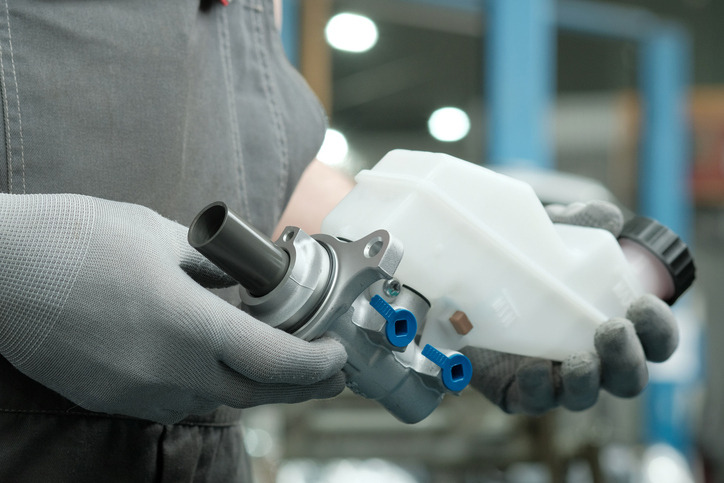
The master cylinder is part of the hydraulic pressure-generating system. The brake booster provides assistance so the driver does not need to supply all of the braking force through the pedal.
As a result, a master-cylinder pressure-loss problem may produce a sinking pedal. A loss of power assist is more commonly associated with increased pedal effort—a pedal that feels unusually hard rather than one that simply continues sinking.
Even this comparison should be treated as a diagnostic clue rather than an automatic verdict. Brake systems contain interconnected mechanical, hydraulic, electronic, and power-assist components.
For a future technician, the better question is not “Which symptom belongs to which part?” It is “Which test will confirm where the fault is?”
Can You Drive With a Failing Brake Master Cylinder?
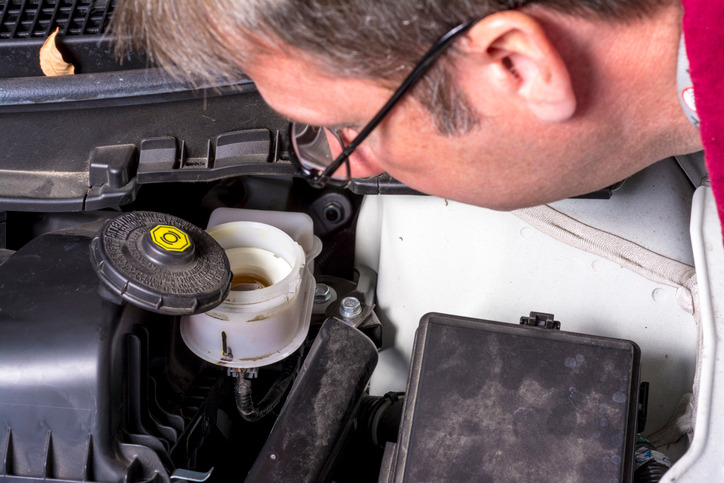
Can you drive with a failing brake master cylinder? A suspected master-cylinder failure should be treated as a safety-critical brake problem, and the vehicle should not continue to be driven until the braking system has been properly inspected and repaired.
The reason is straightforward: the master cylinder is responsible for creating hydraulic pressure used to apply the brakes. A fault that prevents the system from reliably maintaining pressure can compromise braking performance.
Skilled Trades Ontario identifies diagnosing and repairing braking systems as part of the Automotive Service Technician trade. Its curriculum also emphasizes inspection, testing, diagnosis, and interpreting brake-system performance problems according to manufacturer recommendations.
For students, that is the larger lesson behind faulty brake master cylinder symptoms. Recognizing a symptom matters. Knowing how to isolate, test, verify, and safely repair the fault is what turns that observation into professional diagnosis.
Are you looking for comprehensive auto mechanic training?
Contact ATC Cambridge for more information.
Key Takeaways
- A pedal that gradually sinks under steady pressure is one of the classic symptoms of a bad brake master cylinder.
- Master-cylinder failure can involve external leakage or internal bypass past worn piston seals.
- Internal bypass may occur without an obvious external fluid leak.
- A sinking pedal can also result from faults elsewhere in the hydraulic system, including certain ABS hydraulic-control problems.
- Isolating the master cylinder can help technicians distinguish an internal cylinder fault from problems elsewhere in the brake circuits.
- A hard pedal points technicians toward different possibilities than a pedal that slowly sinks.
- Brake problems affecting hydraulic pressure should be treated as safety-critical rather than driven on while awaiting repair.
FAQ
What are the symptoms of a bad brake master cylinder?
Common symptoms include a brake pedal that slowly sinks under steady pressure, a low or spongy pedal, fluid leakage, or difficulty maintaining hydraulic pressure. These symptoms require diagnosis because other brake-system faults can produce similar behaviour.
Why does my brake pedal slowly sink to the floor?
A pedal may sink because hydraulic pressure is being lost through an external leak or because fluid is bypassing worn seals inside the master cylinder. Other hydraulic faults should also be ruled out before condemning the cylinder.
How do you test a brake master cylinder for internal bypass?
A technician can isolate the master cylinder from the remaining hydraulic circuits using the appropriate service procedure. If a properly bled and isolated cylinder cannot hold pedal pressure, internal bypass may be present.
Can you drive with a failing brake master cylinder?
No. A suspected master-cylinder failure can compromise hydraulic braking performance. The vehicle should be inspected and repaired before being returned to normal driving.