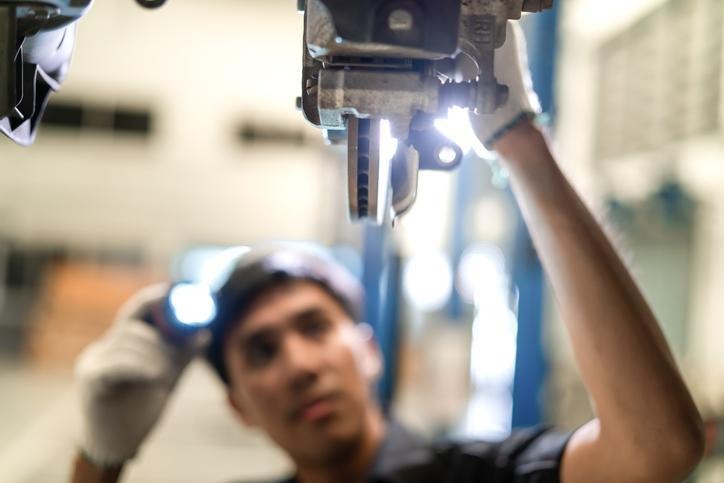
Brake Caliper Slide Pins: How Sticking Hardware Affects Pad Wear and Braking
In Brief: Brake Caliper Slide Pins Sticking and Wear
- Brake caliper slide pins help a floating caliper move correctly as braking force is applied.
- A seized or binding pin can contribute to dragging brakes and uneven brake pad wear.
- Technicians inspect pins, boots, bores, brackets, pads, and related components rather than diagnosing from pad wear alone.
- Lubrication requirements vary by vehicle, so technicians should use only the specified brake caliper slide pin lube and follow manufacturer service information.
- After servicing, technicians confirm free movement and verify that the brake system operates correctly.
____________________________________________________________________________
Brake pads can tell a story. Remove a set during service, and you might find one pad substantially more worn than its partner, an unusual contact pattern, or evidence that a brake has been dragging. The next question for a technician is: why?
On floating-caliper brake systems, brake caliper slide pins are one possible piece of that diagnostic puzzle. They allow the caliper to move laterally so braking force can be applied appropriately to both sides of the rotor. If that movement becomes restricted, brake operation and pad wear can be affected.
For students at ATC auto mechanic school in Surrey, slide-pin service is a useful lesson in looking beyond the obvious symptom to find the underlying fault.
What Are The Symptoms of Stuck Brake Caliper Slide Pins?
Binding slide pins can contribute to uneven pad contact or wear, brake drag, and other braking-performance concerns.
General Motors service information, for example, instructs technicians investigating guide-pin-related brake concerns to check for restricted movement, seized or binding pins, corrosion, deformation, damaged boots, missing seals, and lubrication problems.
Drivers may notice symptoms such as pulling or abnormal brake behaviour, but those symptoms do not automatically prove that a brake caliper slide pin is responsible.
Brake drag or uneven wear can have other causes, including a binding caliper piston, pads binding in the bracket, or a restricted brake hose. Diagnosis matters.
Uneven pad wear can provide an important clue, but technicians still need to identify its actual cause
Can Seized Slide Pins Cause Uneven Brake-Pad Wear?
Yes, seized or restricted slide pins can contribute to uneven brake pad wear by preventing a floating caliper from moving as intended.
A floating caliper needs controlled lateral movement. When one guide pin binds, the pads may not apply or release normally. Manufacturer service information specifically identifies uneven pad contact or wear as a condition that can accompany guide-pin problems.
But the wear pattern is a clue, not a complete diagnosis.
A technician might compare inner and outer pad thickness, inspect the rotor, check whether the pads move freely in their bracket, assess caliper-piston operation, and examine both guide pins and their boots.
That systematic approach is central to ATC Automotive Service Technician Foundation program: observe the symptom, test possible causes, and confirm the fault before replacing parts.
What Grease Should Be Used on Brake Caliper Slide Pins?
Technicians should use the lubricant specified by the vehicle manufacturer for that particular brake caliper design, and should not assume every slide pin should be lubricated the same way.
This is where service information becomes especially important.
One manufacturer procedure may specify a particular high-temperature lubricant. Another may require a specific grease from a service kit. Some applications may instruct technicians not to grease certain guide components unless the shop manual or a technical service bulletin specifically calls for it.
Using an unspecified brake caliper slide pin grease simply because it is available is therefore poor practice.
Technicians should confirm the correct product, quantity, application points, and cleaning procedure before applying brake caliper slide pin lube. They should also keep lubricant away from friction surfaces such as the brake-pad material and rotor.
Corrosion, damaged boots, deformation, and restricted pin movement are all worth checking
How Do Technicians Check Whether Caliper Pins Move Freely?
Technicians remove and inspect the guide pins according to manufacturer procedures, checking their condition and confirming that our movement is smooth and unrestricted.
The inspection may reveal:
- Corrosion or contamination
- Bent or distorted pins
- Grooves or other physical damage
- Torn or improperly seated boots
- Damaged or missing bushings
- Lack of specified lubrication
- Binding or restricted movement
GM’s guide-pin procedure specifically identifies these conditions as inspection points when technicians suspect a guide-pin-related braking concern.
Cleaning, lubrication, component replacement, and reassembly should then follow the service information for that vehicle. Once repairs are complete, technicians need to verify that the brake operates and releases correctly rather than assuming that replacing or lubricating a pin solved the original complaint.
For students taking an auto mechanic course, that final verification reinforces an essential workshop habit: a repair is not finished until its result has been confirmed.
Would you like to explore training options at our auto mechanic school in Surrey?
Contact ATC Surrey for more information.
Key Takeaways
- Brake caliper slide pins allow controlled movement in many floating-caliper systems.
- Binding or seized pins can contribute to brake drag and uneven brake pad wear.
- Uneven pads alone do not prove that the slide pins are faulty.
- Technicians inspect pins for corrosion, damage, restricted movement, and boot or bushing problems.
- The correct brake caliper slide pin grease or lubrication procedure is application-specific.
- Manufacturer service information should guide cleaning, lubrication, replacement, reassembly, and verification.
FAQ
What are the symptoms of stuck brake caliper slide pins?
Stuck or binding pins can contribute to uneven pad wear, brake drag, abnormal pad contact, and other braking-performance symptoms. Technicians should inspect the system before attributing these symptoms specifically to the pins.
Can seized slide pins cause uneven brake-pad wear?
Yes. Restricted slide-pin movement can prevent a floating caliper from moving correctly and contribute to uneven pad wear. Other brake faults can produce similar wear, so diagnosis is necessary.
What grease should be used on brake caliper slide pins?
Use only the lubricant and procedure specified for the particular vehicle and caliper. Lubrication requirements differ between applications, and technicians should not assume that a generic grease is suitable for every slide pin.
How do technicians check whether caliper pins move freely?
Technicians follow manufacturer procedures to remove and inspect the pins, looking for corrosion, damage, contamination, damaged boots or bushings, and restricted movement. They then confirm that the components move correctly after servicing.