Battery Management Systems Explained: What Hybrid and EV Technicians Need to Know
TL;DR
Battery management systems for EVs are responsible for monitoring battery health, balancing cells, and protecting the pack from damage. They control temperature, voltage, and charging behaviour. For technicians, understanding BMS logic is essential for diagnosing battery-related issues in hybrid and electric vehicles.
Modern hybrid and electric vehicles rely on more than just large battery packs; they rely on intelligent systems that manage those batteries in real time.
At the centre of this is the battery management system, or BMS. Without it, EV batteries would degrade quickly, operate unsafely, and deliver inconsistent performance.
For students entering the field through automotive training in Montreal, understanding battery management systems for EVs is essential. It represents the shift from mechanical systems to data-driven diagnostics.
What Does a Battery Management System Do in an EV?
To understand battery management systems for EVs, it helps to think of the battery pack as a collection of hundreds, or even thousands, of individual cells.
Each of these cells must operate within a safe range. The BMS ensures this by constantly monitoring:
- Voltage across individual cells
- Current flow during charging and discharge
- Temperature throughout the battery pack
This continuous battery temperature monitoring and voltage tracking allows the system to adjust performance in real time.
If a cell begins to operate outside safe limits, the BMS can intervene by limiting power, adjusting charging, or triggering warnings. In this way, the BMS acts as both a controller and a safety system.
Why Is Battery Balancing Important?
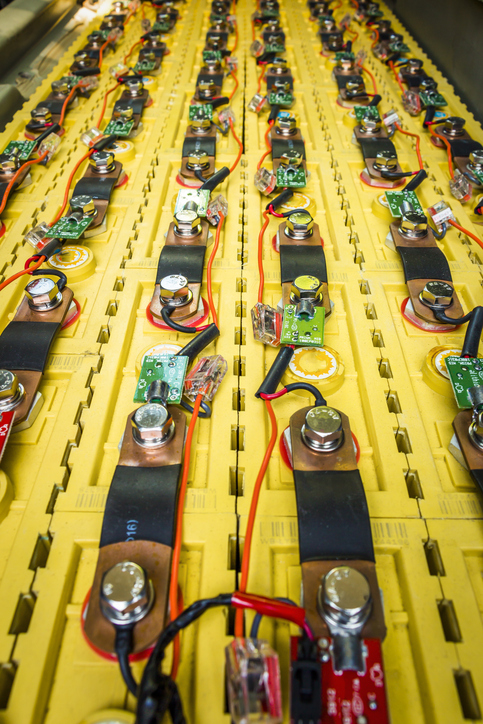
No two battery cells behave the same over time. Small differences in manufacturing, temperature exposure, and usage patterns can cause some cells to charge or discharge faster than others.
This is where EV battery pack balancing becomes critical. If one cell becomes overcharged or undercharged compared to the rest, it can reduce the performance of the entire pack. Over time, this imbalance can lead to:
- Reduced driving range
- Uneven wear across cells
- Increased risk of failure
The BMS manages this by redistributing energy between cells or controlling how they charge. This ensures that all cells remain as equal as possible. For technicians, understanding balancing is key to diagnosing battery performance issues that may not be obvious from overall pack readings.
How Does a BMS Protect Battery Health?
Battery packs operate within strict limits. Exceeding those limits, even briefly, can cause damage.
The BMS protects battery health by enforcing boundaries on:
- Maximum and minimum voltage
- Charging and discharging rates
- Operating temperature ranges
If conditions move outside these limits, the system can reduce power output or restrict charging. For example, in cold conditions, the BMS may limit charging speed until the battery reaches an optimal temperature. In high temperatures, it may reduce power to prevent overheating.
This level of control is what makes modern EVs both efficient and durable. Students in our hybrid and electrical mechanic training program learn how these protective strategies affect vehicle behaviour and diagnostics.
How Do Technicians Diagnose BMS-Related Issues?
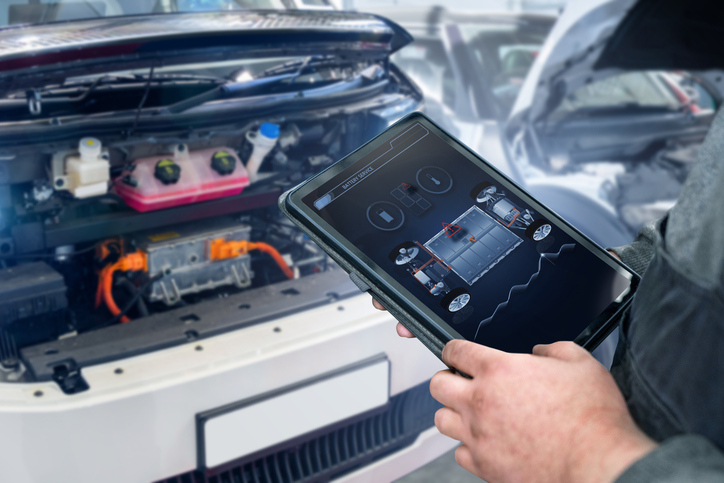
Diagnosing BMS diagnostics is different from traditional mechanical troubleshooting. Because the system is data-driven, technicians rely heavily on scan tools to interpret battery behaviour.
They review:
- Cell voltage differences
- Temperature readings across modules
- State of charge and state of health data
Rather than looking for a single failed part, technicians analyze patterns. For example, a consistent voltage imbalance may indicate a weak cell, while temperature variations may point to cooling system issues.
This approach requires both technical knowledge and analytical thinking. Students at our auto mechanic school develop these skills through hands-on training with real diagnostic tools.
Do Hybrids Also Use Battery Management Systems?
Yes. While hybrid batteries are typically smaller than full EV packs, they still rely on BMS technology. In fact, hybrid battery monitoring is just as important, as hybrids frequently cycle between charging and discharging.
The BMS in hybrid systems ensures:
- Efficient energy use between the engine and the battery
- Safe operating conditions
- Long-term battery reliability
Although the scale may differ, the principles are the same.
Why BMS Knowledge Matters for Future Technicians
As vehicles become more electrified, the role of the technician is evolving. Instead of focusing only on mechanical components, technicians must now understand system logic, data interpretation, and electronic control strategies.
Battery management systems for EVs sit at the centre of this shift. They connect performance, safety, and efficiency into one integrated system. For technicians, understanding how the BMS thinks is just as important as understanding how the battery works.
Are you looking for comprehensive automotive training in Montreal?
Contact ATC Montreal for more information.
Key Takeaways
- Battery management systems monitor voltage, temperature, and current in EV batteries.
- Cell balancing ensures consistent performance across the battery pack.
- BMS protects battery health by controlling operating limits.
- Diagnostics rely on scan data and pattern analysis.
- Both EVs and hybrids use BMS technology for safe operation.
FAQ
Q: What does a battery management system do in an EV?
A: It monitors and controls battery performance by tracking voltage, temperature, and current, ensuring safe and efficient operation.
Q: Why is battery balancing important?
A: Balancing ensures all cells operate evenly, preventing performance loss and extending battery life.
Q: How does a BMS protect battery health?
A: It limits voltage, current, and temperature to prevent damage and maintain safe operating conditions.
Q: Do hybrids also use battery management systems?
A: Yes. Hybrid vehicles use BMS technology to monitor and manage battery performance during frequent charge and discharge cycles.