
Battery Management System (BMS) Explained: The Brain Behind EV and Hybrid Batteries
TL;DR
The battery management system controls and monitors EV and hybrid batteries to ensure safety, efficiency, and performance. It tracks temperature, voltage, and charge levels, helping technicians diagnose issues and maintain battery health.
In electric and hybrid vehicles, the Battery Management System acts as the central control unit for the entire battery pack. Without it, managing a complex high-voltage battery safely and efficiently would not be possible.
This system continuously monitors battery conditions, ensuring that charging, discharging, and temperature levels remain within safe limits. It also communicates with other components, such as the EV inverter, to coordinate vehicle performance.
For students in automotive school, understanding how the Battery Management System (BMS) operates is essential. It forms the foundation for diagnosing faults and maintaining modern electrified vehicles.
What Does a Battery Management System Do?
What does a battery management system do in daily driving? The battery management system oversees several key functions during everyday vehicle operation. It monitors voltage across battery cells, tracks temperature, and ensures that charging and discharging meet the safety standards in Canada.
It also balances the cells within the battery pack, preventing uneven wear and extending the lifespan of the system. In addition, the BMS communicates with the vehicle’s control modules to manage power delivery and efficiency.
These functions work together to ensure the vehicle operates reliably under a wide range of driving conditions.
How the BMS Affects Charging and Range
How does the BMS affect charging speed and range? Charging speed and driving range are directly influenced by how the battery management system controls energy flow. The system regulates how quickly the battery can accept a charge, based on factors such as temperature and overall battery condition.
As explored in auto mechanic school, if the battery is too cold or too hot, the BMS may limit charging speed to protect the cells. This is where battery thermal management becomes important, as maintaining optimal temperature allows for more efficient charging and improved range.
The BMS also calculates available energy, ensuring that the vehicle provides accurate range estimates to the driver.
Battery Thermal Management and Cooling Systems
Temperature control is a critical part of battery performance. The battery cooling system works alongside the BMS to regulate heat generated during operation and charging.
If temperatures rise beyond safe limits, the BMS can adjust performance or limit power output to prevent damage. This coordination ensures that the battery remains within safe operating conditions while maintaining efficiency.
Understanding how battery thermal management works is essential for diagnosing overheating or reduced performance.
Common Symptoms of BMS or Sensor Issues
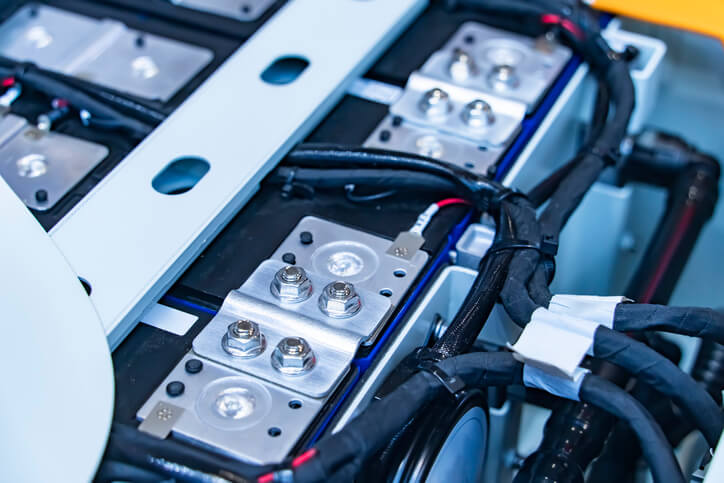
What symptoms can show a BMS or sensor issue? When the battery management system or its sensors malfunction, several symptoms may appear. Drivers may notice reduced driving range, inconsistent charging behavior, or warning messages related to the battery system.
In some cases, the vehicle may limit power output or enter a protective mode to prevent further damage. These responses are designed to maintain safety but can indicate underlying issues that require diagnosis.
Technicians rely on system data and diagnostic tools to identify whether the problem lies within the BMS, sensors, or related components.
The Role of the BMS in Diagnostics
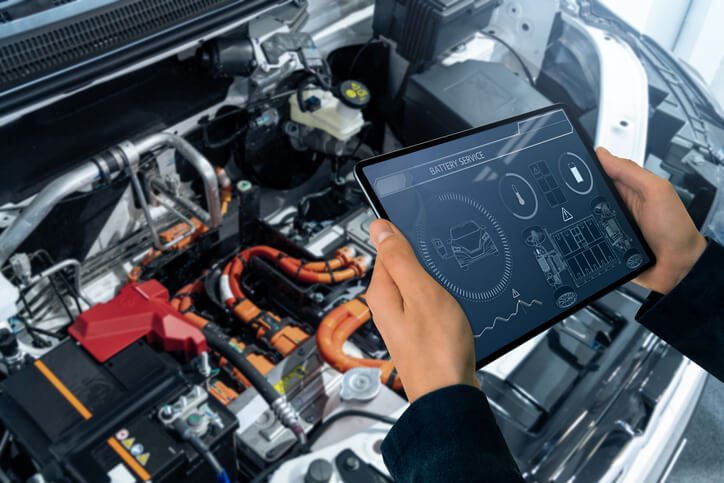
From a technician’s perspective, the battery management system is one of the most important sources of diagnostic information. It provides real-time data on battery performance, including voltage, temperature, and charge status.
This data helps identify irregularities and guides troubleshooting decisions. Rather than guessing, technicians can use BMS data to pinpoint faults and confirm repairs.
For those exploring auto careers, this shift toward data-driven diagnostics is a defining feature of modern automotive work.
Is BMS Knowledge Taught in Training Programs?
Do hybrid and electric programs teach battery system fundamentals? Yes. Understanding the battery management system BMS is a key part of modern automotive school programs focused on hybrid and electric vehicles.
Students learn how to interpret system data, understand battery operation, and diagnose faults safely. In ATC’s auto mechanic school, this hands-on experience prepares them to work with advanced systems found in today’s vehicles.
Training programs also cover related components, including the EV inverter, battery systems, and safety procedures, ensuring a well-rounded understanding of EV technology.
Would you like to explore comprehensive training programs at our automotive school?
Contact ATC Montreal for more information.
Key Takeaways
- The battery management system controls safety, charging, and performance in EVs
- It monitors voltage, temperature, and overall battery health
- Battery thermal management and cooling systems help maintain efficiency
- Faults in the BMS can affect range, charging, and vehicle performance
- Understanding BMS operation is essential for modern automotive diagnostics
FAQ
What does a battery management system do in daily driving?
It monitors battery conditions, balances cells, and manages charging and power delivery.
How does the BMS affect charging speed and range?
It regulates energy flow and adjusts charging based on battery temperature and condition.
What symptoms can show a BMS or sensor issue?
Reduced range, charging inconsistencies, and warning messages are common indicators.
Do hybrid and electric programs teach battery system fundamentals?
Yes, these systems are a core part of modern automotive training programs.