CV Axle Problems: Clicking, Vibration, and Torn Boot Clues
In Brief: Bad CV Axle Symptoms
Common bad CV axle symptoms include clicking or popping during turns, clunking during acceleration or deceleration, vibration, torn boots, and grease around the inside of a wheel. However, similar noises and vibrations can come from wheel bearings, suspension components, tires, and other drivetrain parts. Technicians combine the driver’s description with road testing and physical inspection before recommending repairs.
A clicking sound every time you make a tight turn can be difficult to ignore. Although several automotive problems can produce unusual front-end noises, the CV axle is one component technicians may investigate when clicking, vibration, or grease leakage appears.
Recognizing bad CV axle symptoms is especially useful for students in auto mechanic school. The real diagnostic challenge, however, is determining whether the axle is actually responsible rather than replacing a component based on one symptom.
What Are the Symptoms of a Bad CV Axle?
What are the symptoms of a bad CV axle? Drivers may notice clicking or popping during turns, clunking when accelerating or decelerating, vibration while driving, or grease around the wheel area. A visual inspection may also reveal a split or damaged CV boot.
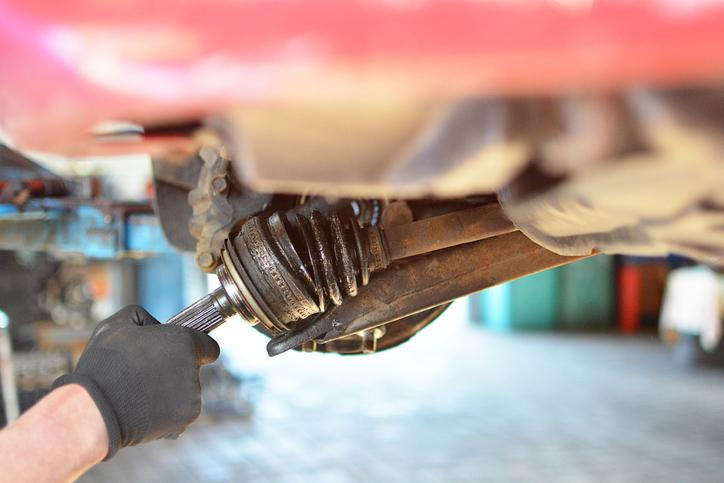
A CV axle, also called a half shaft, transfers power from the transmission to the wheels while accommodating changes in wheel and suspension angles. Each axle typically incorporates inner and outer constant-velocity joints protected by flexible, grease-filled boots.
According to automotive component manufacturer MOOG, clicking while turning can indicate an outer CV joint problem, while clunking during acceleration or deceleration may indicate an inner-joint concern. Vibration is another potential symptom, although it can have numerous other causes.
During automotive training, learning to recognize these patterns provides a starting point for a more systematic inspection.
Why Does a Bad CV Joint Click When Turning?
Why does a bad CV joint click when turning? The outer CV joint must continue transferring torque while operating through changing angles as the wheels steer. As wear develops within the joint, movement under load can produce a repetitive clicking or popping sound.
A clicking noise when turning may become particularly noticeable during sharper, lower-speed turns. This is one of the better-known CV joint symptoms, but technicians still need to confirm where the noise originates.
The conditions under which a noise occurs provide valuable diagnostic information. A technician may consider whether it appears only while turning, changes with vehicle speed, occurs during acceleration, or becomes more noticeable when steering in a particular direction.
This symptom-based approach is important because front-end noises can also originate from steering, suspension, wheel bearings, and other drivetrain components.
Can a Torn CV Boot Damage the Axle?
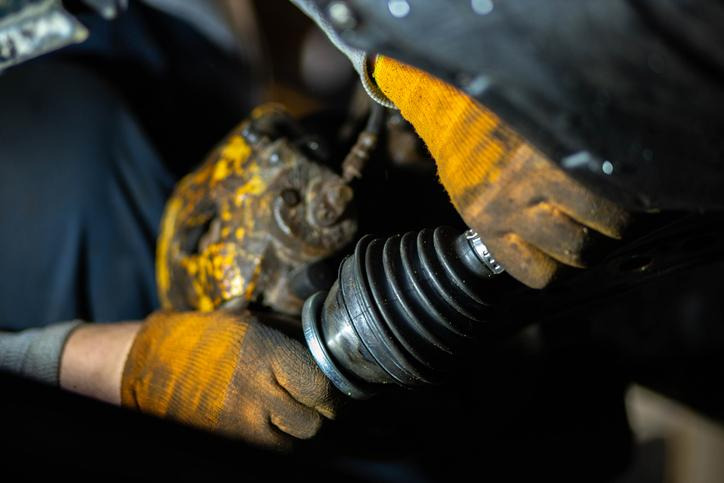
Can a torn CV boot damage the axle? Yes. The boot plays an important protective role by retaining lubricant around the joint while keeping water, dirt, and road debris outside.
When the boot splits, grease may escape and appear around nearby suspension components or the inside of the wheel. Contamination can also enter the joint and accelerate wear. MOOG identifies boot rupture as a common cause of CV axle failure because lubricant can be lost while water and debris enter the assembly.
Finding boot damage early can therefore be important. A technician inspecting a vehicle may look for cracks, tears, loose clamps, and grease leakage before significant joint deterioration develops.
For students exploring auto careers, this demonstrates why visual inspection remains valuable even as vehicles become increasingly computerized.
How Do Technicians Tell CV Axle Noise From Wheel-Bearing Noise?
How do technicians tell CV axle noise from wheel-bearing noise? They consider when and how the symptom occurs and then inspect the relevant components instead of diagnosing by sound alone.
A worn outer CV joint commonly produces repetitive clicking or popping during turns. Wheel-bearing problems can produce different noise patterns, often changing with vehicle speed or loading. Other suspension and steering faults can introduce still more possibilities.
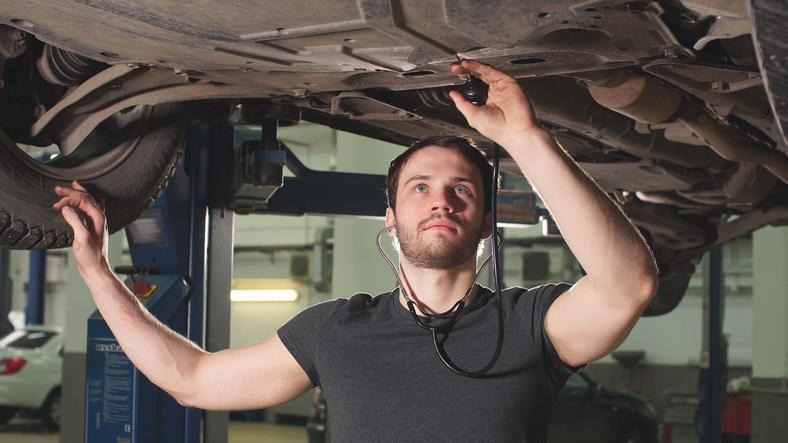
Technicians may road-test the vehicle to reproduce the customer’s complaint, then inspect the axle boots, joints, wheel-bearing area, tires, and related components. They may also check for excessive movement or other physical evidence of wear.
Vibration deserves similar care. Axle problems can cause vibration, but so can tire imbalance, alignment problems, loose components, worn suspension parts, and bent drivetrain components.
Diagnosis is therefore a process of elimination supported by evidence, not simply matching one sound to one part.
How Does CV Axle Replacement Cost Fit Into Diagnosis?
CV axle replacement cost varies with vehicle design, labour requirements, parts selection, and whether other components require attention. Some axles are relatively straightforward to access, while others require additional disassembly.
Before discussing replacement, technicians should establish that the axle is actually faulty. Installation also requires attention to vehicle-specific procedures. For example, axle hardware may require specific torque values, and technicians need to avoid damaging nearby ABS components and transmission seals. Consult original-equipment service information for the appropriate procedure for each application.
For new technicians, that sequence matters: inspect, test, confirm, consult specifications, and only then recommend the appropriate repair.
Would you like to explore training options at our auto mechanic school?
Contact ATC Toronto for more information.
Key Takeaways
- Bad CV axle symptoms may include clicking, clunking, vibration, grease leakage, and visible boot damage.
- A clicking noise when turning can point toward wear in an outer CV joint.
- Torn boots can release grease and allow contamination into the CV joint.
- Vibration alone does not prove that a CV axle has failed.
- Technicians compare symptom patterns and inspect nearby drivetrain, steering, suspension, and wheel components.
- CV axle replacement cost varies, making accurate diagnosis important before recommending replacement.
FAQ
What are the symptoms of a bad CV axle?
Possible symptoms include clicking or popping while turning, clunking during acceleration or deceleration, vibration, torn CV boots, and grease leakage around the wheel area.
Why does a bad CV joint click when turning?
A worn outer CV joint can develop excessive internal movement. When the joint operates at an angle during a turn and transfers torque, this wear may produce repetitive clicking or popping.
Can a torn CV boot damage the axle?
Yes. A torn boot can allow grease to escape and contaminants to enter the joint, potentially accelerating CV joint wear.
How do technicians tell CV axle noise from wheel-bearing noise?
Technicians consider when the noise occurs, reproduce the complaint during a road test when appropriate, and physically inspect the axle, bearings, tires, steering, and suspension components before confirming the source.