Control Arm Bushings: How Worn Rubber Affects Noise, Steering, and Tire Wear
In Brief: Bad Control Arm Bushing Symptoms
Common bad control arm bushing symptoms can include clunking noises, steering that feels loose or unstable, pulling, vibration, and uneven tire wear. However, these symptoms can overlap with other steering, tire, alignment, and suspension faults. Technicians inspect the bushings for deterioration and excessive movement while checking surrounding components before confirming the repair.
A vehicle’s suspension has to accomplish two seemingly opposite tasks. It must allow the wheels to move as the vehicle travels over uneven surfaces while keeping their movement controlled enough to maintain predictable steering and handling.
Control arm bushings help make that possible.
When these flexible components deteriorate, drivers may notice noise, changes in steering feel, or unusual tire wear. Recognizing bad control arm bushing symptoms, however, does not mean immediately replacing the first worn-looking piece of rubber.
For students beginning auto mechanic training, control arm concerns demonstrate an important diagnostic principle: symptoms provide clues, but inspection and testing help determine the actual cause.
What Are Bad Control Arm Bushing Symptoms?
What are the symptoms of bad control-arm bushings? Depending on the suspension design and severity of wear, possible signs include clunking over bumps, vibration, pulling, wandering, unstable steering, and abnormal tire wear.
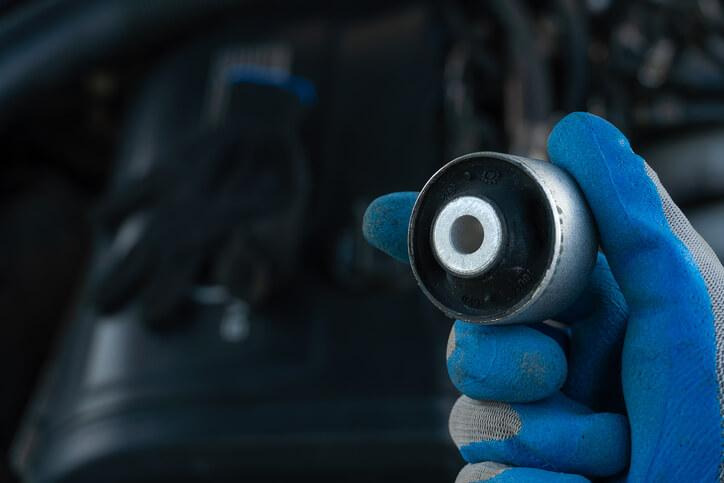
The control arm connects parts of the wheel and suspension assembly to the vehicle structure. Bushings at their mounting points allow controlled movement while helping isolate vibration and impact.
As the rubber deteriorates or separates, the arm may be able to move more than intended. Front-end noise, unstable steering, uneven tire wear, vibration, and a rougher ride are among potential control arm symptoms.
The challenge is that these symptoms are not unique to bushings. Ball joints, tie rods, wheel alignment, tires, and other automobile suspension problems can produce similar complaints.
Can Worn Control-Arm Bushings Cause Uneven Tire Wear?
They can contribute to it when excessive suspension movement affects wheel control or alignment behaviour. A healthy control arm bushing helps maintain controlled positioning as suspension loads change during acceleration, braking, cornering, and travel over uneven roads. If deterioration permits excessive movement, wheel geometry may no longer remain stable under load.
Uneven or premature tire wear can consequently become an important diagnostic clue. MOOG lists uneven tire wear among possible signs of control-arm trouble, while manufacturer suspension information hosted by NHTSA notes that tire wear patterns can indicate suspension damage or misalignment.
However, students at our auto mechanic school learn that tire wear needs context. Incorrect inflation, alignment concerns, worn steering components, and other suspension faults can also alter wear patterns. Replacing tires without identifying the underlying cause could allow the same wear to return.
How Do Technicians Check Control-Arm Bushings?
Inspection typically involves examining the bushings and related suspension components for deterioration, damage, or movement outside acceptable limits. The exact procedure depends on the vehicle. Technicians may look for torn or separated rubber, deformation, deterioration, or signs that the bushing is no longer controlling movement as intended.
Manufacturer criteria are especially important. One Stellantis technical bulletin hosted by NHTSA, for example, specifies inspecting a particular front lower control arm bushing with the suspension loaded and identifies rubber bulging from a defined area as the failure criterion for the vehicles covered by that bulletin.
Other manufacturer information instructs technicians to check upper and lower control-arm bushings for worn, torn, shredded material or excessive movement.
This demonstrates why technicians consult service information rather than applying one visual rule to every vehicle. Some rubber deformation may be normal for a particular bushing design, while movement or deterioration elsewhere may indicate failure.

Is It Safe to Drive With Worn Control-Arm Bushings?
That depends on the extent of deterioration and how the vehicle’s steering and suspension are being affected. Because these components contribute to wheel control and handling, suspected suspension problems should not simply be ignored. Symptoms such as significant pulling, looseness, vibration, abnormal noises, or rapidly changing tire wear warrant professional inspection.
You should have the steering and suspension inspected when a vehicle develops irregular handling characteristics such as drifting, unusual front-end noise, vibration, uneven tire wear, or a loose or wandering feeling.
Severity matters. Minor deterioration identified during an inspection is different from a bushing that has separated enough to permit substantial movement. If you’re hoping to become a mechanic, this reinforces the importance of avoiding blanket statements about vehicle safety. The technician needs to assess the actual condition and its effect on vehicle operation.
Why Technicians Check More Than the Bushing
A customer may arrive complaining about a clunk, steering vibration, pulling, or unusual tire wear. While a worn bushing could explain the symptom, several components operate together within the suspension.
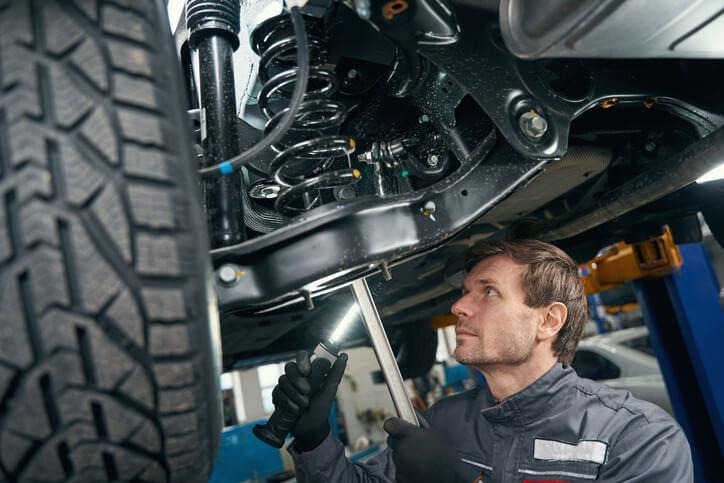
A technician may therefore inspect the control arm itself, bushings, ball joints, steering components, tires, wheel bearings, and other relevant parts based on the complaint.
Manufacturer guidance illustrates this broader approach. This is an important diagnostic habit. Finding one worn component does not necessarily prove it caused every symptom reported by the driver.
Why Control Arm Diagnosis Matters in Automotive Training
Control arm bushings may appear relatively simple compared with electronic engine-management systems, but diagnosing them still requires observation, mechanical knowledge, and careful interpretation.
Technicians need to understand what the bushing is designed to do, recognize abnormal movement, distinguish acceptable rubber characteristics from deterioration, and connect inspection findings with the customer’s complaint. They must also consider how a worn component can affect surrounding systems.
That makes control-arm diagnosis a useful example of the broader skills developed through automotive training. Rather than replacing components based on assumptions, technicians gather evidence and compare what they find with manufacturer specifications.
Are you looking for comprehensive auto mechanic training?
Contact ATC Cambridge for more information.
Key Takeaways
- Bad control arm bushing symptoms can include clunking, vibration, pulling, unstable steering, and uneven tire wear.
- A lower control arm bushing helps permit controlled suspension movement while isolating vibration and impact.
- Uneven tire wear can provide a clue, but several tire, steering, suspension, and alignment faults can cause similar patterns.
- Technicians inspect bushings for deterioration, damage, separation, and excessive movement according to vehicle-specific procedures.
- Not every visible change in rubber automatically confirms bushing failure.
- Significant changes in steering or handling should be professionally inspected.
- Proper diagnosis includes checking surrounding steering and suspension components rather than focusing on one symptom alone.
FAQ
What are the symptoms of bad control-arm bushings?
Possible symptoms include clunking over bumps, vibration, unstable or wandering steering, pulling, and uneven tire wear. Because other suspension and steering problems can produce similar symptoms, inspection is required to identify the cause.
Can worn control-arm bushings cause uneven tire wear?
Yes. Excessive movement associated with worn bushings can contribute to changes in wheel control and alignment behaviour, potentially producing uneven tire wear. Other causes should also be investigated.
How do technicians check control-arm bushings?
Technicians visually inspect bushings and may check for deterioration, separation, deformation, or excessive movement. The correct inspection criteria depend on the vehicle and bushing design, so manufacturer service information should guide diagnosis.
Is it safe to drive with worn control-arm bushings?
It depends on the severity of the wear and its effect on vehicle control. Significant pulling, looseness, vibration, noise, or other handling changes should be inspected promptly by a qualified technician.