Automotive Wire Repair Best Practices: Crimping, Sealing, and Strain Relief
TL;DR
Automotive wire harness repair requires more than reconnecting broken wires. Reliable repairs depend on proper crimping techniques, sealed connections, and adequate strain relief to prevent vibration and corrosion damage. Following wiring best practices helps technicians avoid repeat failures and maintain long-term electrical reliability.
Electrical systems are becoming increasingly complex in modern vehicles. Sensors, control modules, cameras, and communication networks all depend on reliable wiring connections.
Due to this complexity, automotive wire harness repair must be performed carefully and in accordance with industry best practices. A poorly repaired wire can cause intermittent faults, sensor errors, or complete system failures.
For technicians learning advanced diagnostics or students preparing for automotive careers, understanding proper wiring repair is an essential skill.
Why Is Automotive Wire Harness Repair So Important?
Modern vehicles rely heavily on electronic systems and communication networks; wiring reliability is critical for both safety and performance. Canadian vehicle design and electrical safety standards are governed by Canadian motor vehicle safety regulations, which help ensure electrical systems operate safely and consistently.
If a harness becomes damaged due to vibration, corrosion, or improper repair, it can cause several issues:
- Intermittent electrical faults
- Sensor communication errors
- Warning lights and diagnostic trouble codes
- Component failure due to unstable voltage
Proper terminal repair and wire restoration techniques ensure the system functions reliably after service. Many manufacturers publish strict repair procedures because incorrect wiring repairs can create long-term reliability problems.
Once damage is identified, technicians must decide how the wiring should be repaired, most often choosing between crimped or soldered connections.
Crimp vs Solder: Which Method Is Better?
One of the most common debates in automotive wiring is crimp vs solder. Is soldering acceptable for automotive harness repairs? While soldering can work in certain applications, most vehicle manufacturers recommend crimped connections for harness repairs.
Advantages of Crimped Connections
Crimp connectors offer several benefits:
- Strong mechanical connection
- Better flexibility under vibration
- Consistent electrical conductivity
- Faster installation during service
A properly crimped connector compresses the wire strands securely without damaging them.
Concerns With Soldering
Soldered repairs may introduce problems such as:
- Increased stiffness in the wire
- Greater risk of vibration damage
- Potential overheating during installation
As vehicles experience constant vibration, crimping often provides better durability for automotive wire harness repair. Students attending an auto mechanic school often begin exploring these differences during hands-on workshops.

What Makes a “Sealed” Wiring Repair, and When Is It Required?
Many wiring repairs occur in areas exposed to moisture, road salt, and temperature changes. A sealed repair protects the wiring connection from environmental damage.
Sealed repairs typically involve:
- Weather-resistant connectors
- Adhesive-lined heat-shrink tubing
- Proper insulation restoration
A heat-shrink splice is one of the most common repair methods used in automotive wiring. This process involves:
- Crimping the wire splice connector
- Applying heat-shrink tubing
- Heating the tubing until the adhesive seals the connection
Once completed, the repair becomes resistant to moisture and corrosion. Sealed repairs are especially important in areas such as:
- Engine compartments
- Wheel wells
- Underbody wiring harnesses
Through structured programs at an automotive school, students practice wiring repair skills that support long-term auto careers.
How Do You Prevent Repeat Wiring Failures?
One of the most overlooked aspects of automotive wire harness repair is strain relief. Without proper strain relief, wires may fail again due to vibration or movement. Technicians can prevent repeat failures by following key wiring best practices:
- Maintain proper wire routing
- Avoid sharp bends in repaired sections
- Secure wiring harnesses using factory clips or retainers
- Protect repaired sections from heat sources
- Use sealed connectors when exposed to moisture
Providing adequate strain relief reduces stress on repaired wires and ensures long-term durability. Technicians must also inspect surrounding wiring to confirm that the original damage was not caused by harness rubbing, poor routing, or missing retainers.
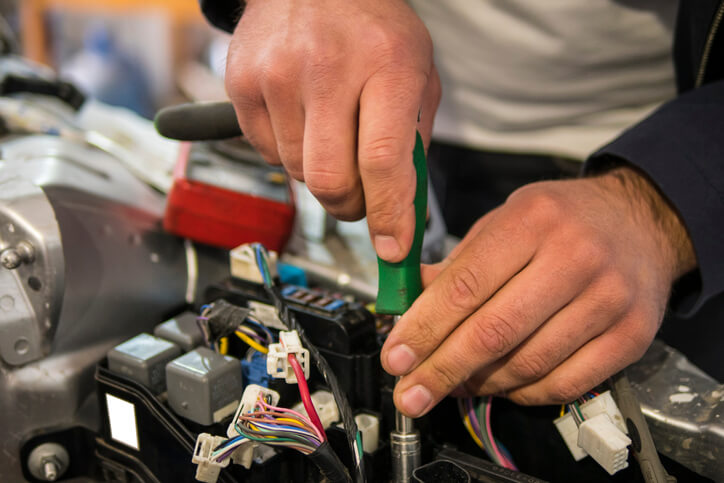
Why Wiring Skills Matter for Modern Technicians
Electrical diagnostics are becoming more common in automotive service. Modern vehicles rely heavily on sensors, communication networks, and control modules.
Technicians must be comfortable working with wiring systems and performing high-quality repairs. Developing strong wiring repair skills helps technicians confidently diagnose and repair electrical faults in modern vehicles.
Are you ready to explore a wide range of auto careers?
Contact ATC Montreal for more information.
Key Takeaways
- Automotive wire harness repair requires proper crimping, sealing, and strain relief.
- Crimped connections are generally preferred over soldered repairs in vehicles.
- Heat-shrink splice methods protect wiring from moisture and corrosion.
- Sealed repairs are critical in exposed areas such as engine bays and underbody harnesses.
- Proper wiring best practices prevent repeat failures and improve electrical reliability.
FAQ
Is soldering acceptable for automotive harness repairs?
While soldering can work in certain applications, most vehicle manufacturers recommend crimped connections for harness repairs.
What makes a “sealed” repair and when is it required?
Many wiring repairs occur in areas exposed to moisture, road salt, and temperature changes. A sealed repair protects the wiring connection from environmental damage.
How do you prevent repeat failures from vibration and corrosion?
Technicians should use proper strain relief, sealed connectors, and correct wire routing. Securing harnesses with clips and avoiding sharp bends helps prevent future damage.