
Why Some Jobs Go to Senior Techs: Understanding Skill Levels in the Shop
For a new automotive service technician program graduate, it might be surprising to see certain jobs always going to the more experienced technicians. However, this practice is standard across auto repair shops. Not all repairs are equal in complexity or risk, so managers assign work based on skill level. Complex problems and critical repairs are typically given to senior techs, while newcomers handle routine maintenance.
This ensures quality work on tough issues and provides learning opportunities for less experienced staff.
Different Skill Levels in an Auto Repair Shop
Auto repair shops usually have a mix of skill levels among their technicians. Broadly, there are entry-level or junior mechanics (often apprentices or recent graduates) and senior or master technicians with years of experience. Newcomers typically join with a solid foundation from an automotive service technician program, but with limited real-world practice. Senior techs, on the other hand, have honed their expertise over many years and often possess advanced certifications or specializations.
- Entry-Level Technicians (Junior Techs): These are mechanics at the start of their career. They have good general knowledge from training, but are still building hands-on experience in the shop. They might be apprentices or lube technicians and do not yet specialize in complex diagnostics. Their primary role is to perform basic tasks they are comfortable with at this stage. Entry-level techs usually work under the guidance of more experienced mechanics as they learn the ropes.
- Senior Technicians (Experienced Techs): These are seasoned mechanics who can “do it all,” from complicated engine repairs to tricky electrical diagnostics. Senior techs often have 5-10+ years of experience and may hold certifications. They have encountered a wide range of car problems before, which means there’s little they haven’t seen. In many shops, a senior tech might also be a team leader or foreman who mentors junior staff.
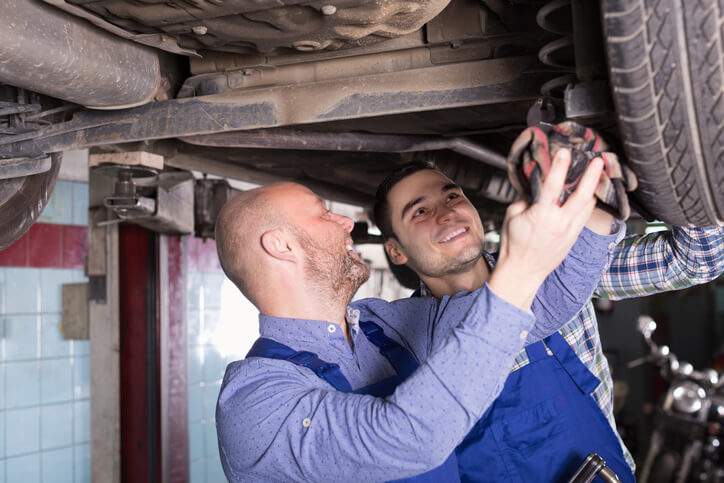
Why Do Senior Techs Get the Hard Jobs?
Shops assign work strategically. Here are a few key reasons why experienced mechanics get the more complex jobs:
- Experienced in complex diagnostics and repairs
- Ensures safe, high-quality repair outcomes
- Fast and efficient on tough jobs
- Skilled with advanced shop technology
- Builds trust with customers and staff
- Coaches new techs and apprentices
In summary, experience plays a key role in job assignments. The goal is to match the task’s difficulty with a technician’s skill so that repairs are done correctly, efficiently, and safely. It benefits the shop and the customers, and it’s part of how new mechanics develop into seasoned pros.
Entry-Level Tasks vs. Senior Technician Tasks
What kinds of jobs can a new automotive service technician program graduate expect to do, and which are reserved for veterans?
While it can vary by shop, here’s a general breakdown:
Typical Duties for Entry-Level Mechanics: “Grunt work” that is vital but not overly complex. New mechanics often start with jobs that are straightforward and procedural. This helps them get familiar with the vehicles and shop workflow without being overwhelmed.
Common entry-level tasks include:
- Perform oil changes, filters, and basic fluid checks
- Replace brake pads and mount/balance tires
- Swap easy-access parts like batteries or belts
- Conduct basic inspections and read simple diagnostic codes
- Assist senior techs with larger, complex repairs
Typical Duties for Senior Technicians: These are the jobs where experience is crucial. Senior techs often get assignments like:
- Diagnose complex engine and electrical issues
- Rebuild engines and transmissions accurately
- Handle advanced systems like ABS and hybrids
- Perform safety-critical repairs and inspections
- Troubleshoot recurring or unresolved vehicle problems
- Mentor juniors and verify quality before delivery
In essence, entry-level techs handle the maintenance and straightforward fixes, while senior techs take on the diagnostics and heavy repairs. Over time, as a new mechanic proves themselves on the simpler jobs, they will be gradually trusted with more complex tasks.
How New Mechanics Can Level Up to Bigger Jobs
If you’re a new mechanic eager to tackle more than oil changes, here are some tips to accelerate your mastery of the basics and avoid mistakes on small jobs
- Ask questions and show curiosity during every repair
- Volunteer for varied jobs to expand your experience
- Build your toolset and learn advanced diagnostic tools
- Earn certifications, take specialized training, or auto mechanic courses
- Be patient and communicate your goals professionally
- Learn from every mistake and apply the lesson
By following these steps, you’ll gradually transition from being the “new kid” in the shop to one of the go-to technicians.
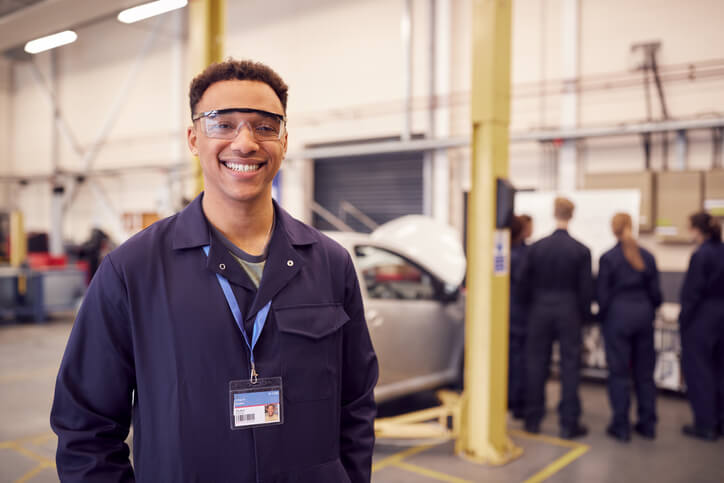
Embracing the Journey from Newcomer to Senior Tech
In an auto repair shop, not all jobs are created equal, and that’s by design. Assigning tasks based on skill level ensures that every repair is completed correctly and efficiently, while also nurturing the development of new talent. If you’re just starting out, remember that every top mechanic began with the basics. Doing oil changes and brake jobs today is not a dead-end; it’s the beginning of your career path.
By understanding why shops operate this way, you can take full advantage of the learning phase. With time, training, and hands-on experience, you’ll gain the expertise to handle the most complex repairs that only senior techs do now. With dedication and training, you’ll be well on your way to becoming that senior tech in the shop who tackles the toughest jobs.
Are you ready to accelerate your career?
Enrolling in an auto mechanic school in Surrey is a great first step to building your technical foundation. From there, hands-on experience and mentorship will do the rest.