
Automotive Air Conditioning: How It Works and What Techs Inspect
TL;DR
Automotive air conditioning systems keep vehicle occupants comfortable by removing heat and humidity from the cabin. These systems rely on components such as compressors, condensers, refrigerant lines, sensors, and electrical controls. Understanding how these parts work together helps future technicians diagnose cooling problems and perform accurate repairs.
Few vehicle features are appreciated more than cold air on a hot summer day. Yet most drivers rarely think about what happens when they press the A/C button.
For future technicians, understanding automotive air conditioning is important because HVAC systems combine mechanical, electrical, and refrigerant-based components. Whether you’re attending an auto mechanic school or exploring future auto careers, learning how these systems operate helps build a strong foundation in vehicle diagnostics.
How Does Automotive Air Conditioning Work?
An air conditioning system removes heat from inside the vehicle and transfers it outside using a closed refrigerant cycle.
The process begins when the compressor pressurizes the refrigerant and sends it through the condenser, where heat is released. The refrigerant then passes through expansion devices before entering the evaporator, where it absorbs heat from the cabin air.
As air flows across the evaporator core, it becomes cooler and less humid before being blown into the passenger compartment. This process repeats continuously while the system is operating.
Modern auto air conditioning systems also rely on sensors, control modules, and electrical components to maintain comfortable cabin temperatures.
What Parts Are in a Car AC System?
Most vehicle air conditioning systems include several major components that work together to manage refrigerant flow and cabin cooling.
These components typically include:
- Compressor
- Condenser
- Evaporator
- Expansion valve or orifice tube
- Refrigerant lines and hoses
- Receiver-drier or accumulator
- Blower motor
- HVAC controls and sensors
Each component plays an important role. If one part fails, cooling performance can be affected or lost entirely.
Automotive school students often discover that understanding component relationships is critical when diagnosing HVAC concerns.
Why Does the Car AC Stop Blowing Cold Air?
Several issues can reduce cooling performance or prevent the system from operating properly.
Common causes include:
- Low refrigerant levels
- Refrigerant leaks
- Compressor failure
- Electrical faults
- Damaged sensors
- Clogged condensers
- Blower motor issues
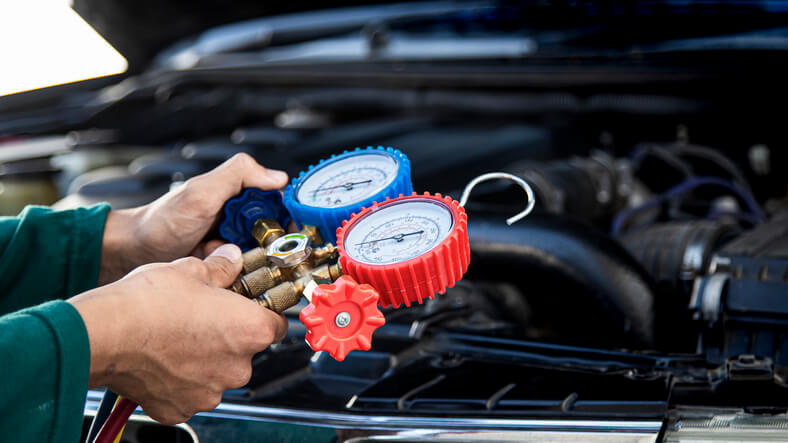
Technicians rarely assume a cause without testing. Instead, they inspect system pressures, electrical signals, airflow, and component operation before recommending repairs.
Because modern automotive AC systems often integrate with vehicle electronics, proper diagnosis requires both mechanical and electrical troubleshooting skills.
Do Automotive Service Technicians Learn AC System Basics?
Yes. HVAC diagnosis and service are important parts of professional automotive training.
Students learn how refrigerant cycles operate, how system components interact, and how technicians safely inspect and test air-conditioning systems. They also develop an understanding of the environmental and safety regulations associated with refrigerant handling.
At our auto mechanic school, students gain exposure to many vehicle systems, including heating, ventilation, and air conditioning. These skills can support a wide variety of future auto careers, from general repair to dealership service and advanced diagnostics.

Why Air Conditioning Knowledge Still Matters
Vehicle comfort systems continue to advance, especially as modern vehicles add electronic climate controls, hybrid technology, and integrated diagnostic systems.
Understanding air conditioning in cars helps technicians develop broader diagnostic abilities while preparing them to work on both current and future vehicle platforms. As technology evolves, strong HVAC knowledge remains a valuable part of a technician’s skill set.
Would you like to explore a wide range of auto careers?
Contact ATC Montreal for more information.
Key Takeaways
- Automotive air conditioning systems remove heat and humidity from the vehicle cabin.
- Major components include the compressor, condenser, evaporator, and refrigerant lines.
- Low refrigerant, leaks, electrical faults, and compressor issues can affect cooling performance.
- Technicians use testing and diagnostics rather than guesswork when troubleshooting AC systems.
- HVAC training is an important part of preparation for many auto careers.
- Students at an auto mechanic school learn the fundamentals of automotive HVAC systems.
FAQ
How Does Automotive Air Conditioning Work?
Automotive air conditioning removes heat from the vehicle cabin and transfers it outside through a closed refrigerant cycle involving the compressor, condenser, and evaporator.
What Parts Are in a Car AC System?
Most systems include a compressor, condenser, evaporator, expansion valve, refrigerant lines, blower motor, and various sensors and controls.
Why Does the Car AC Stop Blowing Cold Air?
Common causes include refrigerant leaks, low refrigerant levels, compressor problems, electrical faults, and airflow issues.
Do Automotive Service Technicians Learn AC System Basics?
Yes. HVAC system operation, inspection, and diagnosis are commonly covered during automotive technician training.