
ADAS Sensors in Snow and Ice: Why Cameras and Radar Need a Clear View
In Brief: Front Radar Sensor Blocked in Snow and Ice
Snow, ice, and road slush can obstruct the cameras and radar sensors used by advanced driver assistance systems (ADAS). A front radar sensor blocked warning may temporarily disable adaptive cruise control or other features, while an obstructed windshield camera can trigger messages such as lane assist unavailable. Technicians distinguish temporary contamination from sensor faults by inspecting sensor locations, checking diagnostic information, and following manufacturer procedures.
A driver starts their morning commute through Surrey after an overnight snowfall. The windshield is clear, the engine is running normally, and everything seems ready for the road. Then a warning appears: Front Radar Sensor Blocked. Adaptive cruise control stops working, even though it operated perfectly the day before.
The problem may be as simple as a layer of snow or slush covering a sensor. But not every warning disappears after cleaning, and the same message can have different causes depending on the vehicle. Understanding how ADAS sensors respond to winter conditions helps aspiring automotive technicians distinguish an environmental limitation from a fault that needs further diagnosis.
How Do Snow and Ice Affect ADAS Sensors?
ADAS features depend on sensors that detect road markings, vehicles, obstacles, and other information around the car. Cameras capture visual details, while radar uses radio waves to estimate the position and movement of objects.
These technologies have different limitations. Snow or ice on a windshield can block a camera’s view of lane markings, while slush accumulating over a front radar cover can interfere with radar signals.
Heavy snowfall, poor visibility, and obscured road markings can also affect system performance even when the sensors themselves are clean. The result may be a temporary loss of certain driver assistance functions rather than a mechanical breakdown.
Why Does a Front Radar Sensor Blocked Warning Appear?
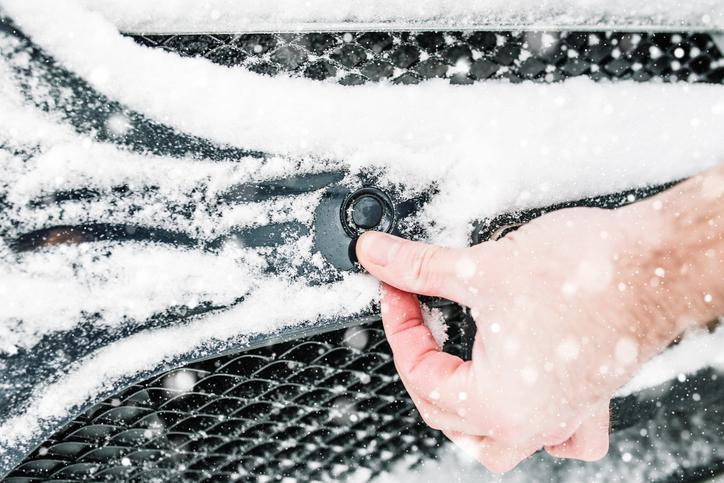
A front radar sensor blocked message generally means the vehicle cannot obtain sufficiently reliable information from its forward radar system. Depending on the model, the radar may be positioned behind the grille, bumper cover, or manufacturer emblem. Snow, ice, mud, and road grime can interfere with its operation.
Drivers might also see messages such as radar sensor is dirty, adaptive cruise control unavailable, or forward collision warning limited. The wording varies between manufacturers, and the message doesn’t establish that the radar sensor itself has failed. Technicians must consider environmental conditions, contamination, damage, and possible electronic faults before reaching a conclusion.
Why Can Lane Assist Become Unavailable in Winter?
Lane-keeping assistance commonly relies on a forward-facing camera, often mounted near the rearview mirror, to identify road markings. If the camera’s viewing area is covered by frost, snow, condensation, or dirt, it may not detect the road reliably. Snow-covered lane markings and reduced visibility can cause similar difficulties.
A lane assist unavailable message may therefore appear even when the camera hardware is functioning correctly. Drivers should also understand that lane assistance is not a substitute for steering. When the feature is limited or unavailable, they must maintain full control of the vehicle and adjust their driving to the conditions.

How Should ADAS Sensors Be Cleaned in Winter?
ADAS sensor cleaning should follow the vehicle manufacturer’s instructions because sensor locations, protective surfaces, and permitted cleaning methods vary. Drivers can generally begin by checking the relevant exterior surfaces for snow, ice, and road grime.
Important precautions include:
- Remove loose snow with a suitable soft brush or cloth.
- Clear the windshield area used by the forward-facing camera.
- Avoid scraping, striking, or applying excessive pressure to radar covers and camera-related components.
- Use manufacturer-approved methods to remove ice or stubborn contamination.
- Check the owner’s manual before cleaning areas containing concealed sensors.
Never assume that clearing a visible grille or windshield surface guarantees full ADAS functionality. The system may require additional time or driving under suitable conditions before a temporary warning clears.
When Does an ADAS Warning Need Professional Diagnosis?
A warning that remains after the relevant surfaces are clean and conditions improve deserves further investigation. Technicians begin by confirming the customer’s complaint and reviewing the circumstances in which the warning appeared. They may then:
- Inspect sensor covers, mounting points, and camera viewing areas.
- Check for damage, corrosion, moisture intrusion, or previous collision repairs.
- Retrieve diagnostic trouble codes using appropriate scan equipment.
- Review live data and manufacturer-specific diagnostic information.
- Determine whether sensor alignment, calibration, or component repair is required.
Calibration is not automatically necessary after every winter warning. It becomes relevant when specified by the manufacturer, particularly after certain repairs, sensor replacements, or alignment-related work.
These diagnostic distinctions are increasingly relevant to students exploring an Automotive Service Technician Foundation program.

Why Should Future Automotive Technicians Understand ADAS?
Modern vehicle maintenance involves mechanical systems, electronics, sensors, and software working together. A blocked radar complaint illustrates why technicians need to understand both the technology and the driving conditions affecting it.
Budding auto mechanics may encounter vehicles equipped with camera-based safety systems, radar-assisted braking, and electronic driver assistance features. The same emphasis on understanding integrated vehicle systems extends to other technologies, including those explored through a hybrid technology training course.
Explore Automotive Training at ATC Surrey
Winter ADAS complaints demonstrate how careful observation, electronic diagnostics, and manufacturer service information come together in modern automotive work. Explore Automotive Training Centre Surrey’s training opportunities to learn more about the knowledge and skills involved in inspecting, diagnosing, and maintaining today’s vehicles.
Would you like to explore automotive training opportunities at our auto mechanic school in Surrey?
Contact ATC Surrey for more information.
Key Takeaways
- Snow, ice, slush, and road grime can obstruct ADAS cameras and radar sensors, limiting certain driver assistance functions.
- A front radar sensor blocked warning does not automatically mean the radar sensor has failed.
- Lane assist unavailable messages may result from an obstructed windshield camera, poor visibility, or snow-covered road markings.
- Drivers should follow manufacturer instructions when cleaning sensor covers and camera viewing areas.
- Persistent warnings require systematic diagnosis, including inspections, fault-code checks, and, where specified, calibration procedures.
- ATC Surrey’s Automotive Technician Foundation program combines classroom instruction with practical shop training, including electrical and computer-control diagnostics.
FAQ
Can snow block a vehicle’s radar or camera sensors?
Yes. Snow and ice can obstruct radar covers and camera viewing areas, preventing driver assistance systems from obtaining reliable information. Heavy snowfall can also reduce visibility even when the sensors are unobstructed.
Why does adaptive cruise control stop working in snow?
Adaptive cruise control may become unavailable when snow, ice, or slush interferes with the forward radar or camera information it needs. The system may temporarily limit or disable the feature rather than operate with unreliable sensor data.
How should drivers clear snow from ADAS sensors?
Drivers should locate the relevant sensor areas using the vehicle owner’s manual and remove snow or ice using manufacturer-approved methods. Soft cleaning materials and gentle handling help avoid damaging sensor covers. Scraping, striking, or applying excessive pressure should be avoided.
When should an ADAS warning be diagnosed in a shop?
A warning should be professionally investigated if it remains after cleaning and improved weather conditions, repeatedly returns, or appears following a collision, windshield replacement, or front-end repair. Technicians can inspect sensor mounting, retrieve diagnostic codes, and determine whether additional testing or calibration is needed.


